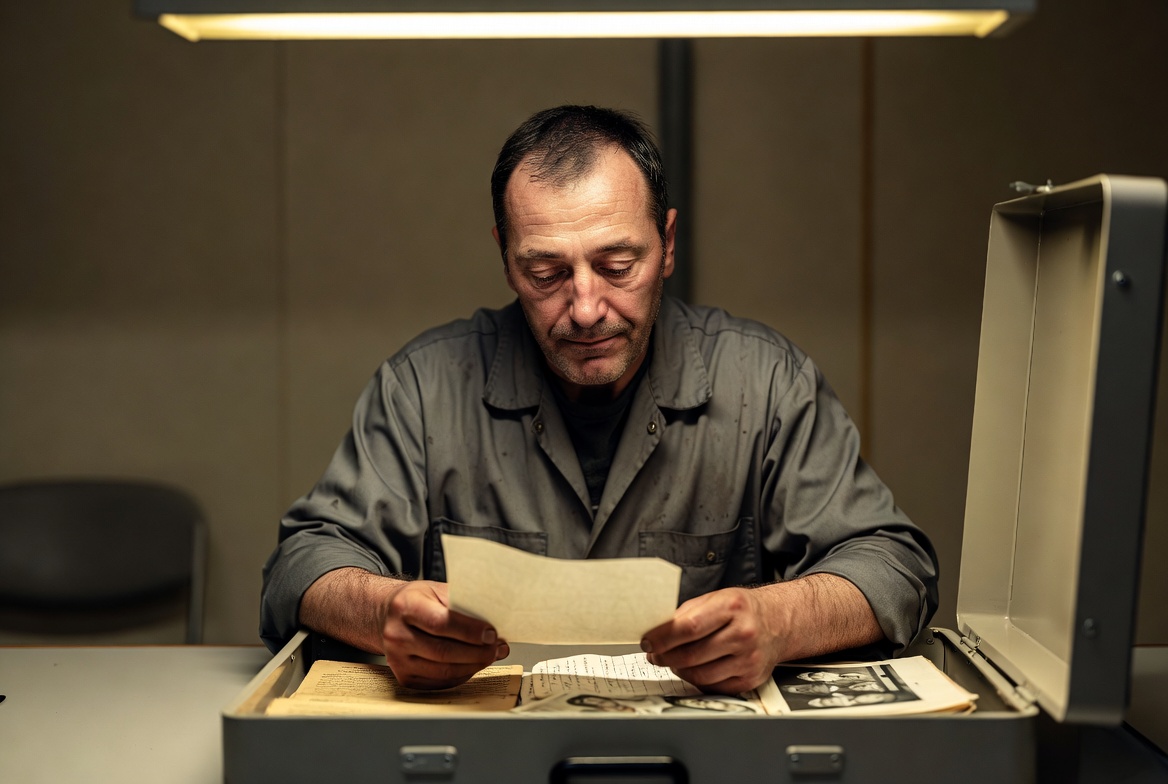
For twenty years, Arthur Henderson had occupied the small back bedroom of our modest home in Austin like a quiet shadow—never asking, never offering, and in the bitter ledger of my heart, never truly belonging
My wife, Sarah, had insisted from the beginning. “He’s family, David. Blood. He has nowhere else.” Her voice always carried that quiet steel when it came to her father, the kind that brooked no argument. So he stayed. Every other Friday, as my paycheck from the transmission shop landed in our account, I watched it dissolve into groceries, utilities, prescriptions, and the endless small needs of an aging man who sipped his black coffee at our dining table as though the world owed him peace in his final chapter.
He was never cruel. That much I granted him, repeating it like a mantra on the nights when exhaustion pressed down on my chest. Arthur was simply there—a slight, reserved figure in a faded baseball cap, shuffling to the kitchen each dawn to prepare his oatmeal and toast with hands that trembled just enough to remind me of his fragility. He never inquired about the cost of milk or medicine. He offered only a soft “Thank you, son,” now and then, words that landed like pebbles in a deep well, barely rippling the surface of my frustration.
I repaired broken cars by day and came home to a house that felt increasingly fractured. Our two boys shared a cramped bedroom because their grandfather occupied the only spare room. I sold my beloved Chevy Silverado to cover his cataract surgery. Roof leaks went unpatched while pharmacy runs took precedence. Credit card balances swelled like storm clouds. Whenever my patience frayed and sharp words rose in my throat, Arthur would lower his gaze to his threadbare slippers and murmur, “I’m sorry, son. I’ll be out of your hair soon enough.”
Those words carved at me. They carried a loneliness so profound it shamed my anger, yet they also fueled it—because they felt like an easy escape from the reality he had imposed on us.
The years accumulated in layers: birthdays muted by medical bills, holidays strained by tension, arguments that ended with Sarah’s tearful pleas and my reluctant silence. Arthur would sit by the window during those moments, staring out at the backyard as if the discord had nothing to do with the man whose presence had reshaped our lives.
Then came an ordinary Tuesday.
I found him in the aluminum lawn chair on the back porch, cap resting neatly in his lap, the old portable radio humming faint static into the warm Texas air. He looked as though he had simply dozed off beneath the late afternoon sun. Sarah’s scream tore through the house like shattered glass. By the time I reached him, Arthur Henderson had slipped away with the same quiet dignity he had carried through life.
The funeral was small and subdued, attended by faded flowers and heavier silences. His other children—Kevin and the rest—arrived late, performed their dramatic grief for the sparse gathering, and vanished before the dirt had fully settled. Kevin clapped me on the shoulder with hollow familiarity. “You’re finally free of the old man, brother-in-law.” I said nothing, though a treacherous part of me whispered agreement in the dark.
That night, the empty lawn chair on the porch haunted me more than his presence ever had. Relief should have come. Instead, guilt arrived like an uninvited guest, heavy and unrelenting.
Three days later, sharp knocks sounded at the front door. A man in a crisp charcoal suit stood on the threshold, briefcase in hand, his expression professionally solemn. “Mr. David Miller?” I nodded. “I represent the estate of Arthur Henderson.”
Sarah appeared behind me, her face pale as ash. Kevin and the siblings materialized soon after, drawn by the scent of potential inheritance, their entitlement thick in the air. “A letter?” Kevin scoffed when the attorney mentioned Arthur’s instructions. “What could that freeloader possibly have left? He lived off you two for twenty damn years.”
The lawyer remained unflinching. From his briefcase emerged a substantial manila folder, a heavy velvet pouch, and a faded yellow envelope addressed in Arthur’s trembling hand. Only one name graced it: David.
Kevin’s face twisted. “There’s been a mistake.”
“There has not,” the attorney replied calmly.
My legs felt unsteady as documents and photographs spilled across the coffee table—old bank statements, worn images, and a battered blue ledger filled with two decades of meticulous entries. Entries I had been too blinded by resentment to ever notice.
The lawyer cleared his throat. “Per Mr. Henderson’s explicit wishes, this letter must be read aloud to the family before any discussion of assets.” He opened the envelope with deliberate care. Sarah’s hand found mine, gripping tightly. Kevin’s smirk faltered and dissolved.
The first words of the letter pierced the room like sudden light in a long-darkened chamber:
“David, I know you always thought I contributed absolutely nothing to this household… but every single plate of food you placed before me was the exact reason I hid everything under your name.”
PART 2
The attorney’s voice, steady and measured, filled the living room as he read Arthur’s letter aloud. Each word landed like a stone dropped into still water, sending ripples through the fragile illusions I had clung to for two decades.
“David,” it began, “I know you always thought I contributed absolutely nothing to this household… but every single plate of food you placed before me was the exact reason I hid everything under your name. I watched you come home with grease on your hands and exhaustion in your eyes. I saw the way you looked at the bills, at your boys sharing that cramped room, at Sarah’s quiet worry. And I decided long ago that my pride would not be another burden you carried.”
Sarah’s fingers tightened around mine. I could feel the tremor in her grip. Kevin shifted uncomfortably on the couch, his earlier sneer replaced by a wary silence.
The letter continued, unfolding a hidden life I had never suspected. Arthur had not been idle in that back bedroom. While I cursed the cost of his prescriptions, he had been meticulously managing investments from a modest inheritance he received shortly after moving in—an inheritance he had chosen never to mention. Every “thank you, son” had been accompanied by quiet transfers: stocks quietly purchased in my name, retirement accounts seeded with what little he had, even a life insurance policy rerouted through careful legal channels so it would pass to us without probate complications or family disputes.
“I was never a rich man,” the letter read, “but I was a patient one. For twenty years, I turned what I had—and what it grew into—into something that might ease the weight I placed on your shoulders. The roof that needed repairing? Paid for from an account you never knew existed. The boys’ college funds? Started the year they turned ten, under your name so no one could challenge it. Your Silverado… I know how much you loved that truck. I kept every record. Every sacrifice you made for me, I tried to return tenfold, without robbing you of the dignity of providing for your family.”
Tears blurred my vision. The blue ledger on the table was no ordinary notebook. Page after page detailed dates, amounts, and quiet actions: utility payments funneled through anonymous channels, grocery deliveries arranged when our cupboards ran bare, even a small trust for Sarah that had grown steadily through compound interest and careful reinvestment. Photographs slipped from the folder—Arthur at a bank years ago, signing documents; Arthur in a lawyer’s office, ensuring everything would remain protected.
But the deepest cut came in the personal lines addressed solely to me.
“I stayed silent because I knew your pride, David. You are a man who measures his worth by what he can carry. If I had offered money openly, you would have refused it. So I became the burden you needed me to be—the one that allowed you to keep being the provider while I worked in the shadows. I saw your resentment. I felt it like winter in my bones. And still, I loved you as the son I never had by blood. You gave me a home when my own children saw me as an inconvenience. For that, I thank you from a place deeper than words.”
Kevin’s face had gone pale. One of the sisters whispered, “This can’t be right,” but the attorney simply continued reading, unflinching.
Arthur’s final paragraphs rose like a gathering storm, the true weight of his secrecy crashing down.
“There is more. The velvet pouch contains the key to a safe deposit box. Inside, you will find the full extent of what I have built—not for glory, not for legacy in the eyes of those who abandoned me, but for the three of you who gave me these twenty years. Over two million dollars, David. Grown quietly, year by year, while I ate your oatmeal and sat in your recliner. It was never about freeloading. It was about protecting the only real family I had left.”
A heavy silence swallowed the room. Sarah was openly weeping now, her shoulders shaking. I felt something inside me fracture—twenty years of bitterness, anger, and quiet contempt shattering against the truth of a love so profound and so carefully concealed that I had mistaken it for emptiness.
The attorney paused, adjusting his glasses. “There is one final instruction in the letter,” he said gently. “Mr. Henderson asked that you, David, be the one to open the safe deposit box. Alone. He wrote that some truths are meant for a son’s eyes first.”
My hands trembled as I reached for the velvet pouch. The key inside was cool, heavy with implication. Kevin stood abruptly, muttering something about contesting the will, but his voice sounded distant, hollow. All I could hear was the echo of Arthur’s words and the memory of that empty lawn chair on the porch.
As the attorney began explaining the next legal steps, a wave of overwhelming regret and gratitude crashed over me. I had spent two decades resenting a man who had quietly rewritten our future while asking for nothing in return. The room seemed to tilt. My vision narrowed to the letter in my hands, the final lines blurring:
“Forgive an old man his pride, David. And know that every quiet morning I sat at your table, I was the luckiest father-in-law alive.”
The climax of understanding hit me then—the full realization of what I had lost, what I had gained, and the irreversible truth that the man I had called a burden had been my family’s greatest unseen guardian.
PART 3
I went alone the following morning, as Arthur had requested. The bank in downtown Austin felt too bright, too ordinary for the gravity of what I was about to uncover. The vault door opened with a heavy metallic sigh, and the manager left me in a small private room with the box. My heart hammered against my ribs as I turned the key.
Inside lay more than money. There were documents confirming the staggering sum—two million, four hundred and seventy-eight thousand dollars, grown through patient, invisible stewardship. But beneath the financial records rested the true heart of Arthur’s legacy: a stack of handwritten journals, a bundle of old photographs, and one final sealed envelope marked For David – Read Last.
I opened the journals first. Page after page chronicled not just transactions, but observations. Arthur had written about my sons’ baseball games he watched from the porch, about Sarah’s tired smile when she thought no one was looking, about the nights he heard me arguing with the bills in the kitchen and quietly added another quiet investment the next day.
One entry, dated only months after he moved in, stopped me cold: “David works so hard. He thinks I don’t see the fear in his eyes when the boys need new shoes. Today I transferred the first ten thousand. He will never know it was me. Not yet. A father protects his children, even when they believe he is the burden.”
Tears fell freely onto the pages. I had spent twenty years building walls of resentment around a man who had been quietly tearing them down from the other side.
Deeper in the box were photographs I had never seen: Arthur as a young man in uniform, standing beside a woman I recognized as Sarah’s late mother. Letters from his other children over the years—dismissive, greedy, asking for money he had long stopped offering them. And then, a small velvet box containing my grandmother’s wedding ring that Sarah had lost years ago. Arthur had found it, repaired it, and kept it safe, waiting for the right moment that never came while he lived.
Finally, I opened the last envelope.
“David,
If you are reading this, I have gone home. I want you to know that these twenty years were not a sacrifice for me—they were a gift. You gave me purpose when my own children saw only inconvenience. You gave me a front-row seat to watch my daughter be loved, my grandsons grow into fine young men, and a son-in-law become the kind of man I always wished I had been.
Do not let guilt consume you. Resentment is the soil in which regret grows, but forgiveness is the rain that washes it clean. Use what I have left not just to ease your burdens, but to live with the freedom I never fully claimed. Take Sarah dancing again. Buy the boys that truck you always talked about. And every once in a while, sit in that old lawn chair on the porch, listen to the radio, and remember an old man who loved you more than he ever knew how to say.
You were never carrying me, son. We were carrying each other.
With more gratitude than I can express, Arthur”
I sat in that sterile bank room for a long time, sobbing like a child. The man I had silently condemned had been the quiet architect of our family’s survival and future. Every weary morning he shuffled to the kitchen, every soft “thank you,” every moment I had interpreted as entitlement had actually been an act of profound, invisible love.
When I finally returned home, Sarah was waiting on the porch, sitting in Arthur’s old aluminum chair. I knelt before her, placed the ring on her finger where it belonged, and told her everything. We cried together—tears of grief, of regret, and of a strange, healing joy. Kevin and the others would receive nothing beyond what basic law required; Arthur had made sure of that. Their dramatic performances at the funeral had been their final, empty performance.
In the weeks that followed, our house changed. The back bedroom became a study filled with Arthur’s journals. The boys learned the truth about their grandfather and carried his name with pride. I returned to the transmission shop lighter somehow, no longer dragging the invisible chains of resentment.
Some evenings, when the Texas sun dips low and paints the sky in gold and crimson, I still sit in that lawn chair on the back porch. The old radio hums softly beside me. And in the quiet, I speak to him.
“Thank you, Dad,” I whisper now—the words I never gave him while he breathed. “I finally understand.”
Arthur Henderson had sat at our table for twenty years without offering a cent. And in the end, he had given us everything.
THE END