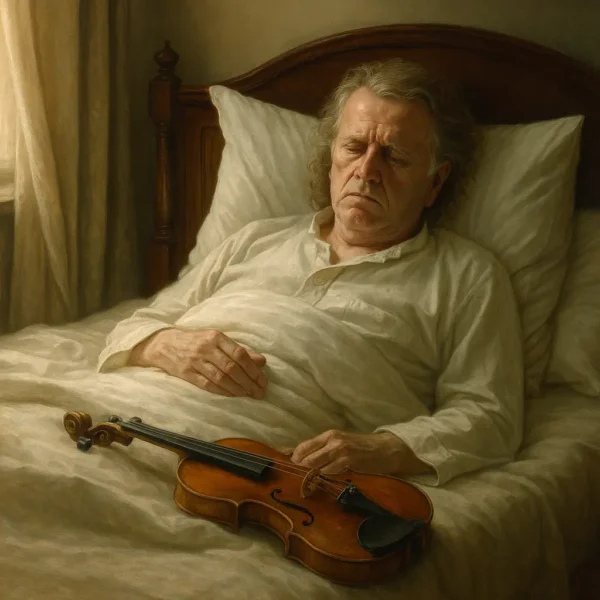
Beyond the Clickbait: André Rieu, the Real Legacy of Maastricht, and the Timeless Magic of the Waltz
Introduction: Deconstructing the Digital Alarm
In the contemporary media environment, social media feeds are inundated with sensational, high-stakes headlines engineered to capture attention instantly. Formatted with alarming phrases like “30 MINUTES AGO IN MAASTRICHT…”, “Heartbreaking news just revealed…”, or “Click the link to see more 👇”, these posts deliberately leverage public affection for world-renowned figures to generate clicks, viral shares, and ad impressions.
Few living musicians evoke as much warmth, nostalgia, and personal devotion across generations as Dutch violinist, conductor, and maestro André Rieu. Celebrated globally as the modern “King of the Waltz,” Rieu has spent more than four decades bringing classical music out of formal concert halls and into open-air arenas, stadiums, and city squares worldwide.
When vague, alarmist headlines surface claiming sudden “heartbreaking developments” in his hometown of Maastricht, fans around the world naturally experience a surge of concern. However, behind these engagement-driven teasers lies a far more inspiring and grounded narrative—one of artistic resilience, profound emotional honesty, deep family roots, and the enduring power of music to bring millions together.
This comprehensive feature examines the true story behind the headlines: André Rieu’s life and career, the reality of his emotional performances, his iconic hometown concerts in Maastricht, the mechanics of modern digital clickbait, and why his legacy remains as vibrant as ever.
Chapter 1: The Maestro of Maastricht: Building a Global Empire of Joy
To understand why news about André Rieu travels so rapidly across the globe, one must first appreciate the scale and intimacy of the phenomenon he has created.
Born in Maastricht, Netherlands, in 1949, Rieu grew up immersed in classical music. His father was the conductor of the Maastricht Symphony Orchestra, and young André began learning the violin at age five. He pursued rigorous conservatory training in Maastricht, Liège, and Brussels, mastering the classic repertoire.
However, Rieu felt that traditional classical performances had become overly rigid, solemn, and detached from everyday audiences. He envisioned a performance style that embraced open emotion, humor, romance, and audience participation.
Key Milestones in André Rieu's Artistic Journey:
├── 1978: Forms the Maastricht Salon Orchestra (6 ensemble members).
├── 1987: Founds the Johann Strauss Orchestra with just 12 musicians.
├── 1994: International breakthrough with Shostakovich's "The Second Waltz."
├── 1995: Acquires his historic home, De Torentjes Castle in Maastricht.
└── Present: Performs for over 700,000 spectators annually across all continents.
In 1987, Rieu established the Johann Strauss Orchestra. What started as a modest 12-piece ensemble grew into a massive touring company featuring up to 80 musicians, vocalists, and choir members. By combining world-class musicianship with grand staging, colorful ballgowns, theatrical lighting, and romantic waltzes, Rieu pioneered a crossover genre that rivaled major rock and pop acts in global stadium ticket sales.
Despite his global stardom, Rieu’s heart has remained firmly anchored in Maastricht, the historic Dutch city on the Meuse River where his artistic journey began.
Chapter 2: The Truth Behind the “Heartbreaking” Headlines
When viral posts use dramatic hooks like “André Rieu has just shared heartbreaking news…”, they typically misrepresent or exaggerate genuine, human moments from his shows or past interviews.
1. Emotional Vulnerability on Stage
Rieu is famous for his transparent, heart-on-his-sleeve performance style. During his concerts, he regularly addresses the crowd, reflecting on topics that touch the human experience:
-
The Passage of Time: Rieu frequently speaks candidly about aging, expressing gratitude for every moment he shares with his audience and emphasizing that time is precious.
-
Tributes to Lost Friends: Over a four-decade career, Rieu has paid tearful on-stage tributes to departed orchestra members, musical mentors, and close colleagues.
-
Messages of Hope in Crisis: During global challenges, Rieu has shared moving reflections on the pain of separation and the healing necessity of live music.
When cameras capture close-up footage of Rieu wiping away tears during a poignant violin solo or an emotional speech, clickbait content creators routinely harvest these clips, add alarming text overlays, and package them as “breaking news” of a crisis.
From Authentic Moment to Manufactured Clickbait:
[ Authentic Stage Moment ] ➔ Maestro wipes away a tear during a poignant song tribute.
       │
       ▼
[ Tabloid Video Extraction ] ➔ Content farms crop footage and remove context.
       │
       ▼
[ Alarmist Framing ] ➔ Headline added: "30 MINUTES AGO... Heartbreaking News!"
       │
       ▼
[ User Engagement Trap ] ➔ Fans click out of concern, generating ad impressions.
2. Overcoming Real Health Obstacles
Like any elite performer maintaining a demanding global schedule, Rieu has faced real physical health challenges in the past. In 2010 and 2012, he suffered from severe inner-ear infections (labyrinthitis) that temporarily affected his balance and forced him to postpone tour dates.
Rieu spoke openly with fans about these health setbacks, detailing his physical therapy and recovery process. His full recovery and triumphant return to the stage demonstrated his determination and physical stamina, proving that short-term challenges were merely pauses in an ongoing musical career.
Chapter 3: The Vrijthof Phenomenon: A Global Pilgrimage
Central to the André Rieu story is the world-famous series of summer concerts held on the Vrijthof Square in Maastricht.
Every July, the historic cobblestone square in the center of Maastricht is transformed into a majestic outdoor concert hall. Surrounding medieval churches and historic buildings serve as a natural backdrop for a massive stage decorated with grand chandeliers, floral arrangements, and high-definition screens.
| Feature | The Vrijthof Summer Concert Series | Standard Arena Concert |
| Location | Historic city square in Maastricht, Netherlands. | Indoor arenas and stadiums worldwide. |
| Audience Reach | ~150,000 live attendees per season across multiple nights. | 10,000 to 20,000 fans per single night. |
| International Footprint | Fans travel from over 100 countries to Maastricht. | Regional audiences within commuting distance. |
| Atmosphere | Open-air festival, local terrace dining, midnight waltzing. | Formal stadium production and seating. |
For the city of Maastricht, the Vrijthof concerts are a cultural and economic highlight of the year. Hotels, restaurants, and local businesses welcome tens of thousands of international visitors who travel to experience the music in the maestro’s hometown.
During these concerts, the distinction between performer and audience disappears. Thousands of spectators lock arms, dance in the aisles, and sing along to melodies ranging from Johann Strauss’s The Blue Danube to popular folk anthems and opera classics like Nessun Dorma.
Chapter 4: Decoding the Architecture of Digital Clickbait
The frequency with which headlines like “30 MINUTES AGO IN MAASTRICHT…” appear on social media platforms reflects broader trends in digital publishing and audience engagement.
Why Classical Legacy Artists Are Targeted
-
High Audience Empathy: Fans of classical, traditional, and crossover music often form deep emotional connections with performers, making them more likely to react with immediate concern to alarming headlines.
-
Algorithmic Triggers: Social media algorithms prioritize posts that generate rapid comment activity, shares, and link clicks. Dramatic phrasing (“heartbreaking news,” “final tears,” “disaster strikes”) maximizes these engagement metrics.
-
The Ellipsis Trick: By cutting off the headline mid-sentence (
...), the creator creates an artificial “information vacuum” that forces curiosity-driven clicks.
How to Identify Verified Information
To protect themselves from misleading content, digital media consumers can rely on several key verification checks:
Verification Checklist for Celebrity News:
Check Official Channels: Authentic announcements regarding tour dates, health updates, or personal news appear directly on André Rieu’s Official Website or verified social media accounts.
Inspect the Source URL: Reliable news comes from established broadsheets and reputable broadcasting outlets, not generic blog domains or anonymous user pages.
Look for Specific Facts: Be skeptical of headlines that use dramatic emotional adjectives without mentioning specific names, dates, or confirmed facts in the opening sentences.
Chapter 5: The Pillars of Rieu’s World: Family and Fellowship
Behind the grand stage productions stands a tight-knit personal and professional support system that has remained stable for decades.
Marjorie Rieu: The Creative Anchor
André Rieu’s wife, Marjorie Rieu (née Kochmann), has been his steadfast partner for over 50 years. Married in 1975 before fame or financial stability arrived, Marjorie—a former language teacher—plays a vital role behind the scenes of André Rieu Productions.
-
Creative Consulting: Marjorie actively assists in selecting concert repertoire, researching historical musical arrangements, and conceptualizing show themes.
-
Grounding Influence: While André commands the spotlight on stage, Marjorie maintains a low-profile private life in Maastricht, ensuring the family remains rooted in authentic values.
The Next Generation
Rieu’s two sons, Marc and Pierre, are integral parts of the family legacy. Pierre Rieu serves as the Vice President and Production Director of the family business, overseeing the massive technical and logistical operations required to transport the orchestra’s staging, instruments, and costumes around the globe.
Furthermore, the Johann Strauss Orchestra functions as an extended family. Many of Rieu’s musicians have performed alongside him for 20, 30, or even 35 years—a level of stability almost unheard of in the modern music industry.
The Extended Rieu Family Structure:
├── Core Leadership: André Rieu (Conductor/Violin) & Marjorie Rieu (Creative Co-Director).
├── Operations & Production: Pierre Rieu (Production Director) & Marc Rieu (Visual Arts).
├── Orchestra Fellowship: 60–80 musicians & singers with decades of shared history.
└── Global Fanbase: Millions of dedicated followers spanning continents and generations.
Chapter 6: Why the World Continues to Choose Joy
In a modern world often characterized by rapid technological change and complex news cycles, the enduring popularity of André Rieu highlights a deep human need for genuine joy, beauty, and emotional connection.
The Universal Language of the Waltz
The 3/4 time signature of the Viennese waltz possesses a unique, sweeping rhythm that naturally encourages movement, romance, and comfort. Rieu’s ability to unlock the emotional core of this music allows audiences to experience:
-
Emotional Catharsis: A space where listeners feel free to laugh, cry, and express genuine feelings openly.
-
Shared Community: Uniting people of different nationalities, languages, and political backgrounds through a shared musical experience.
-
Timeless Elegance: Bringing classic craftsmanship, acoustic beauty, and visual splendor to modern arenas.
As Rieu often reminds his audiences from the stage: “Music has the power to bring people together like nothing else on earth. When we play, there are no borders, no arguments—only love and joy.”
Conclusion: Fact, Fortitude, and the Music That Plays On
The dramatic, clickbait headlines claiming “heartbreaking news in Maastricht” may capture brief attention as users scroll through digital feeds. However, the true story of André Rieu is not defined by manufactured digital rumors or sensationalized hooks.
It is defined by a lifelong dedication to the violin, an unwavering 50-year partnership with his wife Marjorie, the loyalty of his Johann Strauss Orchestra, and the smiles of millions of fans who gather in stadiums and in Maastricht’s Vrijthof Square every year.
At over 70 years of age, André Rieu continues to travel the world with his Stradivarius violin, conducting his orchestra, smiling warmly at his audience, and proving that while internet trends fade quickly, real music, genuine romance, and human connection endure forever.