Media Bias, Political Accountability, and the Tale of Two Legacies
Introduction: The Anatomy of a Digital Outrage Trigger
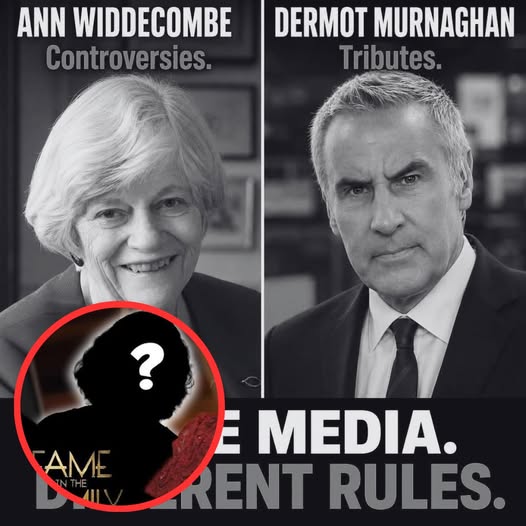
In the contemporary digital landscape, social media feeds are engineered to capitalize on friction, cultural grievance, and political tribalism. Formatted with alarmist urgency—“🚨🇬🇧 SAME COUNTRY. SAME MEDIA. TWO COMPLETELY DIFFERENT GOODBYES.”—viral posts routinely exploit public interest in high-profile figures to accuse news organizations of systemic bias and double standards.
The specific narrative currently sweeping through comment sections contrasts the retrospective media framing of two prominent British public figures: veteran broadcast journalist Dermot Murnaghan and former Conservative Cabinet minister turned commentator Ann Widdecombe.
To casual observers scrolling through social platforms, the contrast appears striking. On one side, a beloved news anchor is remembered through affectionate retrospectives celebrating decades of steady, reassuring presence in British living rooms. On the other side, an outspoken political figure’s legacy is scrutinized through the lens of policy debates, ideological friction, and legislative controversies.
Supporters of Widdecombe point to this juxtaposition as evidence of a entrenched media double standard—claiming that the press soft-pedals coverage of mainstream broadcasters while weaponizing obituaries against outspoken social conservatives.
However, behind these viral engagement traps lies a fundamental question about the mechanics of modern journalism: Is the media applying a hypocritical double standard, or are we witnessing the necessary difference in how journalism treats impartial news presenters versus powerful political lawmakers?
This article deconstructs the debate, examining the structural differences between broadcast journalism and political leadership, the evolution of modern obituary writing, the psychology of digital outrage, and why equating an anchor with a politician represents a profound misunderstanding of civic accountability.
Chapter 1: The Broadcast Anchor: The Sacred Tradition of Impartiality
To understand why career retrospectives for news presenters like Dermot Murnaghan focus on professional craftsmanship and public affection, one must analyze the unique role the broadcast news anchor occupies within British public life.
Dermot Murnaghan's Broadcasting Career Arc:
├── 1984: Enters television journalism as a trainee reporter at Channel 4 News.
├── 1989: Joins ITN/ITV News; becomes anchor of flagship national bulletins.
├── 2002: Moves to the BBC to co-host "BBC Breakfast" & "Eggheads."
├── 2007: Joins Sky News, lead presenter for major national & world news events.
└── 2022: Steps down from regular daily news anchoring after nearly 40 years.
The Regulator and the Presenter
Unlike the American media environment, where cable news anchors frequently broadcast explicit political opinions, British television broadcasting is legally bound by the strict impartiality rules enforced by Ofcom (the Office of Communications).
Under the Royal Charter and statutory broadcasting codes, news anchors on ITN, BBC, and Sky News are legally prohibited from:
-
Expressing personal political views or voting preferences on air.
-
Showing favoritism toward any political party or ideology.
-
Injecting personal bias into the reporting of national controversies.
For nearly four decades, Dermot Murnaghan operated within this tightly regulated framework. His professional identity was built on being an objective conduit of information—the voice that calmly guided the nation through major general elections, international conflicts, royal passings, and national crises.
Because a broadcast journalist does not draft legislation, cast parliamentary votes, or advocate for policy changes that alter the daily lives of citizens, their public legacy is evaluated on technical skill, interviewing rigour, calm authority, and career longevity.
When media outlets publish retrospectives of an anchor’s career, praising their warmth or professional consistency is not an act of political favoritism; it is an accurate reflection of a career defined by strict adherence to institutional neutrality.
Chapter 2: The Political Lawmaker: The Crucible of Public Policy
In sharp contrast to the deliberate neutrality of the news studio, the public career of Ann Widdecombe belongs to the high-stakes, adversarial world of parliamentary politics.
Ann Widdecombe's Political & Public Life:
├── 1987: Elected as Conservative MP for Maidstone (serves until 2010).
├── 1995–1997: Serves as Minister of State for Prisons under John Major.
├── 1998–2001: Appointed Shadow Home Secretary by William Hague.
├── 2010–2018: Shifts to media personality ("Strictly Come Dancing," columnist).
└── 2019: Re-enters elective politics as a Brexit Party MEP.
The Duty of Scrutiny
During her twenty-three years in the House of Commons and subsequent years in European politics, Ann Widdecombe was not a spectator to history—she was an active architect of policy. Serving in government roles, including Minister of State for Prisons, Widdecombe championed firm, uncompromising stances on crime, social conservatism, abortion, and European integration.
When news organizations write retrospectives or obituaries for political figures, journalistic ethics mandate a thorough, unvarnished record of their political impact. A political obituary that omitted controversial policies or public pushback would be a failure of historical recording.
Journalists evaluating a politician’s legacy must examine:
-
Legislative Impact: The tangible outcomes of laws they sponsored, voted for, or enforced while holding public office.
-
Public Friction: Notable political clashes, parliamentary debates, and public opposition to their platform.
-
Ideological Influence: How their rhetoric shaped public discourse and affected different segments of society.
When a media outlet mentions Ann Widdecombe’s policy on prison shackling during her time at the Home Office, or her vocal commentary on social issues, it is not an attempt to malign her memory; it is the execution of a primary media responsibility: holding power to account, even in retrospective.
Chapter 3: Dissecting the “Double Standard”: False Equivalence vs. Editorial Integrity
Viral social posts argue that comparing the coverage of these two figures exposes a systemic bias within British newsrooms. However, placing a non-partisan broadcaster side-by-side with a controversial lawmaker creates a classic false equivalence.
| Analytical Dimension | The Broadcast News Presenter (e.g., Dermot Murnaghan) | The Elected Lawmaker (e.g., Ann Widdecombe) |
| Source of Public Authority | Professional appointment; regulatory trust. | Democratic election; exercise of state power. |
| Primary Responsibility | Reporting events neutrally without personal opinion. | Voting on laws, setting policy, shaping society. |
| Public Expectations | Strict personal impartiality and professional distance. | Bold ideological leadership and policy conviction. |
| Basis for Legacy Evaluation | Communication skill, interviewing poise, integrity. | Real-world impact of legislative and political actions. |
| Journalistic Standard in Tributes | Celebrating professional craft and public service. | Comprehensive historical audit of career and conflict. |
The “Overlooked Detail”
Clickbait teasers frequently tease “one overlooked detail that everyone is talking about” to drive clicks. In reality, the fundamental “detail” missing from viral online commentary is the distinction between reporting the news and making the law.
“To treat a politician with the same gentle, uncritical affection reserved for a neutral news anchor would be a grave disservice to democratic accountability,” notes media historian Dr. Catherine Thorne. “A news anchor asks the questions; a politician answers them and wields the power of the state. Their legacies cannot—and should not—be measured with the same tape.”
If a news organization were to ignore a politician’s controversial legislative record upon their retirement or passing, it would be guilty of sanitizing history. Conversely, if a news organization invented political controversies for an anchor who spent four decades obeying strict neutrality rules, it would be fabricating outrage.
Chapter 4: The Monetization of Cultural Grievance
The viral post contrasting Murnaghan and Widdecombe was not crafted to encourage thoughtful debate on media ethics. It was engineered to exploit the financial mechanics of modern digital publishing.