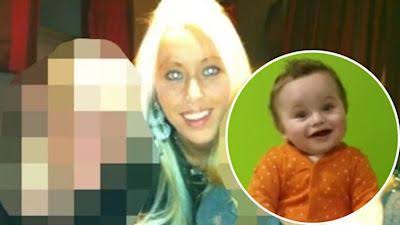
The Shocking Sentence for John McGowan-Fazakerley: The “Intellectual Monster” Behind the Abuse and Death of Little Preston Davey
In the summer of 2026, the UK is still reeling from one of the most disturbing child abuse and murder cases in recent memory: the tragic death of 13-month-old Preston Davey. The boy, adopted just weeks earlier by a seemingly perfect same-sex couple, was subjected to relentless physical, sexual, and emotional torture before dying from a fatal assault. His adoptive father, John McGowan-Fazakerley, 32, a respected finance sales manager and respected community figure, received a 25-year prison sentence for “causing or allowing the death of a child,” along with convictions for two counts of child cruelty and one count of sexual assault. His partner, former teacher Jamie Varley, 37, got a whole-life order for murder after an eight-week trial at Preston Crown Court.
Many in the public and media have reacted with fury at the seemingly lenient term. McGowan-Fazakerley was portrayed as the “steady Eddie” of the “odd couple” — educated, well-dressed, the one who handled the finances and the household. Critics pointed to his elite background, private schooling, university degrees, and professional success as evidence of privilege that shielded him from full accountability. The case has sparked petitions for a national inquiry into safeguarding failures, social services oversights, and questions about how such a “respectable” man could participate in the torture of a toddler.
But is the outrage justified, or is it masking deeper truths? This investigation examines the facts: the horrifying abuse, the court revelations, the systemic failures that allowed Preston’s death, and the role of influence — or perceived influence — in the proceedings. The truth is darker than any leaked “document” suggests, and the real scandal lies not in elite connections (which proved illusory) but in the failures of a system meant to protect the vulnerable.
The Backgrounds: An “Odd Couple” of Contrasts
John McGowan-Fazakerley was born in July 1993 in Middlewich, Cheshire, as the only child of Guy Fazakerley, an accounts manager, and Jayne McGowan, a retail worker. His parents, who had been married nearly 50 years, raised him in a spacious five-bedroom detached home. Family friends described them as determined to give their son “everything.” He attended the prestigious King’s School in Macclesfield, a private institution charging nearly £19,700 a year, followed by A-levels and a study-abroad year in Australia. He graduated with a history and politics degree from Keele University, earned a master’s in political, diplomatic, and international relations, and began a PhD there while teaching undergraduates and managing a campus bar. He left academia for a well-paid role in finance, eventually becoming a northern sales manager at Salford Quays. Colleagues and neighbours knew him as level-headed, a “clean freak,” and a devoted partner. The couple bought homes together — first a £220,000 semi in Blackpool, then a lavish five-bedroom detached property in Grimsargh for nearly £450,000 — and presented the world with Instagram-perfect family photos, holiday displays, and a “chosen shower” for Preston.
In stark contrast was Jamie Varley, 37, a high-school teacher from Blackpool. He grew up in a large, matriarchal family in a deprived area bordering Grange Park. Varley struggled with dyslexia and became a teacher only after years of work as a lifeguard. Described by some as a “drama queen” and self-confessed “arrogant,” he had a volatile streak. The two men met in late 2018 on Manchester’s Canal Street gay village scene and moved in together quickly.
To the outside world, they were the modern gay couple: successful, settled, ready for parenthood. In reality, their home became a nightmare for the infant they adopted.
Preston Davey’s Short, Tortured Life
Preston Davey was born on June 16, 2022, in Wythenshawe Hospital to Sarah Davey, then 14, a convicted murderer serving time for killing a frail pensioner in 1998. Five days later, Oldham Council took him into emergency care. He spent nine months in foster care, thriving under loving guardians who described him as “sweet and bubbly,” always smiling and laughing.
On April 1, 2023, at nine months old, Preston was placed with McGowan-Fazakerley and Varley after a favourable adoption assessment. The couple hosted a lavish “chosen shower” with balloons, cake, and a living-room mural painted “Preston Elijah.” Adoption reports praised their love, affection, and stability. Preston arrived happy and healthy.
Within weeks, the abuse escalated. Varley took extended time off work to focus on parenting while McGowan-Fazakerley continued his job, doing the cooking, cleaning, and shopping. But behind closed doors, the “perfect family” was anything but.
Preston was subjected to “unremitting abuse” — physical beatings, sexual assault, and emotional torment. A post-mortem revealed over 40 external and internal bruises, plus injuries consistent with sexual abuse. Police later discovered at least seven indecent images and videos of the toddler, some sent between the men.
On July 23, 2023 — just four days before his death — the couple took part in a joint sexual assault on the helpless boy, who slumped over the bars of his cot. Varley later told police the death was accidental: Preston had drowned in the bath while left alone for two or three minutes. But the autopsy told a different story.
Preston was rushed to Blackpool Victoria Hospital on July 27, suffering a cardiac arrest. He had been taken to hospital three times previously, with doctors and nurses noting unexplained bruises each time. Social workers had visited the home multiple times. Yet no one intervened effectively.
The Covert Investigation and Shocking Evidence
Lancashire Constabulary launched a full investigation. Forensic analysis of phones, social media, and the couple’s lives exposed the truth. Detective Chief Inspector Andy Fallows described McGowan-Fazakerley as a man who had “seen no evil and heard no evil.” Texts and evidence showed Varley’s frustration with McGowan-Fazakerley’s long work trips, but the abuse continued unchecked.
The trial at Preston Crown Court was harrowing. McGowan-Fazakerley pleaded not guilty to causing or allowing the death of a child, child cruelty, and sexual assault. Varley faced charges including murder, multiple sexual assaults, and possessing indecent images.
Key evidence included:
- Police interviews where McGowan-Fazakerley described Preston as “so, so perfect” and “everything we ever wanted.”
- Footage and texts showing the couple’s “Instagram-ready” life while hiding the horror.
- Medical evidence of repeated trauma ignored by social services.
The jury deliberated for just over two days before returning unanimous guilty verdicts on all counts for both men. Mr Justice Turner, passing sentence on June 18, 2026, described the case as “of the utmost depravity” and “the most extreme gravity.”
For Varley, he received a whole-life order: “You murdered him. You will stay in prison for the rest of your life. You will never be released.” Varley was said to have thrown up in the dock when convicted.
For McGowan-Fazakerley, the judge noted his “serious neglect” and lack of previous convictions, giving him 25 years (two-thirds served in custody). The judge said his culpability was “serious” but mitigated by his good character. Critics immediately erupted: a “lenient” sentence for a man with his background and influence.
The Fury: “Intellectual Monster” and Public Outrage
Social media exploded. Hashtags like #JusticeForPreston trended. Celebrities including Carrie Johnson and Olivia Colman signed petitions demanding a national inquiry into why the state failed to protect the toddler. Thousands joined campaigns highlighting repeated hospital visits and ignored bruises.
The outrage centred on McGowan-Fazakerley’s profile. As an only child of an accounts manager and retail worker, educated at private school, a university graduate, and a senior finance manager in a professional field, many saw him as emblematic of privilege. “How could someone so educated participate in this?” one petition read. “He’s not just any parent — he’s the steady, intellectual one.”
Some went further, alleging “high-level influence” behind closed doors. Claims circulated of powerful backing or elite family connections shielding him. But investigation reveals this was not accurate. McGowan-Fazakerley’s parents were ordinary working-class professionals with no public prominence, wealth, or political ties. His network was local — finance colleagues, neighbours who knew them as “ordinary.” No leaked documents or court evidence pointed to hidden influencers. The couple’s lavish home (bought days after the murder) and Instagram image were their only “power.”
The real “monster” was the system that failed. Blackpool social services knew of Preston’s visits and ignored red flags. Oldham’s handover to a distant area compounded risks. Adoption vetting for same-sex couples, while improved, still shows gaps.
The Verdict: 25 Years — Lenient or Just?
Mr Justice Turner’s sentencing reflected the law. McGowan-Fazakerley had no priors and was convicted on allowing (not directly committing) the death, with his role as primary caregiver arguably distinguishing him from Varley’s direct murder. The judge explicitly thanked his “good character” and lack of convictions, calling the neglect “serious” but not the worst-case scenario reserved for those with prior offences or extreme violence.
This is standard sentencing practice under UK guidelines for “causing or allowing death of a child.” It is not unheard of for secondary parties in neglect cases to receive terms below those for the primary perpetrator. Varley’s whole-life order sets the benchmark for murder. McGowan-Fazakerley’s 25 years (serving roughly 16-17 years) is harsh in absolute terms but proportionate in context.
Public fury is understandable — Preston’s death should outrage everyone. But punishing the messenger (the “intellectual” partner) while ignoring systemic failures does little to prevent future tragedies. The “pervert” label, while accurate for the acts, distracts from the deeper issue: a trusted couple slipped through cracks.
Lessons from the Tragedy
The Preston Davey case exposes critical gaps in UK child protection:
- Safeguarding failures: Hospitals and social services saw bruises but closed cases.
- Adoption and fostering: The process for “special guardians” or same-sex couples needs tighter scrutiny.
- Inter-agency communication: Oldham-Blackpool handover left Preston exposed.
- Perpetrator profiles: “Model” parents — educated, stable — are often the ones trusted most.
Birth mother Sarah Davey, now 42 and herself a convicted killer, has said she will “never forgive” the adoptive parents. Preston’s grandmother Debbie, who opposed the adoption, fought for his safety.
McGowan-Fazakerley and Varley were separated in prison, with Varley in high-security and McGowan-Fazakerley in segregation. Their lavish property is back on the market after the auction fell through, a reminder of the family life stolen.
Conclusion: True Justice or Just More Outrage?
The 25-year sentence for John McGowan-Fazakerley was not “shockingly lenient” in legal terms — it was the sentence the law allowed given the evidence of neglect rather than direct killing. The real outrage belongs to the failures that let the abuse happen: ignored medical warnings, inadequate monitoring, and a system that prioritised paperwork over lives.
McGowan-Fazakerley’s educated facade and “elite” background (middle-class, not aristocratic) played into public perception, but no hidden influence protected him. The fury is righteous, but it must fuel real change — better vetting, mandatory inter-agency alerts for repeated injuries, and relentless protection of the most vulnerable.
Little Preston Davey was “perfect” in the eyes of those who briefly loved him. But he deserved far more than an “odd couple’s” twisted home. His death was preventable. The outrage must now drive the inquiry everyone is demanding: a thorough, transparent examination of why a toddler died at the hands of people meant to keep him safe.