STREAMING NOW ON NETFLIX: A MASTERCLASS IN HEART-POUNDING PSYCHOLOGICAL DREAD!
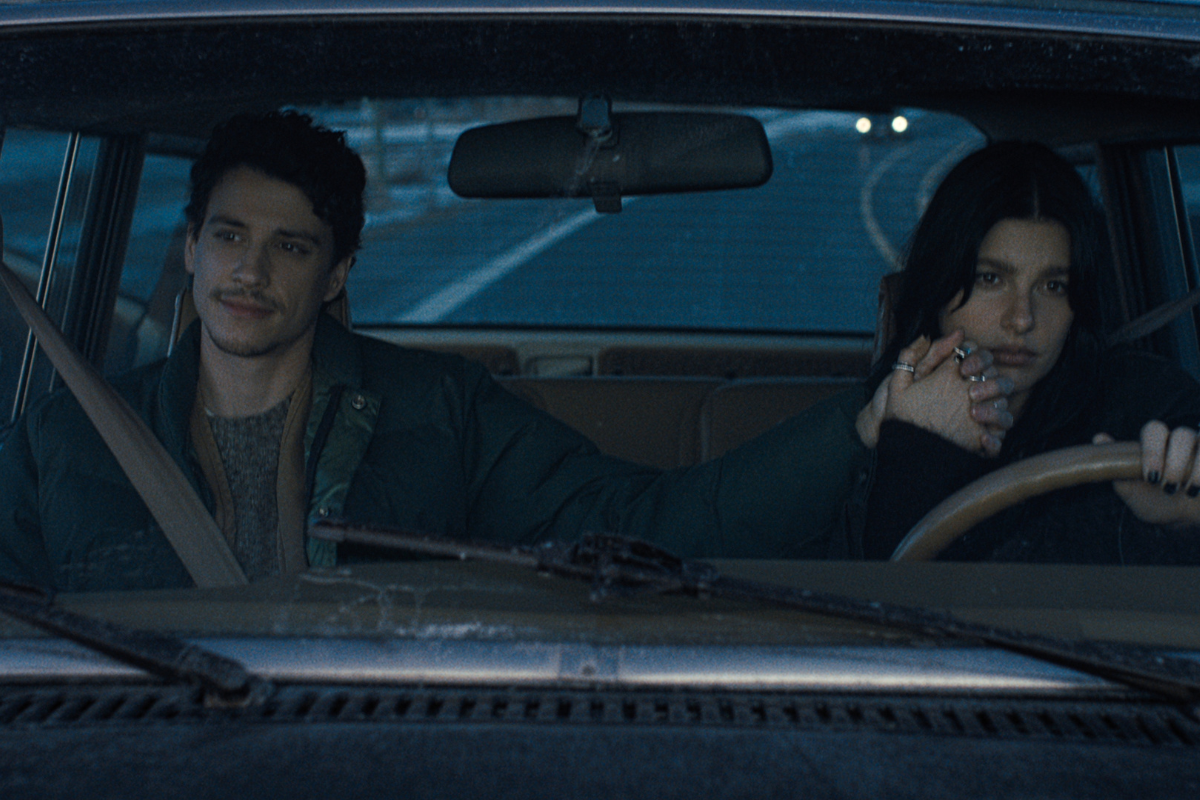
Holding hands when every passing mile brings them closer to total collapse. On Netflix, this critically acclaimed thriller masterfully combines intimate emotional tension with looming tragedy. The quiet confession whispered across the front seats right after this frame proves that some bonds are forged in the shadow of something far darker than either partner can yet admit.
In the opening stretch of Something Very Bad Is Going to Happen, Rachel Harkin and Nicky Cunningham sit side by side in a car cutting through snow-dusted roads toward what should be the happiest week of their lives. Their fingers intertwine. The gesture looks tender. It is. And it is also the first quiet signal that the ground beneath them is already shifting. The series, an eight-episode horror limited series that dropped on Netflix on March 26, 2026, turns the familiar rituals of a wedding week into a slow-motion freefall. Created by Haley Z. Boston and executive produced by the Duffer Brothers, it does not simply scare. It unsettles from the inside out, making the most ordinary moments—shared glances, casual touches, soft admissions—feel charged with dread.
Rachel (Camila Morrone) is a woman who has always trusted her instincts a little too much. Years earlier, those same instincts kept her off a flight and, in the process, introduced her to Nicky (Adam DiMarco). Their love story began on the road. It feels only fitting that the final days before their wedding unfold on another journey, this time toward his family’s secluded home in the snowy woods of upstate New York. The plan is intimate, almost fairy-tale: a small ceremony surrounded by the people who know Nicky best. What neither of them fully grasps is that Rachel carries something older and colder than pre-wedding nerves. A generational curse tied to the question of soulmates hangs over her bloodline. Marry the right person by sundown on the appointed day, or the consequences will be irreversible and bloody.
The series is careful with its revelations. It never rushes the horror. Instead it lets the atmosphere thicken around the couple like fog on the windshield. Dead animals appear on the roadside. Stray conversations carry the wrong tone. A wedding dress vanishes. Relatives smile too widely or too thinly. Through it all, the camera keeps returning to the simple, devastating image of two people holding hands while the miles disappear behind them. Every mile is a countdown. Every shared silence feels heavier than the last. The quiet confession that follows one of those hand-holding moments is not a grand speech. It is smaller, more dangerous: a half-admitted fear, a doubt spoken into the space between the seats. In that instant the audience understands what the characters are only beginning to sense—that intimacy itself can become the most efficient delivery system for terror.
Morrone carries the series with a performance that is both grounded and increasingly frayed. Her Rachel is not a hysterical bride. She is practical, watchful, and deeply in love, which only makes her growing certainty that something is wrong more painful to witness. DiMarco matches her with a different kind of vulnerability: the easy confidence of a man who has never had reason to question the story of his own life, slowly discovering that the story may have been incomplete. Supporting players add texture and threat. Jennifer Jason Leigh, as Nicky’s mother Victoria, brings a brittle elegance that can tip into something far colder. The extended Cunningham family—sisters, brothers, in-laws—circles the couple with a mixture of welcome and quiet scrutiny that feels true to the awkwardness of joining any closed clan, only amplified by the series’ supernatural undercurrents.
What elevates Something Very Bad Is Going to Happen beyond standard wedding-horror tropes is its insistence on treating the emotional stakes as seriously as the physical ones. The show is interested in the terror of lifelong commitment when you cannot be certain the person beside you is the one the universe (or the curse) has marked as yours. It asks, without ever stating it so bluntly, what happens when love and survival start to pull in opposite directions. The road-trip sequences that open the story are particularly effective in this regard. Confined to the car, Rachel and Nicky have nowhere to hide from each other or from the growing list of omens. The holding of hands becomes both comfort and trap. The whispered confession becomes both intimacy and warning. These scenes establish the series’ central tension: the closer the couple gets to the altar, the more the foundation of their relationship is tested by forces neither of them fully controls.
Critics have responded to that tension with largely favorable notices. Rotten Tomatoes currently sits in the mid-to-high 80s for the season, with reviewers praising the marriage of atmospheric dread and sharp character work. Many have singled out Morrone’s ability to keep Rachel likable even as her paranoia intensifies, and the Duffer Brothers’ involvement has drawn inevitable comparisons to the more grounded, character-driven stretches of Stranger Things. The consensus is that the series succeeds most when it trusts quiet unease over jump scares. When the horror does arrive in more explicit form—animal carcasses, sudden violence, the unmistakable presence of blood—it lands harder because the emotional groundwork has been so carefully laid.
The series is structured with almost ruthless clarity. Each episode covers roughly one day of the wedding week, turning the calendar itself into an antagonist. The title is not coy. Something very bad is going to happen, and the audience is invited to sit with that knowledge while the characters still cling to hope. That knowledge changes the way every tender moment plays. A laugh in the car feels fragile. A shared meal with new relatives carries an undercurrent of surveillance. The simple act of holding hands while the road unspools becomes an image of two people trying to stay connected even as the distance between what they want and what is coming grows wider with every mile.
Boston has described the project in interviews as an exploration of the particular horror of becoming a wife—of stepping into a role that is both chosen and imposed, romantic and ancestral. The series never loses sight of that idea. It is interested in the rituals of preparation, the objects that suddenly feel charged (a dress, a ring, a family photograph), and the way superstition can feel more rational than optimism when the signs keep multiplying. Yet it also remains, at its core, a story about two people who once chose each other on a different road and are now trying to determine whether that choice still holds.
By the time the final episodes arrive, the accumulated weight of those early car scenes pays off in ways both inevitable and surprising. The quiet confession that follows the frame of joined hands is only the first of several moments when private truths surface under pressure. Viewers who binge the series in a single sitting will notice how carefully the emotional temperature is managed: the intimacy never disappears, but it is steadily contaminated by the knowledge that the couple is driving toward a threshold from which not everyone will return unchanged.
Something Very Bad Is Going to Happen is currently streaming in full on Netflix. All eight episodes are available, allowing audiences to experience the road trip, the gathering storm of omens, and the eventual collapse in one continuous descent. It is not a series that relies on constant shocks. Its power lies in the slow recognition that the most dangerous things can hide inside the most familiar gestures—two hands linked across a console, a soft voice speaking truths that can no longer be taken back, the growing certainty that the next mile will cost more than the last.
In an era of loud horror, this one trusts the audience to feel the temperature drop in the silence between words. It understands that sometimes the most heart-pounding dread arrives not with a scream but with a quiet confession, spoken while the car keeps moving forward and the destination grows closer, mile by inevitable mile.