STREAMING NOW ON NETFLIX: THE DEVASTATING HIGH-STAKES PSYCHOLOGICAL DRAMA
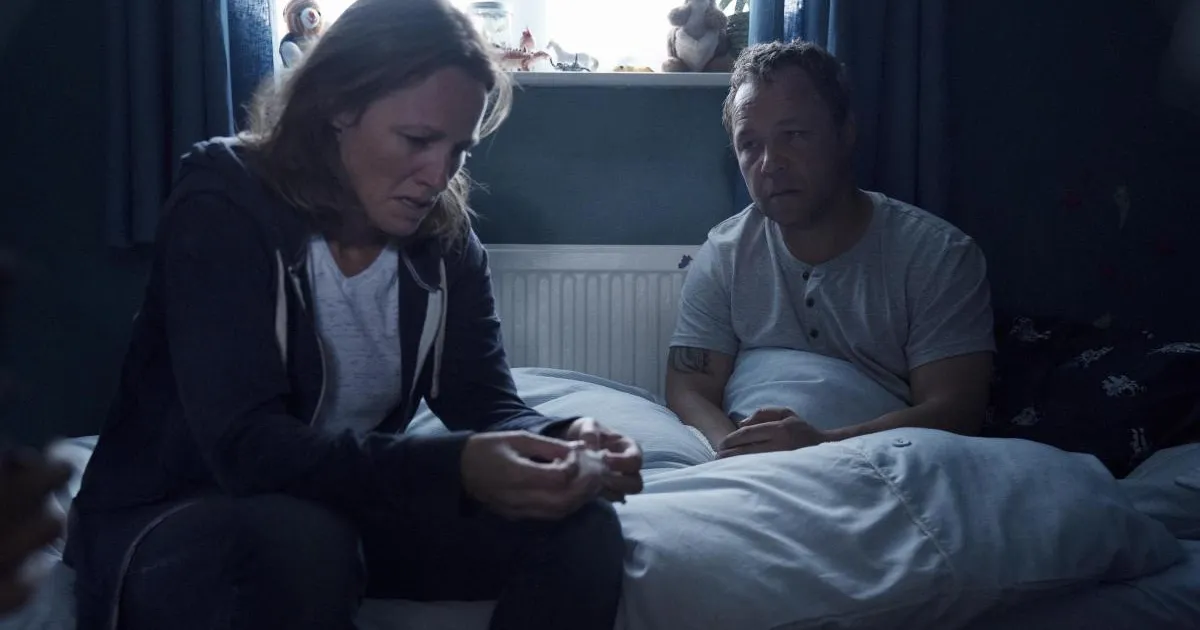
Reunited after 30 years, only to unlock the horrific secrets buried in their childhood past. On Netflix, Stephen Graham and Helen Behan deliver unforgettable performances in a story of trauma and redemption. Sitting on the edge of the bed in this quiet room, the suffocating truth Joseph confesses is the kind that rewrites everything you thought you knew about survival.
Virtues is not a show that arrives gently. It does not ease you in with soft lighting or polite conversation. It drops you into the raw nerve of a man’s life just as the last solid thing he has left is being pulled away. Joseph, played with devastating precision by Stephen Graham, is a recovering alcoholic whose carefully rebuilt existence collapses the moment his young son leaves for Australia with his ex-partner. What follows is not simply grief. It is the sudden, violent return of something far older and more corrosive.
With nowhere left to stand in England, Joseph spends the last of his money on a ferry to Ireland. He is searching for the sister he has not seen in three decades. The woman who answers the door is Helen Behan’s Anna, and the moment of recognition between them is one of the most quietly shattering reunions television has offered in years. There is no swelling music, no tidy embrace. There is only the stunned, almost physical impact of two people who have carried the same missing piece for half a lifetime finally standing in the same room.
What begins as a fragile family reunion quickly becomes something far more dangerous. Joseph’s return forces both siblings to confront the years they spent in care as children, years that left scars neither of them has ever fully named. The past does not stay buried. It rises in fragments, in sudden silences, in the way Joseph’s body tenses at certain voices and certain rooms. The series understands that trauma is not always a single dramatic event. Sometimes it is the slow, suffocating knowledge that something happened and that the people who should have protected you either could not or would not.
Stephen Graham has long been one of the most fearless actors working in British drama, but his performance here feels like a career peak. He plays Joseph as a man who has spent decades trying to outrun himself through drink, through distance, through sheer force of will. When the running stops, what remains is both broken and fiercely, stubbornly alive. You see the child he once was in the adult’s face. You see the rage, the shame, the desperate hope that someone might finally understand. Graham never asks for sympathy. He simply refuses to look away from the character’s pain, and in doing so he makes it impossible for the audience to look away either.
Opposite him, Helen Behan gives a performance of remarkable restraint and depth. Anna has built a life. She has a husband, a home, a routine. The sudden reappearance of her brother threatens all of it, not because she does not love him, but because loving him means acknowledging the shared history she has spent years keeping at a careful distance. Behan makes every flicker of recognition, every protective instinct, every moment of reluctant tenderness feel earned. Their scenes together crackle with the complicated intimacy of people who know each other too well and not at all.
The supporting cast is equally strong. Niamh Algar’s Dinah arrives like a force of nature, carrying her own buried wounds and an instinctive recognition of Joseph’s. Mark O’Halloran’s Craigy is a quieter, more unsettling presence, a man whose connection to Joseph’s past becomes impossible to ignore. The writing, by Shane Meadows and Jack Thorne, trusts silence as much as speech. Long stretches pass with little dialogue, yet the emotional pressure never drops. When words finally come, they land with the weight of decades.
Virtues is unflinching about the damage inflicted in childhood institutions and the long shadow that damage casts. It does not sensationalise the horror for cheap effect. Instead it shows how survivors carry it in their bodies, in their relationships, in the way they flinch from kindness they do not believe they deserve. The series is particularly powerful in its depiction of male trauma and the limited scripts society still offers men for processing pain. Joseph’s journey is not toward some neat resolution. It is toward the harder, more human work of facing what happened and deciding what to do with the knowledge.
There are moments of unexpected warmth and even humour that keep the drama from becoming unbearable. Family meals, workplace banter, the small acts of care that people offer one another even when they are struggling themselves. These moments matter. They remind the viewer that the characters are not defined solely by what was done to them. They are still capable of connection, of imperfect love, of choosing something other than bitterness.
The final episodes refuse easy answers. Forgiveness is not presented as a moral obligation or a simple release. It is shown as a private, often costly decision that some characters can make and others cannot. The series understands that some truths, once spoken aloud, change the shape of every relationship that follows. Sitting on the edge of that bed, listening to Joseph finally put words to the thing that has haunted him for thirty years, is one of the most intense viewing experiences recent television has delivered.
Available now on Netflix, Virtues demands to be watched in a quiet room with the phone turned off. It is not background entertainment. It is the kind of drama that stays with you after the credits roll, the kind that makes you look differently at the people around you and at the private histories they may still be carrying. Stephen Graham and Helen Behan do not simply act their roles. They inhabit them so completely that the boundary between performance and lived experience seems to dissolve.
In an era of endless content, Virtues stands out as something rarer: a story that trusts its audience with difficult truths and rewards that trust with performances of extraordinary honesty. The secrets it unearths are horrific. The redemption it offers is hard-won and incomplete. Yet in the space between those two realities, the series finds something that feels almost like grace.
Stream it while the impact is still sharp. Some stories do not soften with time. This is one of them.