CLINICAL REVELATION AT TRIAL: DOCTOR’S TESTIMONY ON 5-YEAR-OLD CORA STUNS COURT
Initial defense arguments were completely challenged today after hospital treatment records were unsealed in court. The doctor’s precise timeline confirms that the physical distress suffered by little Cora occurred within a tight timeframe inside the home. Those analyzing the medical chart stopped in disbelief upon reading that the five-year-old arrived at the emergency department already in full cardiac arrest, with no detectable heartbeat and clear clinical signs that the critical events had unfolded rapidly while she was still under the roof of the family house in Duxbury, Massachusetts.
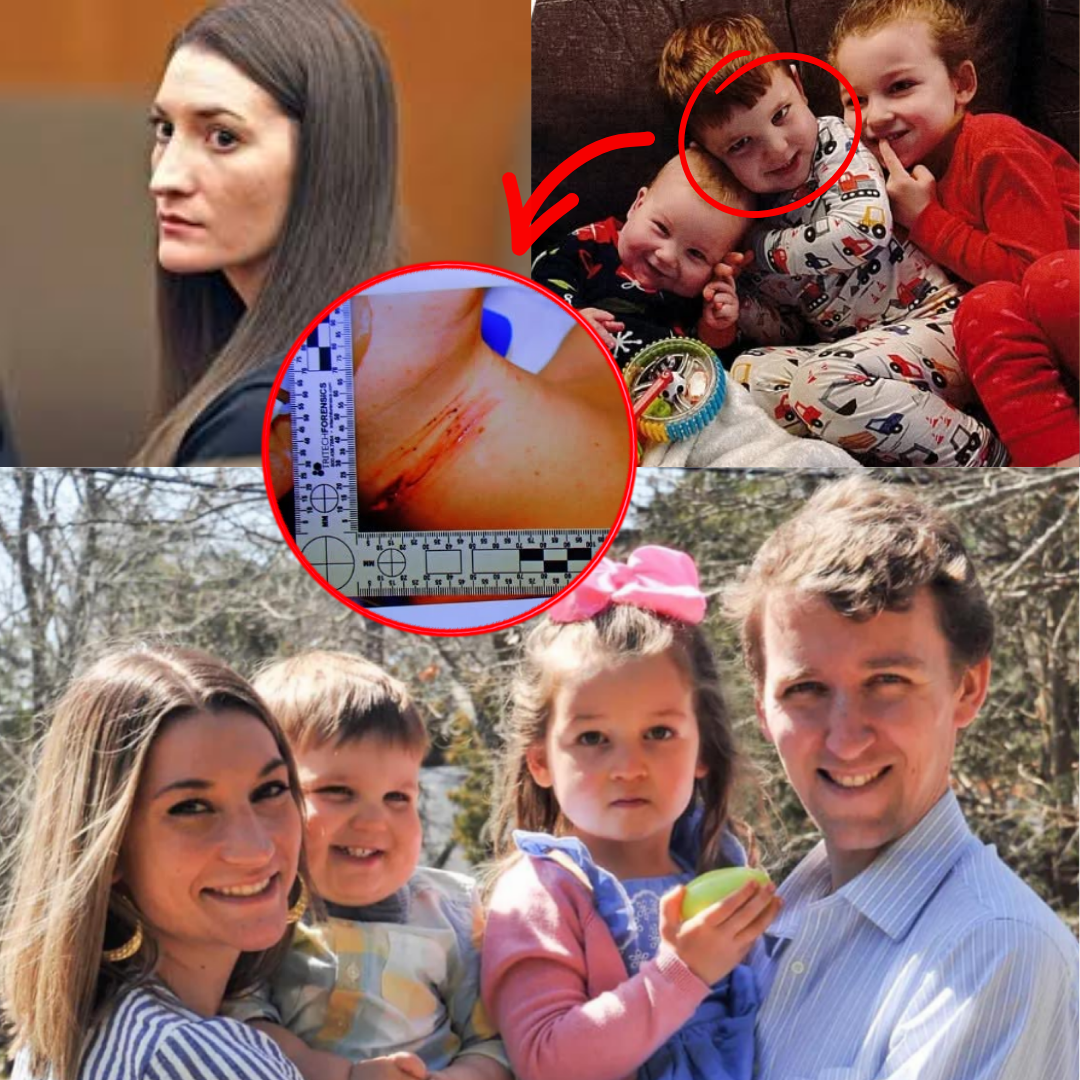
The courtroom in Plymouth Superior Court fell into a heavy silence as the testimony unfolded. Lindsay Clancy, the 36-year-old mother charged with three counts of murder in the January 24, 2023, deaths of her children—Cora, 5; Dawson, 3; and Callan, then 8 months—sat at the defense table in a wheelchair, the lasting result of spinal injuries sustained when she jumped from a second-story window after the killings. As details of her eldest daughter’s final medical records were presented, Clancy buried her face in her hands. Audible sobs filled the room. At one point she was heard saying, “I can’t do this.” The judge temporarily cleared the jury so the proceedings could continue without further interruption.
Prosecutors have long maintained that the deaths were intentional acts of extreme cruelty. The defense has argued that Clancy was in the grip of postpartum psychosis and therefore not criminally responsible. Until the medical evidence this week, much of the focus had remained on Clancy’s own mental-health history, her medications, journal entries, and earlier hospitalizations. The unsealing and detailed presentation of the children’s hospital and autopsy records shifted that balance sharply.
Dr. Michael Snyder, an emergency medicine physician who treated Cora at Beth Israel Deaconess Hospital in Plymouth, described the scene that greeted his team on the evening of January 24, 2023. First responders had already been performing advanced life-support measures. When Cora arrived, she was not breathing on her own. There was no heartbeat. Her skin showed a blue tint consistent with severe oxygen deprivation. Bruising was visible around her neck. Petechiae—tiny pinpoint hemorrhages—appeared around the eyes and face. A small amount of blood was noted coming from her nose. Staff continued resuscitation efforts, including medications, intubation, and cardiac ultrasound, for roughly 30 minutes. At approximately 7:28 p.m., Cora was pronounced deceased.
The medical examiner’s testimony went further. Dr. Barbara Olson of the Massachusetts Office of the Chief Medical Examiner, who performed the autopsy on Cora the following day, walked the jury through the external and internal findings. She described a ligature furrow—a linear, horizontally oriented mark of paleness with distinct edges—around the child’s neck, accompanied by associated abrasions. Petechial hemorrhages were present around the eyes, face, and inside the lips. Bruising on the arms and legs was largely attributed to medical intervention by first responders, but the neck injuries and overall pattern were consistent with asphyxia caused by ligature strangulation. Olson explained that loss of consciousness can occur within 10 to 30 seconds depending on the force applied, and that irreversible brain injury follows if oxygen is not restored. She stated her opinion, to a reasonable degree of medical certainty, that the cause of death was asphyxia by strangulation.
The hospital charts and EMS records, now before the jury, established a compressed timeline. Cora had been seen by her pediatrician earlier that same day for a routine concern and had appeared well. Hours later she was found unresponsive inside the home. The clinical picture left little room for any prolonged interval of distress outside the residence. The records showed that by the time emergency crews reached her, the cascade of oxygen deprivation had already progressed to cardiac arrest. Those reviewing the charts in court reacted with visible shock at how tightly the medical data locked the critical events to the interior of the family home.
Defense attorneys have not disputed that Clancy caused the deaths. Their case rests on her mental state. They have presented evidence of her struggles with anxiety, depression, medication side effects, and a brief inpatient stay at McLean Hospital in early January 2023. They argue that postpartum psychosis can produce a break from reality so profound that a parent is incapable of understanding the wrongfulness of their actions. Prosecutors counter that the methodical nature of the acts, the use of exercise resistance bands, and the subsequent attempt to end her own life do not support a claim of legal insanity. The clinical timeline presented this week is being used by the Commonwealth to underscore that the events were deliberate and occurred in a controlled domestic setting rather than in the chaos of an acute psychotic break without awareness.
The emotional weight of the testimony was impossible to ignore. One juror was seen wiping tears. Others stared fixedly at the screens displaying medical images and records. Clancy continued to cry quietly through much of the examination. Court officers and attorneys monitored her closely. The judge reminded the jury that their decision must rest on the evidence and the law, not on sympathy or passion.
Outside the courtroom the case has drawn intense national attention. Clancy’s husband, Patrick, has previously testified about the ordinary appearance of the morning and afternoon of January 24—photographs of the children playing in the snow, routine texts, a request that he stop for medication for Cora on his way home with dinner. He left the house around 5:15 p.m. By the time first responders arrived later that evening, the three children were in cardiac arrest and Clancy was found severely injured in the backyard after her fall.
The medical revelations this week have sharpened the central conflict for the jury. On one side stands the defense theory of a mother overwhelmed by a severe psychiatric condition that stripped her of criminal responsibility. On the other stands the clinical record: a precise sequence of oxygen deprivation, cardiac arrest, and death that the doctors say began and concluded inside the home within a narrow window of time. The hospital charts, once sealed in the ordinary course of privacy, now sit in open court as some of the most powerful evidence yet presented.
As the trial continues, both sides are expected to call additional expert witnesses on psychiatry, pathology, and the effects of postpartum mental illness. For now, the image that lingers is the one created by the doctors’ testimony: a five-year-old girl whose final medical records document a sudden and irreversible crisis that the clinical timeline places squarely within the walls of her own home. Those who studied the charts in the courtroom this week were left staring at the pages in stunned silence, confronted by a medical narrative that leaves little ambiguity about when and where the physical distress of little Cora began and ended.