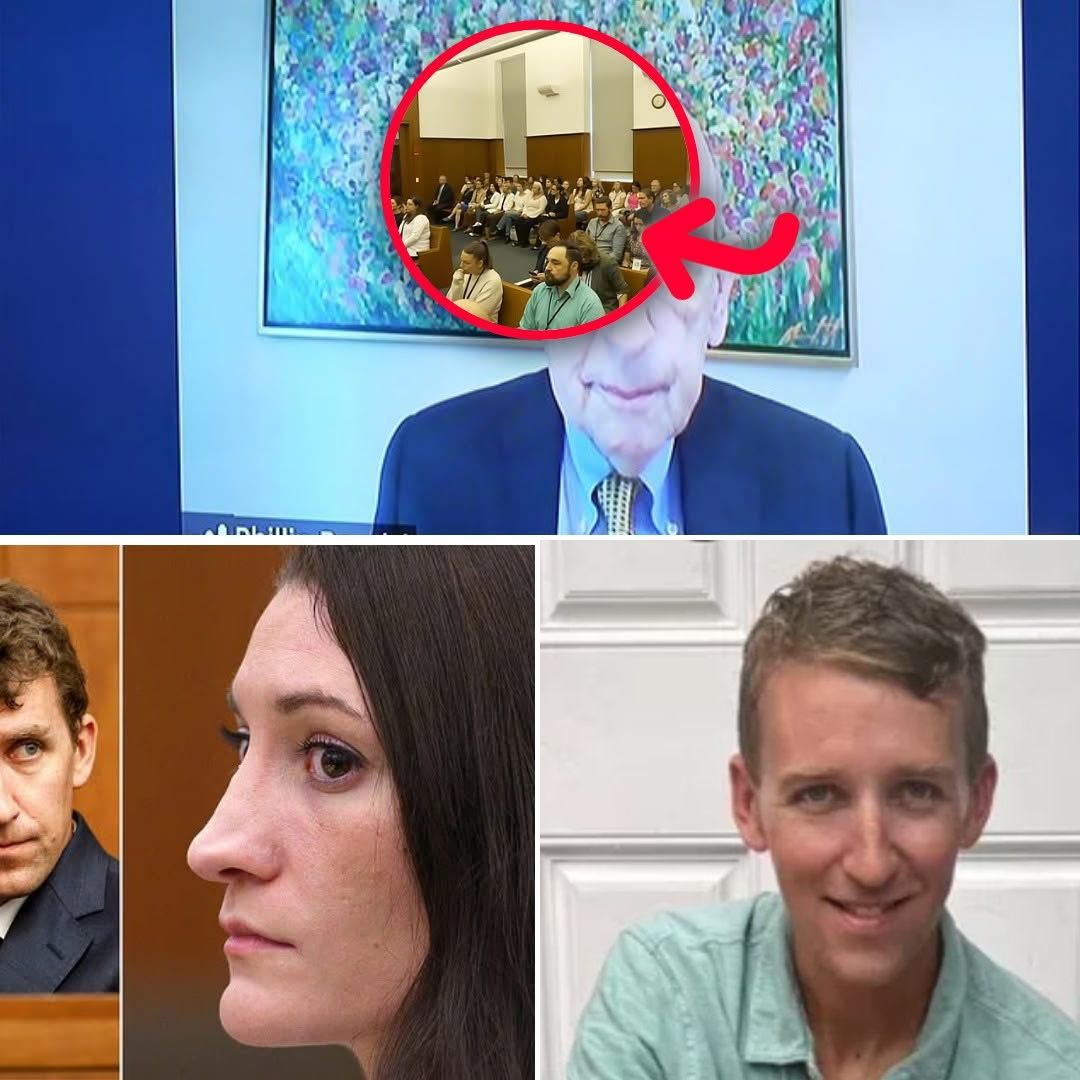
FORENSIC EVALUATIONS AND EXPERT TESTIMONY: SEPARATING PSYCHIATRIC FACTS FROM CLICKBAIT IN THE LINDSAY CLANCY TRIAL
The Reality Behind the “Suppressed Psychological Trigger” Claims
A series of viral social media posts has recently surfaced claiming that a “top forensic psychiatrist” dropped chilling new insights in court regarding Lindsay Clancy, the former Duxbury, Massachusetts nurse accused in the January 2023 deaths of her three young children—Cora, Dawson, and Callan. Promoted with sensationalized headlines and urgent emojis, these posts allege that unsealed psychiatric files exposed a “suppressed psychological trigger” that drove Clancy to her fatal breaking point, promising exclusive details behind clickbait links.
However, an examination of official court transcripts, evidentiary filings, and expert witness testimonies from Plymouth Superior Court confirms that no secret or suppressed psychological trigger was uncovered. The courtroom proceedings featured a rigorous, complex debate between highly credentialed forensic psychiatrists evaluating Clancy’s mental state at the time of the incident.
Rather than revealing dramatic, hidden secrets, the unsealed medical records and expert evaluations centered on established psychiatric conditions, including postpartum psychosis, major depressive disorder, severe anxiety, and the physiological impact of rapid medication adjustments.
Forensic Psychiatric Testimony: Competing Clinical Interpretations
During pre-trial hearings and trial proceedings, both the defense and prosecution presented comprehensive evaluations conducted by leading forensic psychiatrists. The central legal question was not whether a secret trigger existed, but whether Clancy met the legal standard for criminal insanity under Massachusetts law at the exact moment of the tragedy.
The Defense Psychiatric Evaluation: Postpartum Psychosis and Delusions
The defense introduced testimony from nationally recognized forensic psychiatrists, including Dr. Phillip Resnick and Dr. Paul Zeizel, who conducted extensive clinical interviews with Clancy and reviewed thousands of pages of her medical history.
Key findings presented by the defense experts included:
-
Postpartum Psychosis and Bipolar Spectrum: Defense experts concluded that Clancy was suffering from severe postpartum psychosis complicated by undiagnosed bipolar disorder. Dr. Resnick testified that Clancy experienced acute auditory command hallucinations—voices compelling her to harm her children and herself—and suffered from a complete breakage from reality.
-
Lack of Criminal Capacity: Dr. Resnick testified that due to her severe mental disease, Clancy lacked the substantial capacity to appreciate the wrongfulness of her conduct or conform her behavior to the requirements of the law on the day of the incident.
-
Medication-Induced Instability: Defense evaluations highlighted that in the four months leading up to January 2023, clinicians had prescribed Clancy over a dozen different psychiatric medications—including neuroleptics, benzodiazepines, mood stabilizers, and selective serotonin reuptake inhibitors (SSRIs). Experts argued that this rapid cycling of pharmaceuticals severely destabilized her neurochemistry, compounding her psychotic state.
The Prosecution Psychiatric Evaluation: Capacity and Premeditation
Conversely, state prosecutors presented evaluations from court-appointed and state-retained forensic experts, including Dr. Kirk Heilbrun and Dr. Avram Mack, who offered a contrasting clinical interpretation.
Key findings presented by prosecution experts included:
-
Major Depression Without Involuntary Psychosis: Prosecution experts diagnosed Clancy with major depressive disorder and severe generalized anxiety, but concluded there was insufficient evidence to prove she was acting under an involuntary, irresistible psychotic delusion during the commission of the act.
-
Appreciation of Wrongfulness: Dr. Heilbrun testified that Clancy’s goal-directed behaviors on the day of the incident—such as using a navigation app to track the delivery time for dinner, sending her husband on errands to a restaurant and pharmacy, and taking her children out to play in the snow earlier that afternoon—indicated that her cognitive functioning remained intact.
-
Absence of Active Hallucinations During Intake: Prosecution witnesses noted that during initial medical evaluations immediately following her hospitalization, Clancy did not explicitly describe active auditory or visual hallucinations to treating clinicians, leading state experts to question the timeline of her reported psychosis.
What the Unsealed Psychiatric Files Actually Showed
The psychiatric records unsealed by the court provided a detailed timeline of Clancy’s interactions with healthcare providers, forming a paper trail of a mother seeking help for severe mental distress:
-
McLean Hospital Voluntary Admission: In early January 2023, just weeks before the tragedy, Clancy voluntarily admitted herself to McLean Hospital, a psychiatric facility in Belmont, Massachusetts. Unsealed discharge summaries showed she sought treatment for severe insomnia, anxiety, and intrusive thoughts. Crucially, clinicians documented that she repeatedly denied any intent, plan, or urges to harm her children during her stay.
-
Outpatient Clinical Notes: Therapy logs recorded her persistent complaints of “brain fog,” severe physical exhaustion, and intense remorse over her inability to feel connected to her youngest child, Callan. Notes documented her compliance with medical advice and her ongoing frustration that changing medication dosages failed to alleviate her suffering.
The unsealed files did not contain hidden plot twists or suppressed secrets; instead, they documented a tragic, documented record of a patient interacting with multiple healthcare systems while experiencing declining mental health.
The Legal Framework: The Insanity Standard in Massachusetts
The psychiatric evidence evaluated in court was applied against the legal standard for criminal responsibility in Massachusetts, established in the landmark case Commonwealth v. McHoul.
Under the McHoul standard, a defendant is not criminally responsible if, as a result of mental disease or defect at the time of the offense:
-
They lacked substantial capacity to appreciate the criminality or wrongfulness of their conduct; OR
-
They lacked substantial capacity to conform their conduct to the requirements of the law.
The trial focused heavily on whether postpartum psychosis negated Clancy’s capacity under either arm of this legal test. While defense experts maintained that command hallucinations destroyed her volitional capacity, prosecution experts asserted that her rational, methodical actions demonstrated an awareness of wrongfulness.
Deconstructing the “Suppressed Trigger” Clickbait Phenomenon
The proliferation of online headlines claiming that forensic psychiatrists discovered “chilling suppressed triggers” is a manifestation of digital clickbait architecture.
Mechanisms of True Crime Sensationalism
Digital content aggregators use high-arousal framing—incorporating words like “UNMASKS,” “CHILLING TRUTH,” “SUPPRESSED FILE,” and “BREAKING POINT”—to exploit curiosity and emotional engagement. These headlines deliberately omit key context, inserting trailing arrows and truncated sentences to force users onto external, ad-heavy websites.
The Impact on Public Understanding
Sensationalizing severe psychiatric trials creates significant public harm:
-
Misrepresentation of Legal Evidence: It replaces documented clinical evaluations with fictionalized conspiracy theories, confusing public understanding of complex judicial proceedings.
-
Stigmatization of Perinatal Healthcare: Reframing medical conditions like postpartum psychosis into sensationalized crime-thriller tropes distracts from essential public education regarding maternal mental health screening, early warning signs, and psychiatric support systems.
-
Pollution of the Jury Pool: Unverified claims circulating widely online threaten the integrity of fair trial guarantees by introducing false narratives to prospective jurors.
Responsible Reporting and Judicial Integrity
As proceedings surrounding the Lindsay Clancy case move forward, objective analysis must remain grounded in verified court records, admissible expert testimony, and established legal standards. The tragic events of January 2023 represent a profound human tragedy that demands factual precision, empathetic understanding of maternal mental health, and respect for the judicial process.