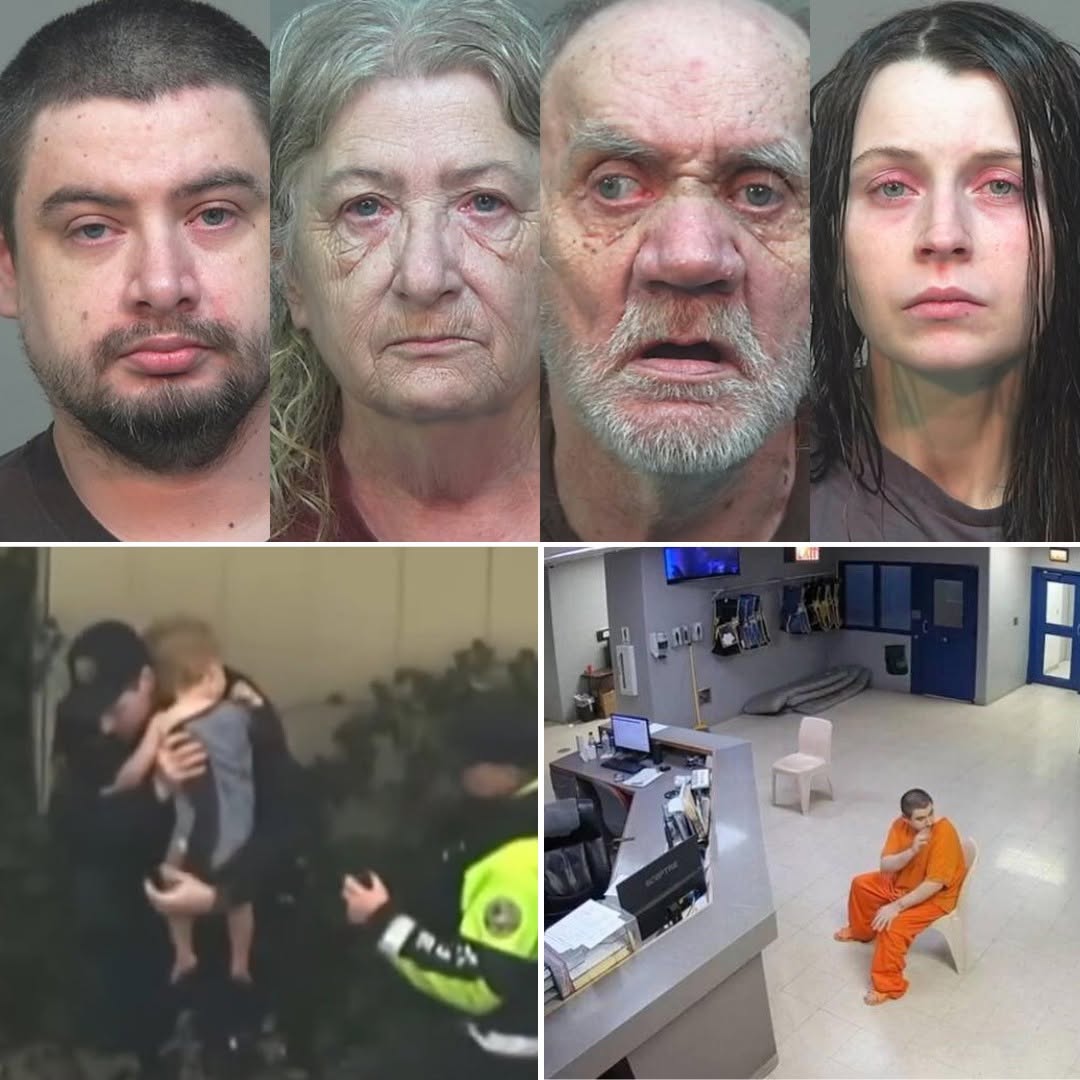
BEYOND THE SENSATIONAL TROPES: CHILD TESTIMONY, FORENSIC REALITY, AND THE MYTHOLOGY OF VIRAL TRUE CRIME
Viral headlines promising that “the youngest child spoke only one sentence” that “flipped the entire investigation upside down” rely on a familiar storytelling framework: borrowing cinematic horror tropes to frame real or fabricated criminal investigations. By promising tales of “strange symbols” on walls and “unexamined hidden rooms,” digital content aggregators transform complex forensic work into serialized gothic fiction designed to drive click-through rates.
In actual law enforcement proceedings and courtroom trials, criminal investigations do not unfold through dramatic, movie-style revelations. When cases involve juvenile witnesses, complex crime scenes, or structural searches, forensic science and developmental psychology operate under strict, standardized protocols designed to separate verifiable physical evidence from narrative embellishment.
Forensic Child Psychology: How Children Participate in Investigations
The trope of a young child dropping a single, chilling sentence that instantly solves a complex case misrepresents how child witness testimony is gathered, evaluated, and utilized in the justice system. Forensic psychologists and law enforcement officers follow rigorous, scientifically validated methodologies when interviewing juvenile witnesses:
-
The NICHD Interview Protocol: Developed by the National Institute of Child Health and Human Development, this standard forensic interview model emphasizes open-ended questions (e.g., “Tell me everything that happened from the beginning”) rather than leading or dramatic prompts. This structure prevents interviewers from inadvertently introducing concepts, suggesting answers, or shaping the child’s narrative.
-
Developmental and Cognitive Realities: Young children perceive, process, and articulate traumatic events differently than adults. Their statements are frequently non-linear, fragmented, and influenced by immediate emotional needs or developmental stages. Forensic interviewers undergo specialized training to interpret these disclosures without imposing adult logic or dramatic interpretations onto a child’s words.
-
Susceptibility to Suggestion: Decades of psychological research demonstrate that young children are vulnerable to leading questions, memory contamination, and adult expectations. Consequently, an isolated statement from a young child is never used as the sole foundation for shifting an entire investigative strategy without independent, corroborating physical or digital evidence.
When a child discloses critical information, investigators treat it as a starting point for scientific verification rather than an absolute, self-contained revelation.
Crime Scene Processing vs. “Strange Symbols and Hidden Rooms”
Sensationalized social media posts frequently claim that investigators returned to a scene after hearing a child’s statement to discover “strange symbols” or “secret rooms.” In reality, the physical processing of a crime scene is a methodical, highly regulated procedure governed by constitutional search warrant requirements and strict forensic standards.
Forensic Documentation of Scene Anomalies
When forensic teams encounter markings, graffiti, or unusual structural features inside a residence, they do not treat them as mysterious or supernatural signs. Instead, specialists apply objective forensic techniques:
-
Photogrammetry and Scene Mapping: Crime scene technicians utilize 3D laser scanners and high-resolution spatial mapping to document every inch of a property during initial search warrant execution.
-
Chemical and Material Analysis: Markings on walls or surfaces are analyzed using alternate light sources (ALS), chemical reagents like luminol, and spectrographic analysis to determine whether the substance is paint, marker, biological fluid, or household matter.
-
Contextual Evaluation: Forensic analysts cross-reference visual markings with known database patterns, psychological evaluations, or handwriting samples to determine if they represent genuine evidence of crime, childhood scribbles, or pre-existing property damage.
Legal and Physical Requirements for Structural Searches
Searching an “unexamined room” or hidden space requires strict adherence to search warrant laws. Law enforcement officers cannot simply re-enter a property based on a vague rumor; they must present sworn affidavits detailing probable cause to a magistrate judge. To locate concealed spaces, forensic teams rely on physical indicators—such as thermal imaging, acoustic wall density testing, radar scanner analysis, and structural blueprint reviews—rather than guesswork or dramatic clues.
Why the “Creepy Child” Archetype Dominates Viral Media
The enduring popularity of stories featuring traumatized children revealing dark household secrets relies on deep-seated psychological triggers exploited by social media algorithms:
-
Subversion of Innocence: In literature, cinema, and true-crime folklore, subverting the natural innocence of a child creates immediate emotional shock and cognitive dissonance. Headlines that pair early childhood with ominous or terrifying statements tap into archetypes popularized by psychological thrillers like The Sixth Sense or The Shining.
-
The Hidden Room Trope: The concept of a secret room or hidden space within a domestic home plays on fundamental anxieties about the illusion of domestic safety. It suggests that sinister activity can exist undetected right behind everyday walls, turning a familiar living environment into a source of suspense.
-
Algorithmic Engagement Economics: Content creators write cliffhanger endings (“an unexamined room could hold the answer no one is ready for”) specifically to bypass critical thinking and force users to click through to ad-monetized websites. These headlines are engineered for viral distribution rather than factual accuracy.
The Danger of Sensationalizing Real-World Investigations
While sensationalized stories generate short-term internet engagement, they distort public understanding of child advocacy, law enforcement procedures, and the judicial system. Reframing potential child trauma into sensational fiction creates significant real-world harm:
-
Trivializing Child Advocacy: Treating child disclosures as sensational plot twists obscures the real-world work of Child Advocacy Centers (CACs), forensic interviewers, and pediatric mental health professionals dedicated to protecting vulnerable children.
-
Undermining Public Trust in Forensics: By portraying police work as dependent on sudden cinematic breakthroughs rather than methodical evidence gathering, clickbait content creates unrealistic expectations about how criminal investigations operate.
-
Eroding Journalistic Integrity: Converting tragic or fabricated events into sensationalized entertainment degrades public discourse, making it harder for audiences to distinguish verified investigative reporting from digital fiction.
Real-world criminal justice relies on patient forensic analysis, rigorous legal standards, and empirical evidence. In the courtroom, justice is served not by theatrical revelations or mysterious symbols, but by the painstaking, methodical presentation of facts.