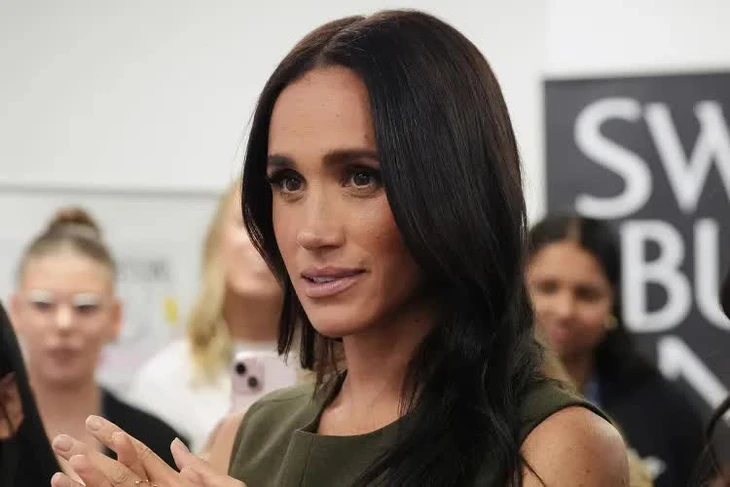
FABRICATED AUDIO AND MONTECITO MYTHS: DECONSTRUCTING THE VIRAL HOAXES SURROUNDING MEGHAN MARKLE
Deconstructing the Sensational Clickbait Teaser
A sensational social media post recently made rounds across digital entertainment platforms, breathlessly claiming that Meghan Markle was “caught in a heated argument” with an unnamed “powerful figure” at her Montecito home while Prince Harry was away. Complete with eye-popping emojis and dramatic framing, the post alleged the existence of a “leaked backstage audio recording” in which the Duchess of Sussex broke down in tears, supposedly confessing the “bitter truth” about why she chose to step back from the British Royal Family. The caption abruptly ended with an arrow emoji prompting users to click an external link to hear the alleged recording.
A thorough review of verified news archives, official statements from the Duke and Duchess of Sussex, and accredited royal reporting confirms that no such audio recording exists. The story is a complete digital fabrication. There are no law enforcement logs, credible news reports, or insider communications backing the claim of a clandestine confrontation at the couple’s California estate.
This viral post represents a textbook example of digital engagement farming. By combining sensationalized tropes—such as secret arguments, tearful confessions, leaked audio, and marital strife—content aggregators construct artificial narratives designed to exploit audience curiosity, manipulate social media algorithms, and monetize web traffic through ad revenue.
The Actual Record: Why the Sussexes Stepped Back in 2020
The claim that a “leaked audio recording” holds a secret revelation regarding Meghan Markle’s decision to leave the UK misrepresents a matter of public record. The true reasons behind the Duke and Duchess of Sussex’s departure from their roles as senior working royals in January 2020—a transition commonly dubbed “Megxit”—have been extensively documented by the couple themselves across multiple global platforms.
Far from being hidden in clandestine recordings, the factors driving their decision were publicly articulated through official channels:
-
Relentless Tabloid Scrutiny: Both Harry and Meghan have repeatedly cited the hostile, intrusive, and often racially charged coverage by British tabloid media as a primary catalyst for their departure.
-
Institutional Unresponsiveness: In their landmark 2021 interview with Oprah Winfrey, as well as their 2022 Netflix docuseries Harry & Meghan, the couple outlined feelings of institutional isolation within the Royal Household. They detailed a lack of mental health support during periods of extreme psychological distress and a failure by the palace press apparatus to counter false stories.
-
Security Concerns: Following their decision to step back, the removal of their official tax-funded police protection created significant personal safety concerns, prompting them to relocate to North America to establish an independent security infrastructure.
-
Financial and Personal Independence: The official statement released by the couple on January 8, 2020, explicitly stated their desire to “carve out a progressive new role within this institution” while working to become financially independent of the Sovereign Grant.
The narrative surrounding their departure is fully documented in primary sources, including Prince Harry’s 2023 memoir Spare, making claims of “newly leaked secret motives” entirely redundant.
The Rise of Synthetic Media and “Leaked Audio” Scams
The specific framing of this clickbait post—relying on “leaked backstage audio”—highlights an increasingly prevalent threat in the digital media ecosystem: the proliferation of AI-generated synthetic audio and deepfakes.
As voice-cloning technology becomes more accessible, bad-faith actors and automated content farms frequently generate synthetic audio clips that mimic the voices of public figures. These clips are then paired with dramatic stock footage or static images and published on platforms like YouTube, TikTok, and Facebook under clickbait titles.
Audio is a particularly effective tool for misinformation because of its perceived intimacy. Viewers are conditioned to treat an audio recording as candid and authentic, making them less likely to question its origin. In the case of public figures like Meghan Markle, synthetic audio is engineered to confirm existing biases—whether sympathetic or hostile—thereby driving high volume comments, shares, and algorithmic prioritization.
The Economics of the “Montecito Narrative”
The continuous generation of manufactured drama around the Sussexes’ life in Montecito, California, is driven by a lucrative digital marketplace. Since relocating to the United States, Prince Harry and Meghan Markle have remained central figures in a global media ecosystem where outrage and gossip translate directly into financial returns.
Digital media outlets and independent content creators utilize several techniques to exploit this ecosystem:
1. Manufactured Domestic Friction
Narratives claiming that one spouse was “caught in an argument while the other was away” exploit public interest in celebrity relationships. By creating a false sense of domestic instability, creators ensure high click-through rates from curious viewers.
2. Anonymous “Powerful Figures”
Vague references to “powerful figures” or “royal insiders” allow clickbait creators to build dramatic tension without naming real individuals, insulating themselves from immediate defamation claims while maintaining an aura of insider mystery.
3. Open-Ended Cliffhangers
By ending posts on a cliffhanger (“the real reason she decided to leave was… 👇”), creators construct an artificial information gap. Users who click the link are routinely redirected to ad-heavy blogs, affiliate marketing landing pages, or malware-suspect sites that deliver no actual audio or evidence.
Navigating Digital Royal Gossip with Media Literacy
The viral post alleging a dramatic tearful audio leak at Montecito underscores the ongoing necessity of critical media consumption. In an era dominated by synthetic media, automated click farms, and algorithmic rage-bait, readers must evaluate sensational claims with skepticism.
To distinguish between genuine news and engineered clickbait, audiences should look for verification from established news organizations, official statements released through Archewell or Buckingham Palace, and primary courtroom or broadcast transcripts. Rejecting fabricated headlines helps curb the spread of digital disinformation and keeps public discourse grounded in verified facts.