PART 3 – The week my brother Logan was born and my duffel bag already waited by the front door like an uninvited guest
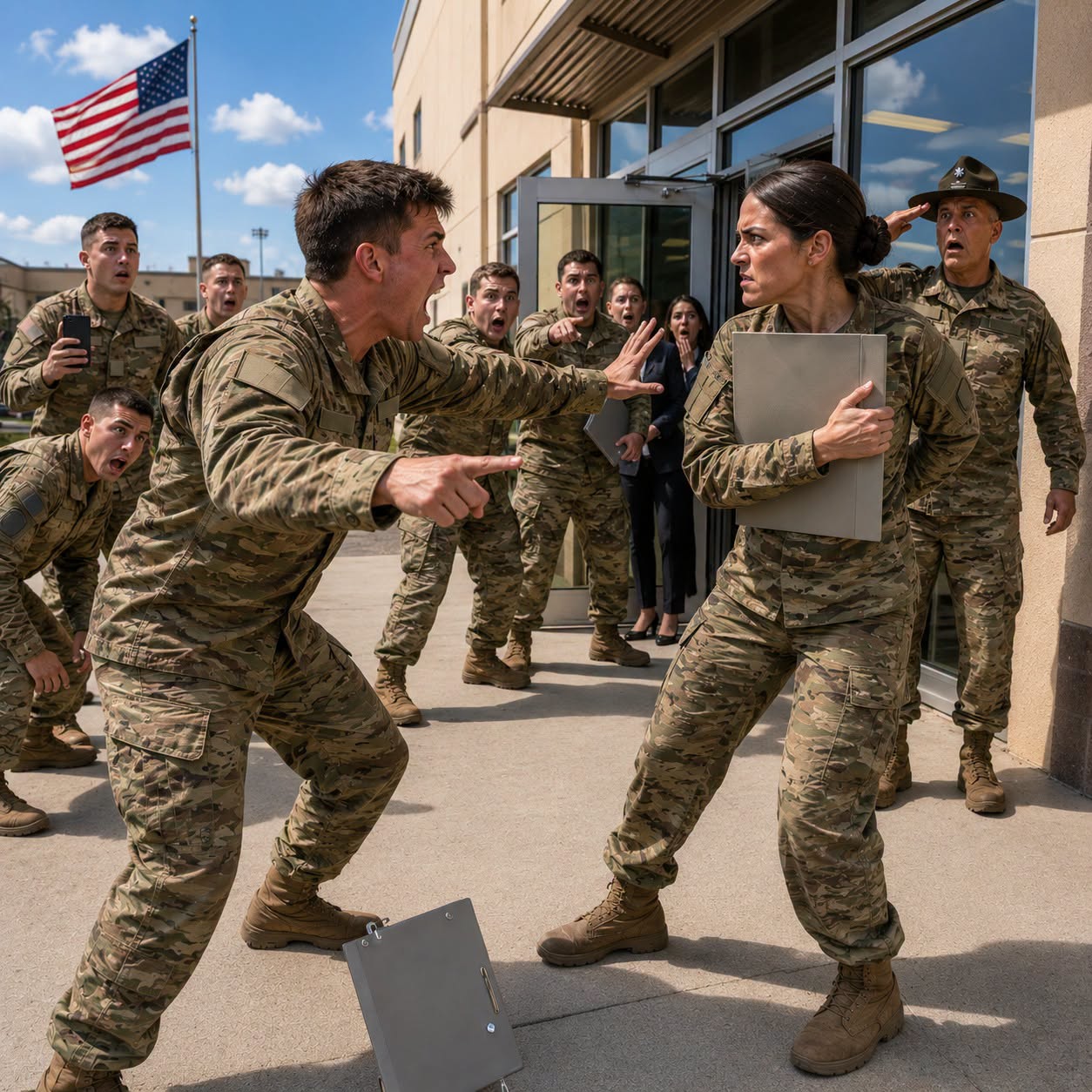
The silence that followed Logan’s outburst was heavier than any desert sandstorm I had ever endured.
I stood motionless, the weight of two decades pressing against my ribs. The platoon sergeant glanced between us, then made a subtle hand signal. The squad dispersed with practiced efficiency, leaving only the three of us beneath the unrelenting sun.
“Captain,” the sergeant said, his voice low with respect, “if you need the room, it’s yours. Private Ellison will remain here until this is settled.” He gave Logan one last measured look—equal parts warning and disappointment—before walking away.
Alone with my brother, the motor pool felt vast and empty. Logan’s shoulders slumped. The bravado that had fueled his anger cracked, revealing the frightened boy beneath the uniform.
“I didn’t know,” he whispered finally, staring at the ground. “About the furnace. The braces. The truck. Mom and Dad… they never said it was you. Not really.”
I exhaled slowly, the breath carrying years of swallowed words. “I didn’t do it for thanks, Logan. I did it because you were my brother. Because family meant something to me even when it didn’t seem to mean much to them.” My voice remained steady, but beneath it lay the quiet ache of the girl who had walked away into the rain twenty-five years earlier.
He looked up then, really looked. Past the captain’s bars, past the stranger he had tried to shove into the wall. For the first time, he saw the cost etched in the faint lines around my eyes, the way my posture still carried the memory of distant battlefields.
“I built bridges so you could have a foundation,” I said softly. “I fixed what was broken because no one fixed it for me. But I’m not here to claim credit. I’m here because blood is thicker than pride, even when pride tries to drown it.”
Logan’s hands trembled at his sides. “I just wanted… something that was mine. Something they couldn’t say came from you. Every time they talked about the Army, it was like they were waiting for me to be better than you. But you were always better. And I hated it.”
The confession hung between us, fragile and human. I stepped closer, not as an officer, but as his sister. I placed a hand on his shoulder—the same shoulder I had once imagined carrying through life’s unseen storms.
“Then stop hating shadows,” I told him. “Be the work, Logan. Not for them. Not against me. For yourself.”
He didn’t pull away. For a long moment, we stood there in the fading light, two Ellisons who had finally collided after a lifetime of orbiting different stars. There would be more conversations—hard ones, necessary ones. My parents’ selective memories, the town’s narrow definitions of worth, the wounds that money couldn’t heal. But in that motor pool, something shifted. Not forgiveness, not yet. Something quieter. Recognition.
As I walked back to my car later, the rain beginning to fall just as it had on the day he was born, I felt the old weight lighten. I had spent years being the unseen architect of our family’s survival. Now, perhaps, Logan would learn to build something of his own.
And maybe, in time, we could build something together.
THE END