PART 2 – The rain hammered against the narrow window of my office like accusatory fingers, each drop a reminder that the world outside refused to pause. I stared at the screen of my laptop, the video call still open, for one frozen heartbeat, the only sound in the universe was that relentless downpour
The hours after the call blurred into a controlled storm. I moved on autopilot, the way soldiers do when the world narrows to mission and survival. My fingers flew across the keyboard, pulling strings I rarely touched. A favor owed by an old friend in the MP unit. A quiet word with the night-shift gate sergeant who remembered the care packages my mother used to send during deployments. Within forty-three minutes, I had an escorted medical transport approved—technically a “family emergency override” that bent every regulation without quite breaking it.
I rode in the back of the Humvee, rain lashing the windows, my mind replaying Grant’s indifferent face on an endless loop. The woman’s bare feet. The quilt. The way he had sighed as if my mother’s life were a minor inconvenience.
Figure it out.
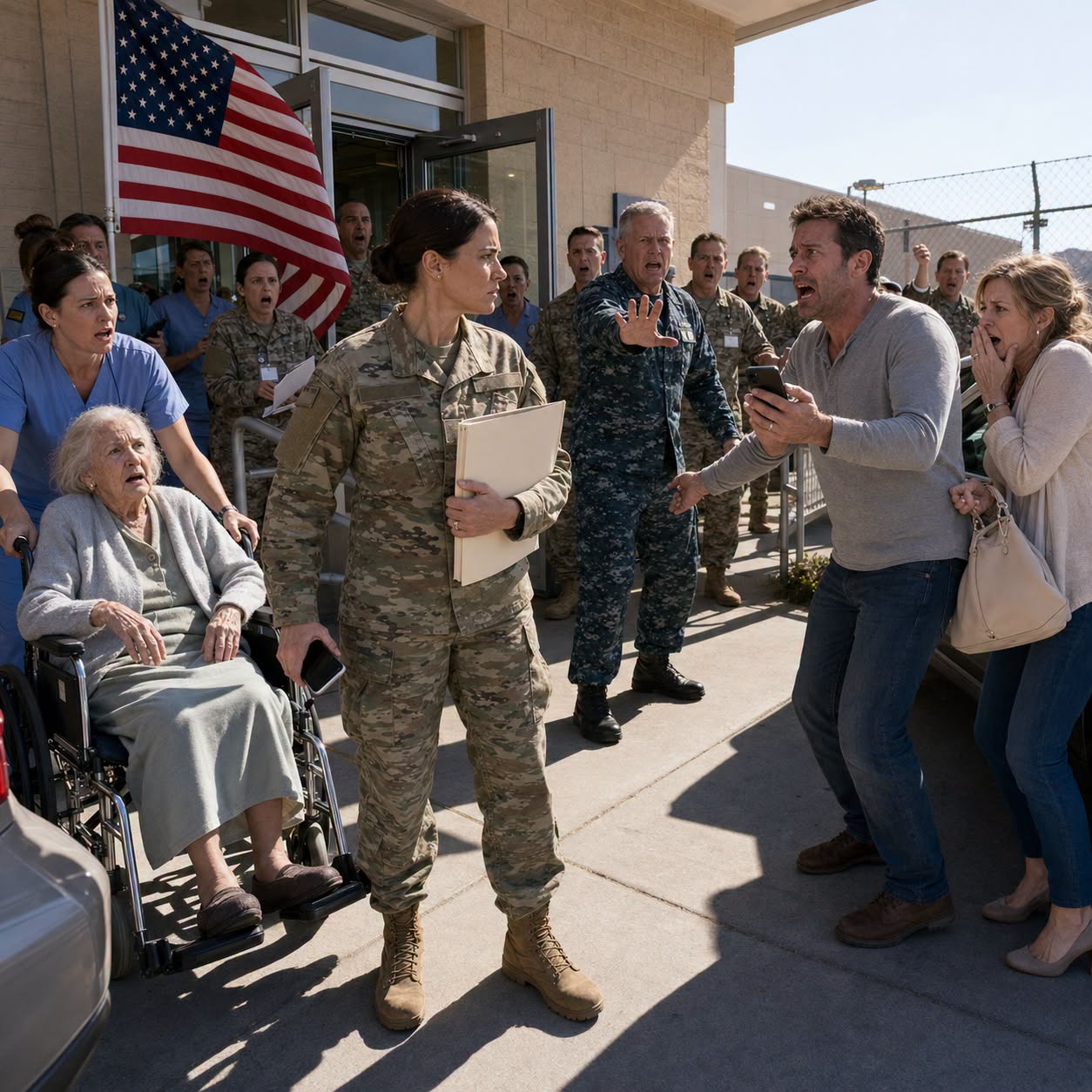
By the time we reached Mom’s bungalow, the ambulance had already arrived. Beatrice stood on the porch wringing her hands, her face pale under the porch light. Inside, paramedics worked with quiet efficiency. Mom lay on the stretcher, oxygen mask fogging with each shallow breath, but her eyes—those fierce, unyielding eyes—found mine the moment I burst through the door.
“Natalie…” Her voice was a fragile thread. “I told Beatrice not to call. Didn’t want to bother you.”
I dropped to my knees beside her, taking her paper-thin hand in both of mine. “You could never bother me, Mom. Never.”
In the ambulance, as sirens cut through the night, I held her hand and told her stories from my early days in the Army—the ridiculous ones that always made her laugh. How I once mixed up coordinates and delivered winter coats to a desert training exercise. How I learned to sleep standing up during 72-hour ops. She smiled weakly, squeezing my fingers with what little strength she had left.
At the hospital, the doctors spoke in measured tones: possible heart attack, tests needed, keep her calm. I signed forms, made calls, and stood guard outside her room like a sentinel. Only when the cardiologist assured me she was stable for the night did I allow myself to lean against the wall, exhaustion crashing over me in waves.
That was when my phone began to vibrate.
At first, I ignored it. Then it rang again. And again.
Grant.
By 7:15 the next morning, the call log showed thirty-eight missed calls. Thirty-eight. Each one more desperate than the last. Voicemails I refused to open. Text messages piling up like accusations:
Call me back. This is crazy, Natalie. Where are you? We need to talk. It wasn’t what it looked like.
I sat in the hospital cafeteria, nursing a cup of terrible coffee, watching the sunrise paint the windows gold. My reflection in the glass looked like a stranger—tired, but strangely calm. Twenty-two years of service had taught me the power of silence. Let the enemy reveal their panic first.
At call number thirty-nine, I finally answered.
“Nat?” Grant’s voice cracked with relief and something sharper—fear. “Thank God. Listen, about last night—”
“I handled it,” I said evenly. “Mom’s stable. Doctors are running tests.”
He exhaled loudly. “Good. That’s… good. Look, that woman—she’s just an old friend who stopped by. It got late, we had wine, things got… misinterpreted. You know how it is.”
I said nothing. The silence stretched, taut as a tripwire.
“Nat, come on. You can’t seriously think—” His tone shifted, defensive, then wheedling. “I was stressed. Work’s been hell. You’re always gone on base. I made a mistake, okay? One stupid mistake. We’ve been married eighteen years. We can work through this.”
I closed my eyes, remembering the way the woman had nestled against him in our home. The casual possession in her posture. The complete absence of guilt on his face.
“Grant,” I said softly, “when you looked at me on that call and said my mother’s life wasn’t your problem… that wasn’t a mistake. That was the truth finally showing itself.”
He started talking faster, words tumbling over each other—promises, apologies, threats of what would happen if I “blew this up.” I listened with the detached clarity of someone watching a bridge burn from the far shore.
Then came the moment that changed everything.
A nurse approached me in the hallway, holding a small plastic bag. Inside were the belongings they had removed from Mom’s pockets when she arrived: her house keys, a crumpled tissue, and her phone. The screen was still open to a text message she had tried to send me before collapsing.
It read: Natalie, I saw Grant’s car at the house yesterday with another woman. I didn’t want to worry you, but I’m scared for you, sweetheart.
My blood turned to ice.
I looked back at my phone, where Grant was still pleading.
“Grant,” I interrupted, my voice low and steady, carrying the weight of every deployment, every loss, every hard lesson the Army had taught me. “I know.”
The line went dead silent for three full seconds.
Then he exploded—denials, accusations, demands to know what I thought I knew. But beneath the bluster, I heard it: the fracture. The realization that the woman he had dismissed so easily was no longer the loyal, duty-bound wife he believed he could control.
This wasn’t panic anymore.
This was the beginning of his unraveling.
And as I stood in that sterile hospital corridor, my mother fighting for her life just meters away, a deeper, colder resolve settled over me. I had spent years building a life around loyalty—only to discover it had been one-sided all along.
Now, the rules had changed.
TO BE CONTINUE…