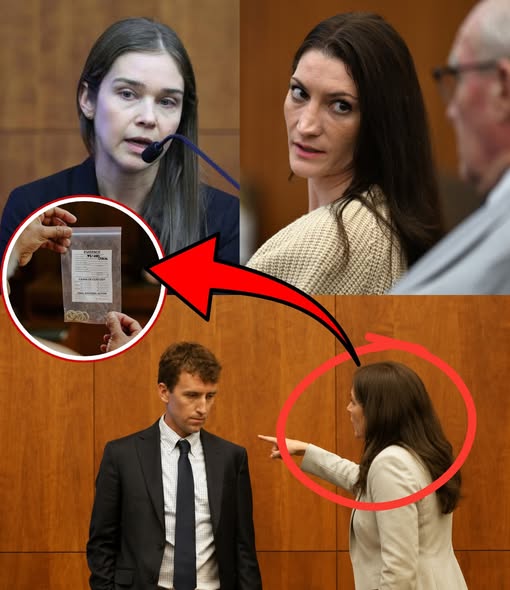
HE ANATOMY OF COURTROOM SENSATIONALISM: DECONSTRUCTING THE VIRAL ‘BOMBSHELL’ HOAX IN THE LINDSAY CLANCY CASE
Deconstructing the Clickbait Teaser
A dramatic social media post recently made rounds across true-crime online communities, breathlessly declaring: “THE TABLES HAVE OFFICIALLY TURNED! LINDSAY CLANCY’S DEFENSE DROPS A LAST-MINUTE BOMBSHELL THAT STUNNED THE ENTIRE COURTROOM!” Packed with theatrical phrasing and sensational claims, the viral caption alleged that a routine court session “erupted into absolute bedlam” when defense attorneys submitted a “heavily guarded piece of evidence just minutes before adjournment.” To heighten the dramatic tension, the post introduced a “surprise star witness—someone intimately close to Patrick Clancy for years” who allegedly delivered “devastating testimony” that “shatters the official narrative,” before terminating in a classic cliffhanger trap: “pointing a direct finger at… Watch more below”.
Despite its dramatic presentation, this entire post is completely fictitious. A thorough review of official court dockets in Plymouth County, Massachusetts, alongside trial reporting from accredited regional news outlets, confirms that no such “surprise star witness” took the stand, no last-minute suppressed evidence was filed, and no courtroom bedlam occurred. The viral teaser is a engineered piece of true-crime clickbait designed to manipulate public emotion, farm engagement, and monetize curiosity surrounding a deeply tragic legal case.
The Judicial Reality vs. Manufactured Bedlam
To understand why this viral caption is a total fabrication, one must examine the actual procedural reality of the Lindsay Clancy legal case.
In January 2023, the tragedy in Duxbury, Massachusetts—where Lindsay Clancy was charged in connection with the deaths of her three young children—became one of the most closely followed legal cases in New England history. However, real-world judicial proceedings operate under strict procedural rules that bear no resemblance to sensationalized internet drama:
-
The Rule of Mandatory Discovery: Under Massachusetts Rules of Criminal Procedure (Rule 14), “last-minute bombshells” and “heavily guarded evidence” dropped minutes before adjournment are virtually impossible. Modern trial procedure strictly requires both prosecution and defense attorneys to exchange witness lists, expert reports, and documentary evidence well before hearings to prevent trial by ambush.
-
The Clinical Nature of the Defense: Lindsay Clancy’s defense team, led by attorney Kevin Reddington, has consistently focused its legal arguments on documented medical history, severe postpartum psychosis, and complex psychiatric medication regimens. The legal battle centers on clinical evaluations, medical record admissibility, and expert psychiatric testimony—not cinematic accusations or surprise personal vendettas.
-
Courtroom Decorum and Motion Hearings: Pre-trial proceedings in Plymouth Superior Court are formal judicial sessions presided over by a judge. Motions regarding bail, competency, or evidence admissibility are conducted with strict decorum, far removed from the “absolute bedlam” depicted in viral social media captions.
The Mechanics of Manufactured Courtroom Drama
The creation and viral distribution of fake courtroom updates represent a widespread monetization model operating across social media networks.
Content aggregators and automated true-crime channels utilize specific structural tactics to convert real-life legal cases into digital ad revenue:
1. The Soap Opera Narrative Pivot
By inventing “surprise witnesses” and claiming that blame is shifting to “someone intimately close to Patrick Clancy,” clickbait creators reframe a tragic medical and legal crisis into a trashy thriller. This creates artificial speculation among commenters, driving viral debate and boosting post reach.
2. The Open-Ended Cliffhanger
Cutting off the text mid-sentence (“pointing a direct finger at…”) constructs an artificial information gap. Readers driven by curiosity click the “Watch more below” link expecting a video reveal, only to be redirected to ad-monetized landing pages.
3. Traffic Arbitrage and Link Monetization
The links attached to these teasers never direct users to official court transcripts or televised trial archives. Instead, users are funneled through tracking URLs to ad-cluttered blogs, automated YouTube recap loops, or affiliate marketing schemes designed to generate pay-per-click advertising revenue.
The Ethical Impact of Sensationalist Disinformation
While fake news about movies or TV shows causes minor confusion, fabricated narratives surrounding real-life violent tragedies carry severe ethical and legal consequences.
Sensationalized true-crime clickbait causes direct harm:
-
Poisons Potential Jury Pools: Unfounded rumors of “secret evidence” and “surprise witnesses” circulate widely across social media feeds, potentially polluting the objectivity of future jurors who may mistake internet fiction for court-admitted evidence.
-
Re-traumatizes Surviving Family Members: Families navigating profound personal loss and ongoing legal proceedings are subjected to digital harassment fueled by malicious claims about their personal lives.
-
Trivializes Perinatal Mental Health: Reducing a tragic case involving postpartum psychosis and legal insanity defense to a cheap “bombshell” hook undermines public understanding of severe perinatal mental illness and legal standards for criminal responsibility.
Navigating High-Profile Legal Coverage with Media Literacy
The viral post alleging a last-minute courtroom bombshell in the Lindsay Clancy trial highlights the necessity of media literacy when following high-profile legal news online.
To distinguish authentic court updates from engineered clickbait, readers should adopt key verification habits:
-
Verify Through Official Dockets and Accredited Press: Legitimate updates in state criminal trials are published on official court dockets and covered by established journalists (such as The Boston Globe, Boston 25 News, or WCVB).
-
Recognize Procedural Impossibilities: Be skeptical of claims involving “surprise witnesses” or “hidden evidence” suddenly dropped during a session. Modern court systems rely on strict discovery rules that prevent such surprises.
-
Avoid Unverified External Links: Refrain from clicking on vague “Watch more below” prompts on social media accounts that lack journalistic credibility or verified credentials.
The legal proceedings surrounding Lindsay Clancy will ultimately be decided in a court of law based on verified evidence, expert testimony, and judicial precedent—not through the sensationalized fabrications of digital clickbait.