The Final Hours: Doctor’s Devastating Courtroom Testimony Unveils Tragic Timeline in Five-Year-Old Cora’s Final Day
Inside a hushed court, where the air hung heavy with solemn grief, prosecutors presented what legal observers are calling the most critical and emotionally devastating testimony of the trial so far. The attending physician who led emergency medical interventions on the final day of five-year-old Cora’s life took the witness stand, offering a harrowing, minute-by-minute medical timeline that left family members in tears, jurors visibly shaken, and the entire courtroom stunned into silence.
While previous days of the trial focused on circumstantial evidence and conflicting parental statements, the expert medical testimony delivered a stark, uncompromising account of physical reality. Through forensic data, emergency response logs, and clinical observations, the witness reconstructed the heartbreaking hours leading up to the tragedy, exposing the severe disconnect between what was reported by caregivers and what actually occurred behind the closed doors of the family home.
A Shocking Arrival at the Emergency Room
The physician began his testimony by describing the harrowing moment Cora was brought into the pediatric emergency department. According to medical records entered into evidence, the five-year-old girl arrived in a state of profound collapse, displaying signs of critical physical distress that immediately triggered a code blue response.
“From the moment she passed through those doors, it was clear we were fighting an uphill battle,” the doctor testified, his voice steady yet heavy with emotion. “Her vital signs were virtually nonexistent. She was unresponsive, hypothermic, and showing unmistakable signs of long-standing physical trauma that went far beyond an acute medical emergency.”
Despite aggressive resuscitation efforts lasting nearly two hours—including advanced cardiac life support, continuous ventilation, and multiple blood transfusions—the medical team was unable to restore brain activity or stable cardiac rhythm. Cora was pronounced dead shortly before midnight, launching a criminal investigation into the circumstances surrounding her final hours.
Medical Evidence Challenges Family Statements
The core of the doctor’s testimony directly challenged the initial narrative provided to law enforcement by the child’s primary caregivers. During initial police interviews, family members claimed that Cora had suffered a sudden, unexpected fall from a couch earlier in the evening and had quickly drifted off to sleep before becoming unresponsive.
However, forensic medical analysis presented in court told a radically different story. The witness detailed a series of internal and external injuries that were completely inconsistent with a low-level fall.
Pathological evidence revealed widespread blunt-force trauma, severe internal hemorrhaging, and deep tissue bruising at various stages of healing—indicating a prolonged pattern of physical abuse rather than an isolated domestic accident. Furthermore, specialized diagnostic scans demonstrated that the fatal internal injuries had occurred several hours prior to the emergency call, during a window when caregivers claimed the child was merely resting.
“A standard fall from household furniture simply cannot generate the velocity or force required to cause injuries of this magnitude,” the doctor stated under direct examination by lead prosecutors. “The trauma we observed was consistent with high-impact, repeated force. Furthermore, the delay in seeking medical care proved catastrophic.”
Painstaking Detail: The Crucial Delay in Emergency Care
Perhaps the most devastating portion of the testimony focused on the crucial hours between the onset of severe physical trauma and the eventual arrival of emergency medical services. Through timeline analysis of blood chemistry, body temperature, and cellular degradation, the medical team established that Cora had been in acute, life-threatening distress for at least six to eight hours before any call for help was placed.
During this window, while the child suffered from rapid internal bleeding and neurogenic shock, no medical assistance was sought. Court documents indicate that instead of dialing emergency services, caregivers made multiple internet searches regarding head injuries, bruise concealment, and home remedies for unconsciousness.
Prosecutors argued that this prolonged delay in seeking professional medical intervention directly robbed the five-year-old girl of any realistic chance of survival. Under cross-examination, the doctor affirmed that had Cora been brought to a trauma center within the first two hours of sustaining her injuries, modern pediatric surgical techniques could likely have saved her life.
Emotional Impact Inside the Courtroom
The emotional weight of the clinical details proved overwhelming for those present in the gallery. Several jurors were seen dabbing away tears as high-resolution medical charts and anatomical diagrams were displayed on courtroom monitors to illustrate the extent of the trauma. Members of the local community who filled the public seating sat in stunned silence, reflecting the collective shock of a region closely following the tragedy.
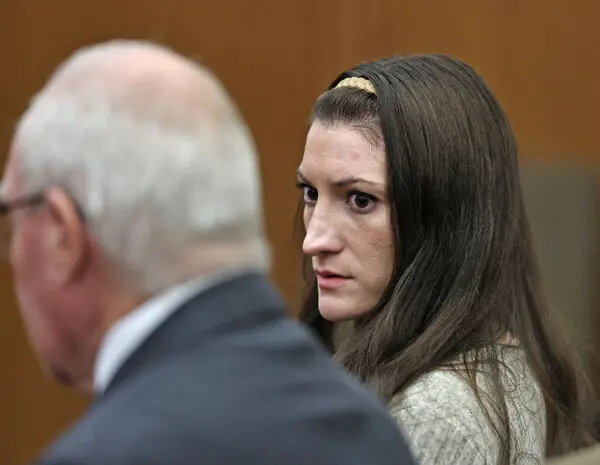
The defendant, seated alongside defense counsel, maintained a head-down posture throughout the majority of the medical presentation, avoiding eye contact with the witness box and the jury panel. Defense attorneys attempted to mitigate the impact of the doctor’s testimony by raising questions regarding pre-existing medical conditions and potential diagnostic oversights during emergency care, but the witness firmly stood by the clinical findings.
A Community Demands Justice
As the trial moves into its second week, the physician’s testimony stands as a decisive turning point in the prosecution’s case. By stripping away emotional rhetoric and focusing strictly on undeniable medical facts, the testimony has provided a clear, undeniable voice for a victim who can no longer speak for herself.
Outside the courthouse, members of the public gathered for a quiet candlelit vigil in honor of young Cora, leaving flowers, teddy bears, and handwritten notes on the steps of the building. The tragedy has sparked widespread discussion regarding child protection protocols, community vigilance, and the vital importance of reporting suspected domestic abuse before it escalates into irreversible loss.
With additional expert witnesses, forensic investigators, and law enforcement officers scheduled to testify in the coming days, the court continues its pursuit of truth and accountability. For a heartbroken community, the painful medical testimony delivered on the stand represents a necessary, albeit gut-wrenching, step toward securing justice for five-year-old Cora.