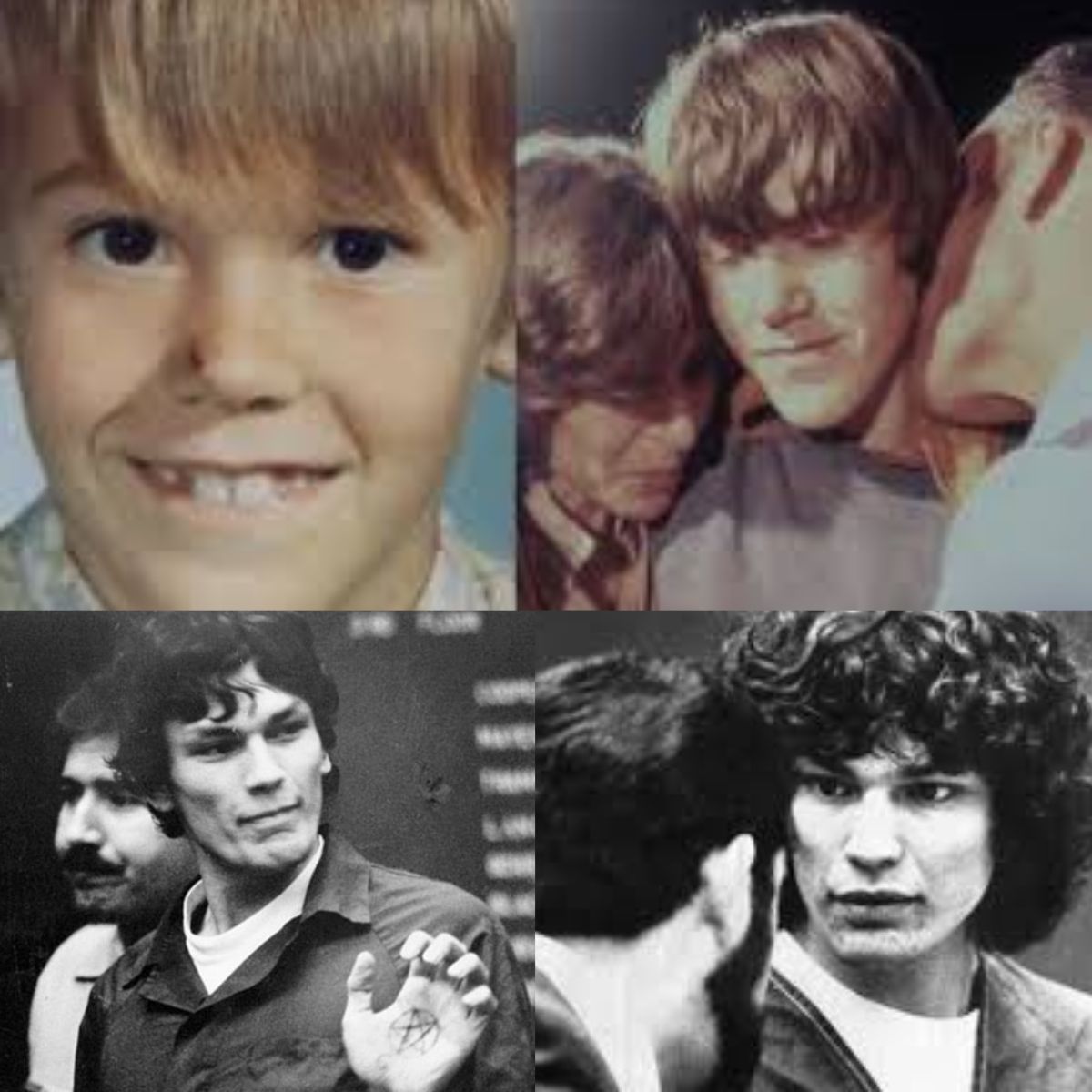
“HE ESCAPED A NIGHTMARE… ONLY FOR AN EVEN DARKER ONE TO BEGIN.” BBC viewers are shaken by a chilling true-crime series uncovering the haunting case of Steven Stayner—one of the most disturbing abductions ever told.
In the quiet suburbs of Merced, California, a single afternoon in December 1972 shattered a family forever – and decades later, the horrifying ripples of that day continue to send shivers down the spines of true-crime fans across Britain.
BBC viewers tuning into iPlayer have been left reeling by the gripping three-part documentary series Captive Audience: A Real American Horror Story, which has quietly been added to the streaming service and is rapidly becoming one of the most talked-about true-crime watches of the year. What begins as the heartbreaking tale of a little boy snatched off the street spirals into something far darker, far more twisted, and almost impossible to comprehend: a story of unimaginable survival, media frenzy, shattered lives – and one brother who would go on to become one of America’s most notorious serial killers.
The series revisits the 1972 abduction of seven-year-old Steven Stayner, who endured seven years of hell at the hands of a convicted child molester before bravely escaping – and saving another young victim in the process. But just when you think the nightmare is over, the documentary delivers its most gut-wrenching revelation: Steven’s older brother, Cary Stayner, would later unleash a reign of terror in Yosemite National Park, brutally murdering four women and earning the chilling moniker of the Yosemite Park Killer.
As one stunned BBC viewer posted online: “I thought I’d seen every twist in true crime… but this? A hero brother and a serial killer brother from the same family? I’m speechless. Absolutely chilling.”
The three-part series, originally released on Hulu and Disney+ in 2022 and now streaming free on BBC iPlayer, has been hailed as “overwhelming”, “mind-blowing” and “heartbreaking” by those who have binge-watched it. With interviews from surviving family members, including Steven’s mother Kay and his daughter Ashley, plus rare archive footage and emotional testimony, it peels back the layers of a tragedy that feels ripped from the darkest pages of fiction – except every horrifying detail is devastatingly real.
The Day That Changed Everything: Steven Stayner’s Abduction
It was a crisp December afternoon in 1972 when seven-year-old Steven Gregory Stayner was walking home from school along a familiar road in Merced, a modest Central California town nestled near the foothills of the Sierra Nevada.
A man named Ervin Edward Murphy, acting on behalf of his associate Kenneth Parnell – a convicted sex offender who had previously worked at a Yosemite resort – approached the trusting little boy. Promising a ride home and even claiming Steven’s parents had given permission, the men lured him into a car. What followed was seven years of unimaginable abuse, manipulation, and psychological torment.
Parnell, who had a long history of targeting children, took Steven to remote cabins, first in Mariposa County and later in Mendocino County. He gave the boy a new name – “Dennis” – and brainwashed him into believing his family no longer wanted him. Steven was subjected to repeated sexual abuse while being forced to live a bizarre, isolated “normal” life under Parnell’s control. He attended school sporadically, played with other children, and even helped Parnell with odd jobs – all while carrying the heavy secret of his true identity.
Back home in Merced, Steven’s parents, Delbert and Kay Stayner, were plunged into a living hell. They plastered missing posters everywhere, begged the media for coverage, and clung desperately to hope as the days turned into months and then years. The family – including older brother Cary, then 11, and three sisters – fractured under the unbearable strain of not knowing.
The documentary doesn’t shy away from the raw emotion of those early years. Kay Stayner speaks movingly about the constant ache of uncertainty, the toll it took on her marriage, and how the family tried – and often failed – to hold itself together while the world slowly forgot about their missing boy.
For true-crime aficionados, this section of the series is a masterclass in building tension. Viewers are transported back to an era before amber alerts, before widespread CCTV, and before “stranger danger” became a national mantra. Steven’s disappearance helped spark important conversations about child safety that still resonate today.
The Miraculous Escape – And The Heroic Rescue Of Timmy White
Then, in 1980, came the moment that would turn Steven Stayner into a national hero.
By now 14 years old, Steven had grown increasingly troubled by Parnell’s behaviour. When the predator abducted another young boy – five-year-old Timothy White – in February 1980, Steven knew he could no longer stand by. Risking everything, he took the terrified toddler and fled the remote cabin where they were being held, hitchhiking to safety and walking into a police station in Ukiah, California.
“I know my first name is Steven,” the boy told astonished officers – a line so poignant it would later become the title of a bestselling book and a hit 1989 NBC miniseries starring Corin Nemec.
The reunion with his family was emotional, chaotic, and heavily documented by the media. Cameras swarmed the Stayner home as Steven tried to readjust to life as a normal teenager after seven years in captivity. He had missed so much – birthdays, holidays, the simple rhythms of family life. And the psychological scars ran deep. Steven struggled with anger, trust issues, and the lingering effects of years of grooming and abuse.
Yet he found moments of light. He married Jody Edmondson in 1985 and became a father to two children, Ashley and Steven Jr. He even took a small non-speaking role in the miniseries based on his own life, showing remarkable courage in confronting his past publicly.
Tragically, Steven’s story did not end happily ever after. In 1989, at just 24 years old, he died in a motorcycle accident after a car collided with him. Timothy White – the boy he had saved – served as a pallbearer at his funeral, a heartbreaking full-circle moment. White himself later became a law enforcement officer, testified against Parnell in later proceedings, and also passed away young.
Kenneth Parnell, the monster responsible, received a shockingly lenient sentence of just seven years for the kidnapping and abuse of Steven (he had already served time for prior offences). He died in prison in 2008 from natural causes, having never shown genuine remorse.
The Sinister Twist: Cary Stayner Becomes The Yosemite Park Killer
Just as the Stayner family began to find some fragile peace after Steven’s death, an even darker shadow fell over their name.
In 1999, nearly two decades after Steven’s return, a series of brutal murders rocked Yosemite National Park – a place the Stayner family knew well from happier times.
Four women were savagely killed in and around the park: Carole Sund, her daughter Juli Sund, family friend Silvina Pelosso, and park naturalist Joie Armstrong. The crimes were shocking in their violence and the apparent randomness of the victims.
The killer? None other than Cary Anthony Stayner, Steven’s older brother.
Cary, who had been working as a handyman and maintenance worker at a Yosemite lodge, was arrested and eventually confessed to the murders. He was convicted and sentenced to death for the killings, which he carried out with chilling efficiency. Some reports suggested he had fantasised about harming women even before Steven’s abduction, though the family trauma undoubtedly played a role in his fractured psyche.
In chilling interviews and court testimony, Cary spoke of feeling overshadowed by his younger brother’s fame – first by the kidnapping and then by the media circus surrounding Steven’s return and the miniseries. While the world celebrated Steven as a survivor and hero, Cary allegedly felt neglected, invisible, and consumed by resentment.
The documentary’s third episode dives deep into Cary’s descent, exploring how the Stayner family was once again thrust into the national spotlight – this time not as victims of tragedy, but linked to one of the most infamous serial killers in modern American history.
Viewers are left grappling with uncomfortable questions: Could the intense media attention on Steven have contributed to Cary’s pathology? Did the family’s inability to process the trauma create a pressure cooker environment? Or was Cary’s evil already simmering long before 1972?
One family member reflects poignantly in the series: the Stayners had endured two completely different true-crime nightmares – one of survival and heroism, the other of unimaginable monstrosity – all within the same household.
Why This Documentary Has BBC Audiences Hooked
Captive Audience stands out in the crowded true-crime genre because it doesn’t just recount the crimes. Produced with input from the Russo brothers (the filmmakers behind some of Marvel’s biggest blockbusters), it examines the media’s role in shaping – and sometimes distorting – real-life stories.
The series cleverly weaves together the evolution of true-crime storytelling itself, from the 1989 miniseries that turned Steven into a household name to the modern obsession with podcasts, documentaries, and endless speculation.
British viewers have praised the sensitive handling of such traumatic material. “It’s not exploitative – it feels respectful to the victims and the family,” one commenter wrote on social media. Another added: “The way it shows how fame can destroy as much as it heals is fascinating and terrifying.”
Interviews with Steven’s daughter Ashley Stayner, who was too young to remember her father clearly, add a deeply personal layer. She speaks about growing up with the weight of this dual legacy – her father the hero, her uncle the killer – and the complex emotions that come with it.
The series also revisits the impact on Timothy White’s life and the long-term effects on everyone touched by Parnell’s evil.
The Lasting Legacy: Trauma, Media, And Unanswered Questions
What makes the Stayner story so uniquely disturbing is its layers of irony and tragedy. A family that suffered the ultimate parental nightmare – a missing child – later produced a serial killer. A boy who heroically saved another child from the same fate couldn’t save himself from an early death. A community that celebrated a miracle reunion had to confront pure evil from within the same bloodline.
Cary Stayner remains on death row, though executions in California have been on hold for years. He has shown little remorse and has even given interviews that only deepen the horror.
For true-crime enthusiasts, the documentary raises profound questions about nature versus nurture, the long shadow of childhood trauma, and how society processes stories of survival that don’t have neat, happy endings.
Steven’s abduction helped change laws around child safety and missing persons. But the family paid an unimaginable price.
As the series draws to a close, viewers are left with a haunting sense of unease. One BBC watcher summed it up perfectly: “This isn’t just another true-crime doc. It’s a story about how one crime can destroy multiple generations in ways you could never predict.”
Where To Watch The Full Series Now
If you haven’t yet dived into Captive Audience: A Real American Horror Story, it’s available to stream right now on BBC iPlayer – completely free for licence fee payers in the UK.
The three episodes fly by, but the images and stories will stay with you long after the credits roll. From the innocent smile of seven-year-old Steven on missing posters to the cold confessions of his brother decades later, this is television that demands to be watched – and discussed.
True-crime fans are calling it essential viewing, a masterfully crafted exploration of one of the most bizarre and heartbreaking family sagas in recent memory.
Prepare to be stunned. Prepare to be moved. And prepare to question everything you thought you knew about survival, fame, and the thin line between hero and monster.
Because in the Stayner family, both existed in the same home – with devastating consequences.
WATCH ALL THREE EPISODES NOW ON BBC iPLAYER – but be warned: once you start, you won’t be able to look away. And you may never see family tragedy in quite the same light again.