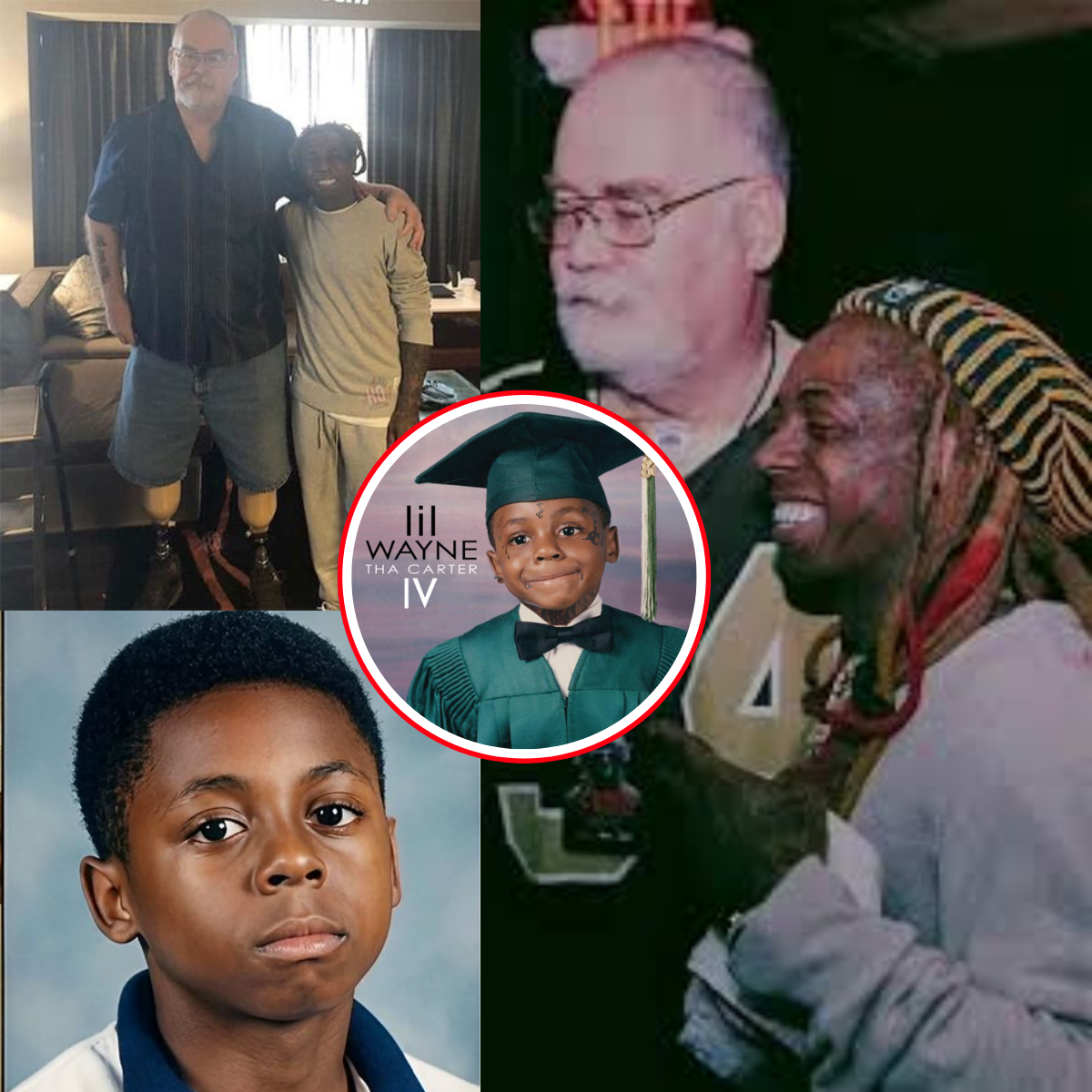
HERO COP REVEALED: Before Lil Wayne became a global hip-hop icon, he was a 12-year-old fighting for his life.
Picture this: a cramped apartment in the tough Hollygrove neighbourhood of New Orleans, November 11, 1994. A skinny 12-year-old boy named Dwayne Michael Carter Jr. – the kid who would one day become the legendary Lil Wayne – is alone after school, munching on a fast-food burger on report card day.
He spots a loaded 9mm pistol left by a family friend in his mum’s bedroom. Curiosity turns tragic in an instant.
Whether it was a horrifying accident or – as Wayne later admitted in raw interviews – a deliberate act born from deep pain and suicidal thoughts, the gun went off. The bullet tore through his chest, narrowly missing his heart by millimetres.
Blood poured out. The boy, terrified and fading fast, somehow managed to dial 911. He crawled across the floor, leaving a crimson trail, and kicked the door weakly to signal help had to come.
What happened next is the stuff of hip-hop legend – a real-life miracle that saved one of music’s greatest icons and gave the world ‘Tha Carter’ series, ‘Lollipop’, ‘A Milli’, and countless anthems that defined a generation.
Enter Robert Hoobler – a towering 6ft 7in New Orleans police officer known affectionately in the neighbourhood as ‘Uncle Bob’.
Off-duty and heading to a security gig, Hoobler heard the urgent dispatch crackle over his radio: a child with a self-inflicted gunshot wound in Hollygrove needed immediate help.
He didn’t hesitate. He floored it to the address, pounded on the door, and heard the faint, desperate cry: ‘Help me. I’ve been shot.’
Hoobler kicked the door in. There lay young Dwayne – pale, bleeding profusely, barely conscious in a blood-soaked T-shirt and jeans.
Chaos ensued. Other officers arrived, some reportedly distracted by searching for drugs in the apartment (a heartbreaking detail Wayne has recounted with pain). One yelled about narcotics while the boy bled out on the floor.
But Uncle Bob? He lost it.
‘I don’t give a f— about no drugs! Do you not see the baby on the ground?!’ he roared, according to Wayne’s emotional retellings.
With no ambulance immediately available – a tragic reality in 1990s New Orleans – Hoobler refused to wait. He barked orders: ‘Your car, now!’ Another officer backed a cruiser to the door. Hoobler scooped up the dying child, cradled him in his massive arms, and rushed him into the back seat.
As they sped to Ochsner Hospital, Hoobler kept talking, kept reassuring: ‘You’re not gonna die on me. You’re not gonna die on me.’
He stayed by the boy’s side, refusing to leave until doctors confirmed he was stable.
That single act of compassion – defying protocol, ignoring distractions, prioritising a frightened Black child’s life over everything – changed history.
Without Uncle Bob, there might never have been a Lil Wayne.
No Cash Money Records breakout. No Hot Boys era. No Young Money empire with Drake, Nicki Minaj, and more. No five Grammys, over 120 million records sold, and a legacy as one of the most influential rappers ever.
Wayne has said it himself, time and again: ‘If it wasn’t for Uncle Bob that day, the world might never have heard the music.’
In interviews – from his sit-down with Emmanuel Acho to throwback award speeches – Wayne has poured out gratitude. He called Hoobler a ‘guardian angel’, a man who showed him humanity when he needed it most.
Remarkably, Wayne has spoken about how Uncle Bob – a white cop in a predominantly Black neighbourhood – shattered his early perceptions of racism. ‘I never knew racism because of Uncle Bob,’ he said in one emotional recount. ‘He was white as snow… and he refused to step over me.’
The bond endured.
Years later, after Wayne became a superstar, the two reunited. Photos and videos show them together – the global icon and the retired officer, hugging, laughing, reminiscing about that fateful day.
Wayne has shared heartfelt moments: spotting Hoobler in crowds at shows, giving shoutouts, even reportedly offering help when the officer faced hardships.
Tragically, life wasn’t kind to Uncle Bob in his later years.
Robert Edward Hoobler battled severe health issues after a car accident, compounded by diabetes. Both legs were amputated.
Yet the connection remained unbreakable.
When Hoobler passed away on July 22, 2022, at age 65 in his Old Jefferson home, the news hit Wayne hard.
The rapper posted a tear-jerking tribute on Instagram: ‘Everything happens for a reason. I was dying when I met u at this very spot. U refused to let me die… RIP uncle Bob. Aunt Kathie been waiting for u. I’ll love & miss u both and live for us all.’
It was a poignant goodbye to the man who gave him a second chance.
Hoobler’s family and former colleagues spoke of his character: a dedicated cop, a big-hearted man whose actions that day embodied true heroism.
His grandson Daniel Nelson and colleague David Lapene confirmed the story Wayne told was ‘one of the best depictions of Hoobler as a person’ – selfless, decisive, compassionate.
For Lil Wayne – now 43, a father, grandfather, and sober icon who survived his own battles with addiction and near-death scares – Uncle Bob remains family.
‘He’s more than a hero,’ Wayne has said. ‘He’s family.’
The story resonates far beyond hip-hop.
In an era of tense police-community relations, Uncle Bob’s actions stand as a powerful reminder: one person’s choice to see a child in pain – not colour, not circumstance – can alter destinies.
Wayne’s survival wasn’t just a medical miracle. It was a human one.
From that bloodied apartment floor to sold-out stadiums worldwide, the path was paved by a cop who refused to let a kid die.
Today, as Lil Wayne continues dropping mixtapes, mentoring new talent, and living his ‘best life’, every bar he spits carries a silent thank you to Uncle Bob.
Because without that rush to the hospital, without those reassuring words in the cruiser, the soundtrack of a generation might have been silenced forever.
Rest in peace, Uncle Bob.
And thank you – from Wayne, from fans, from hip-hop itself.
You didn’t just save a life.
You saved a legend.