“We Miss You, Tiger…” — Rory McIlroy’s Emotional Tribute as Tiger Woods’ Absence Leaves The Masters Feeling Incomplete
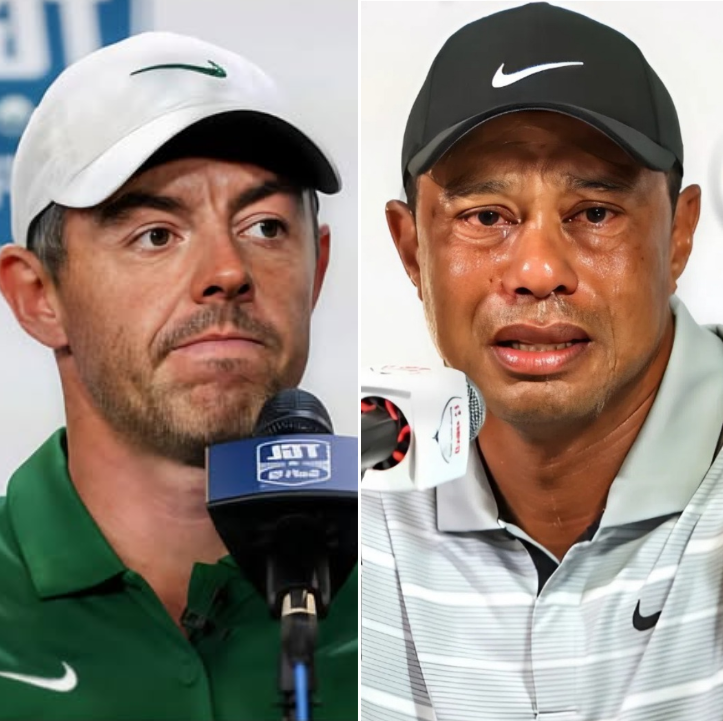
“We miss you so much, Tiger…” — And Augusta Hasn’t Felt the Same Since
When Rory McIlroy spoke those words, the emotion was impossible to ignore. For the second year in a row, Tiger Woods was absent from The Masters Tournament 2026 — and the silence left behind was louder than any roar the course has ever heard.
Fans felt it. Fellow players felt it. The energy, the tension, the magic… something was missing. The Masters is still legendary — but without Tiger, it feels like a piece of its soul has vanished.
But just when the golf world was still processing that absence… Tiger dropped a piece of news no one saw coming. And suddenly, everything changed.
The Void at Augusta National
Augusta National Golf Club in April is more than a tournament. It is a pilgrimage. Azaleas bloom, dogwoods frame the fairways, and the air carries a unique anticipation that only happens once a year. For nearly three decades, one man defined that electricity: Eldrick “Tiger” Woods.
From his explosive 1997 victory — where he won by 12 strokes at age 21 — to his improbable 2019 comeback that had the world in tears, Tiger turned The Masters into his personal stage. Five green jackets. Countless highlight-reel moments. The Sunday red shirt. The fist pumps. The roars echoing through the pines.
In 2025, Woods missed the tournament while recovering from Achilles surgery. Many hoped 2026 would mark his return. He had even teased participation after a limited TGL appearance in late March. Then came March 27, 2026 — a date that altered the narrative dramatically.
Near his home in Jupiter Island, Florida, Woods was involved in a rollover car crash. His Land Rover clipped a truck pulling a trailer, flipped onto its side, and left him needing to crawl out the window. Authorities found him showing signs of impairment. He was arrested on suspicion of DUI with property damage and refusal to submit to a chemical test. Two pain pills were reportedly found in his pocket. Woods later said he had been distracted by his phone and changing the radio.
The golf world held its breath. Woods pleaded not guilty, but the damage to his public image — already scarred by past personal controversies and the devastating 2021 car crash in California — was immediate.
On March 31, 2026, Tiger released a statement that sent shockwaves:
“I know and understand the seriousness of the situation I find myself in today. I am stepping away for a period of time to seek treatment and focus on my health. This is necessary in order for me to prioritize my well-being and work toward lasting recovery. I’m committed to taking the time needed to return in a healthier, stronger and more focused place, both personally and professionally.”
He also stepped down from consideration as captain of the 2027 U.S. Ryder Cup team. Augusta National confirmed he would not compete — or even attend — the 2026 Masters. For the first time since 1994, neither Woods nor Phil Mickelson (who cited personal health reasons) would be part of the field or the Champions Dinner.
Rory’s Emotional Tribute
Rory McIlroy, the defending champion in this scenario and a close friend of Woods, addressed the absence with visible feeling. Speaking ahead of the Champions Dinner he hosted, McIlroy said it was a shame that two of the greatest champions in Masters history would not be in the room. He made sure they were acknowledged.
Reports from inside the dinner described McIlroy keeping his remarks brief but heartfelt: “We miss Tiger… he has to do whatever he has to do to take care of himself.” Other past champions echoed the sentiment — the room felt different without Tiger’s presence.
On the course, players openly discussed the void. Fred Couples noted the pain Woods must be enduring, both physical and otherwise. Jason Day and others emphasized that health comes first. Jack Nicklaus and Gary Player, the honorary starters, were asked about Woods’ latest setback and offered respectful, measured comments focused on his well-being.
The galleries still cheered great shots, but the unmistakable buzz that follows Tiger — even when he is simply walking the grounds — was absent. Television ratings, social media engagement, and on-site atmosphere all reflected a subtle but noticeable dip in energy. As one volunteer at Augusta put it, “The Masters is missing Tiger, but what Tiger is missing is far more troubling.”
A Career Defined by Comebacks
To understand why Tiger’s absence hits so hard, one must revisit the extraordinary arc of his career.
Born December 30, 1975, in Cypress, California, to Earl and Kultida Woods, Tiger was a prodigy. He appeared on The Mike Douglas Show swinging a club at age two. He dominated junior and amateur golf, winning three consecutive U.S. Amateurs. After two years at Stanford, he turned professional in 1996 with the famous “Hello, world” press conference.
His impact was immediate and seismic. In 1997, he won The Masters by a record 12 strokes, shattering barriers as a man of mixed African American and Thai heritage in a sport long dominated by white players. He went on to win 14 more majors, reaching 15 total — just three behind Jack Nicklaus’ record.
The “Tiger Slam” (holding all four major titles simultaneously from 2000-2001), 82 PGA Tour wins (tied with Sam Snead), and 11 Player of the Year awards cemented his status as one of the greatest athletes ever. Off the course, he revolutionized golf’s popularity, sponsorships, and global reach. His TGR foundation has impacted thousands of children through education and golf.
But the path has never been smooth. A 2009 personal scandal, multiple back surgeries (including a spinal fusion that many thought would end his career), the 2021 single-car crash that shattered his right leg, and ongoing mobility issues have tested him repeatedly. Each time, Tiger found a way back — most memorably in 2019 when he won his fifth Masters at age 43, limping but triumphant.
His selective schedule in recent years — focusing on majors and limited events — showed a man managing a battered body while still chasing that elusive 16th major and a sixth green jacket.
The Human Side Behind the Legend
Tiger Woods has always guarded his privacy fiercely. Yet glimpses into his life reveal a complex man: a devoted father to Sam and Charlie (with ex-wife Elin Nordegren), a savvy businessman through TGR ventures, a course designer, and a mentor to younger players.
His influence on the current generation is profound. Rory McIlroy, Scottie Scheffler, Xander Schauffele, and others have repeatedly credited Tiger with elevating the physicality, mental toughness, and professionalism of modern golf. Many pros say they grew up wanting to be like Tiger.
At 50 years old in 2026, Woods faces new realities. Chronic pain from decades of elite athletic strain, combined with the psychological weight of public scrutiny, has taken its toll. The March 2026 crash — his second major rollover incident — appears to have been a breaking point.
Reports suggest he sought treatment, possibly out of the country, with a Florida judge granting permission to leave. Friends and insiders described him as “ashamed” and determined to address underlying issues, including pain management that may have contributed to the incident.
The golf community’s response has been overwhelmingly supportive, prioritizing his health over speculation about his playing future. “Pain is a rough thing,” said Couples. The consensus: whatever time Tiger needs, he should take.
What’s Next for Tiger — and for Golf?
As the 2026 Masters unfolded without him, questions swirled about Tiger’s future.
Will he return to competitive golf? At 50, with significant physical limitations, a full-time schedule seems unlikely. But selective appearances — especially at Augusta, where he has a lifetime invitation as a past champion — remain possible if he regains health and mobility.
Could we see a ceremonial role? Many envision Tiger eventually following in the footsteps of Nicklaus and Player as an honorary starter or ambassador. His design work, including contributions to projects like The Patch at Augusta, shows his passion for the game beyond playing.
Meanwhile, the sport continues evolving. TGL, the tech-infused golf league Tiger co-founded with Rory McIlroy, represents one path forward — blending entertainment with competition in a format more accessible to modern audiences. Woods had participated in the 2026 TGL Finals just days before his crash, showing his desire to stay involved.
The PGA Tour and LIV Golf landscape also shifts, but Tiger’s shadow remains long. His absence reminds everyone how much one individual can elevate an entire sport.
A Legacy That Transcends the Fairways
Tiger Woods’ story is not just about birdies and eagles. It is about resilience, redemption, and the relentless pursuit of greatness amid human frailty.
He changed golf forever — making it cooler, more athletic, more diverse, and more lucrative. He inspired millions to pick up clubs. He provided unforgettable moments that united sports fans across generations.
The roars at Augusta may be quieter without him walking the fairways this year, but they echo in memory: the 1997 chip-in, the 2005 chip from behind the 16th green that defied physics, the emotional 2019 final putt.
Fans around the world continue posting messages: “We miss you, Tiger.” “Get well soon.” “Take all the time you need.”
Because the truth is simple. Augusta National — and professional golf — hasn’t felt the same without him. The course still dazzles. The champions still compete fiercely. But the aura, the anticipation, the sense that anything is possible on those hallowed grounds… that special magic is tied inextricably to Tiger.
As Rory McIlroy and the entire golf world expressed so poignantly, we miss him deeply.
The hope now is for healing — genuine, lasting healing. For Tiger to emerge healthier, at peace, and ready for whatever chapter comes next. Whether that includes more competitive rounds, mentoring the next generation, or simply enjoying time with his children, one thing remains certain:
Tiger Woods’ impact on the game and on millions of lives will endure far beyond any single tournament, any green jacket, or any roar from the crowd.
When — or if — he returns to Augusta, the pines will shake again. Until then, the golf world waits, watches, and whispers the same heartfelt sentiment:
“We miss you so much, Tiger.”