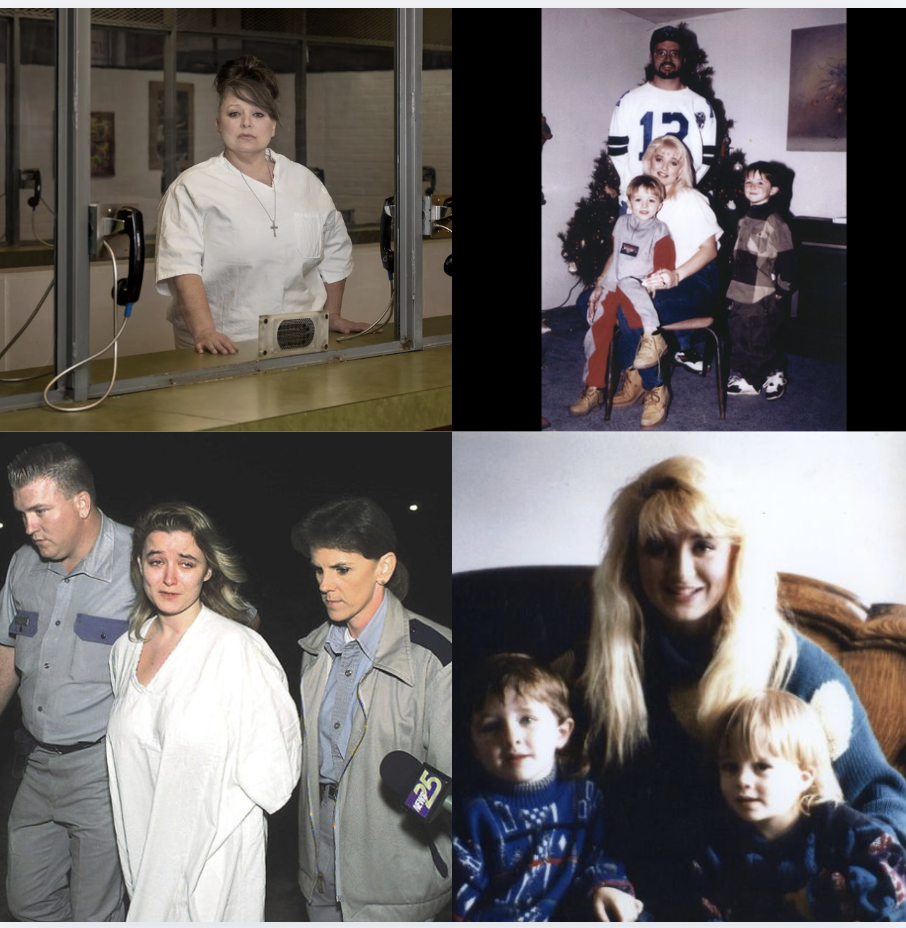
DARLIE ROUTIER: THREE DECADES ON DEATH ROW AND A CASE THAT STILL DIVIDES AMERICA
For nearly three decades, the name Darlie Routier has sat at the center of one of Texas’ most polarizing criminal cases—an enduring symbol of how a single night can fracture a community, a family, and the justice system itself. Convicted in 1997 for the murder of her five-year-old son, Routier has remained on death row ever since, her case resurfacing time and again in appeals, documentaries, and public debate.
Yet despite the passage of time, one thing remains unchanged: the question that continues to haunt both supporters and critics—what really happened inside the Routier home on June 6, 1996?
A Night That Changed Everything
In the quiet suburb of Rowlett, Texas, the early morning hours were shattered by a frantic 911 call. Routier reported that an intruder had broken into the family home and attacked her and her two young sons. By the time police arrived, one child was already dead. The other would not survive his injuries.
From the outset, the case drew intense scrutiny. Investigators quickly began to question Routier’s account, citing inconsistencies in her statements and the physical evidence at the scene. What began as a suspected home invasion soon shifted into a homicide investigation focused on the mother herself.
The Trial That Captured the Nation
Routier’s trial in 1997 was swift, emotional, and highly publicized. Prosecutors painted a picture of a woman under pressure—financial stress, lifestyle concerns, and a desire to maintain appearances. They argued that the crime was staged, pointing to forensic evidence and behavioral interpretations.
The defense countered with a starkly different narrative: that Routier was a victim of a brutal attack, misjudged in the aftermath of trauma. They questioned the handling of evidence and suggested that the investigation had prematurely narrowed its focus.
Perhaps most famously, a piece of video footage played a pivotal role in shaping public perception. The clip, showing Routier at her son’s graveside, was presented by prosecutors as inappropriate and celebratory. The defense argued it was taken out of context—part of a longer memorial that included mourning and prayer.
In the end, the jury sided with the prosecution. Routier was found guilty and sentenced to death.
A Case That Refuses to Fade
Unlike many cases that quietly recede after conviction, Routier’s has persisted in the public eye. Over the years, supporters have rallied around claims of wrongful conviction, pointing to questions about forensic analysis, blood evidence interpretation, and the timeline of events.
Advances in forensic science have also played a role in keeping the case alive. Appeals have sought additional DNA testing, arguing that modern techniques could shed new light on evidence collected decades ago.
Critics, however, maintain that the original verdict was sound, emphasizing the jury’s careful consideration and the weight of the evidence presented at trial.
The Human Cost
Beyond the legal arguments lies the human reality of the case. A family was shattered. Two young lives were lost. And a mother has spent nearly thirty years behind bars, her fate tied to a legal system that moves deliberately, often slowly, through complex appeals.
For the Routier family and the victims’ relatives, the years have not dulled the pain—only deepened the layers of grief and uncertainty.
Public Fascination and Media Influence
Part of what has kept the case alive is its intersection with media and public perception. True crime documentaries, podcasts, and online communities have revisited the evidence repeatedly, each time introducing the case to a new generation.
In some circles, Routier is seen as a victim of a flawed system. In others, she remains firmly viewed as guilty. The divide is stark—and often emotional.
Experts note that such cases highlight the powerful role of narrative. How evidence is presented, how behavior is interpreted, and how stories are told can all shape outcomes in ways that extend far beyond the courtroom.
Where Things Stand Today
As of now, Routier remains on death row in Texas. Legal efforts continue, focusing on forensic re-evaluation and procedural questions. No execution date has been carried out, and no definitive resolution has brought closure to the many who have followed the case.
The absence of finality is, in itself, part of what keeps the story alive. There is no ending—only an ongoing process marked by filings, reviews, and the slow machinery of justice.
The Unanswered Questions
Cases like Routier’s endure because they leave space for doubt—whether justified or not. Was all the evidence fully understood at the time? Could new technology change the interpretation of key details? Or does the original verdict still stand on solid ground?
These are questions that may never be answered to everyone’s satisfaction.
A Legacy of Controversy
Nearly thirty years after that night in 1996, the Routier case remains a lightning rod for debate about the death penalty, forensic science, and the nature of justice itself.
It is a reminder that some stories do not end with a verdict. They continue—through appeals, through public discourse, and through the enduring human need to seek truth, even when it remains just out of reach.