
A brutal murder case in Wolverhampton has ended with a 32-year-old man sentenced to life in prison after a court heard how a mother was allegedly left dying in the street following a violent attack inside the back of a van.
A horrifying murder case that has shaken Wolverhampton to its core has ended with a 32-year-old man sentenced to life in prison after jurors heard chilling details of how a mother was allegedly strangled, beaten, abandoned nearly naked in the street, and left to die following a violent encounter inside the back of a van.
But even after the conviction, disturbing questions continue to haunt the case — because according to prosecutors, what happened after the killing may have been almost as shocking as the attack itself.
Authorities say Tanveer Singh calmly returned to work the next morning “as if nothing had happened.”
And now, as investigators close one of the region’s most brutal murder trials in recent memory, whispers surrounding the final hours before Shara Millar’s death are fueling speculation that parts of that night may still remain hidden.
The court heard that Singh picked up Ms. Millar before driving her to an industrial estate, where prosecutors say the encounter suddenly turned violent after she rejected his sexual demands inside the back of his van.
What followed, according to evidence presented during the trial at Wolverhampton Crown Court, was a sustained and savage assault fueled by rage, cocaine, and what prosecutors described as a terrifying loss of control.
Jurors were told Singh allegedly strangled the mother for several minutes for his own sexual gratification while violently attacking her inside the vehicle.
Medical evidence presented in court described catastrophic injuries.

Ms. Millar reportedly suffered what experts called an “unusual number” of fractures to her neck — injuries prosecutors argued were consistent with prolonged choking and extreme force.
Additional wounds to her face and head were allegedly caused by repeated heavy punches.
By the time the assault ended, prosecutors said Ms. Millar was either dying or already dead.
Yet according to investigators, Singh’s actions after the attack became even more disturbing.
The court heard that the 32-year-old allegedly dumped Ms. Millar’s body at the roadside, leaving her virtually naked with only a bra and a single trainer still on one foot.
Then, in what prosecutors described as a calculated attempt to destroy evidence, Singh allegedly poured AdBlue — a diesel exhaust fluid commonly used in vehicles — over her body.
The prosecution argued this was not panic.
This was deliberate.
This was methodical.
And according to the presiding judge, the defendant’s behavior showed chilling levels of predatory violence and a complete lack of accountability.
But perhaps the single detail that left many observers stunned came the following morning.
Despite the horrifying injuries, despite the violence prosecutors described in court, despite allegedly abandoning a dying woman in the street, Singh reportedly arrived at work the next day behaving completely normally.
Witnesses allegedly noticed nothing unusual.
No visible panic.
No emotional collapse.
No signs of remorse.
“It was as if nothing had happened,” prosecutors said during the trial.
That haunting image — a man accused of committing an unspeakably violent killing before calmly continuing his routine hours later — has now become one of the most disturbing aspects of the entire case.
The trial itself lasted two weeks and exposed deeply graphic details surrounding the final moments of Ms. Millar’s life.
Jurors listened as prosecutors reconstructed the timeline of events leading up to the killing, relying on forensic evidence, witness testimony, digital records, and post-mortem findings.
According to the prosecution, Singh initially encountered Ms. Millar on the street before driving her to the industrial estate where the fatal attack occurred.
What happened inside the van would later become the central focus of the trial.
Prosecutors argued the violence escalated after Ms. Millar resisted Singh’s sexual demands, triggering what they described as an explosive and deadly reaction.
The attack allegedly involved prolonged strangulation, repeated punches, and sustained violence that continued far beyond any accidental confrontation.
Medical experts testified that the injuries found on Ms. Millar’s body indicated an attack of extraordinary brutality.
The neck fractures alone reportedly shocked investigators.
One forensic expert allegedly noted the injuries were among the most severe seen in a strangulation case of this nature.
Meanwhile, the condition in which Ms. Millar’s body was discovered painted an equally horrifying picture.
Abandoned partially unclothed by the roadside.
One shoe missing.
Evidence allegedly washed with chemicals.
And signs of what prosecutors argued was an intentional effort to conceal the crime.
The use of AdBlue became a major point during the proceedings.
Investigators claimed Singh poured the fluid over Ms. Millar’s body specifically to interfere with forensic evidence and reduce the chances of linking himself to the murder.

That allegation appeared to deeply affect the court.
Because according to prosecutors, the defendant did not simply lose control during a violent encounter.
He allegedly made conscious decisions afterward.
Decisions that suggested awareness.
Planning.
And an attempt to escape responsibility.
Throughout the trial, the prosecution repeatedly described Singh’s conduct as predatory.
The judge echoed those concerns during sentencing, condemning both the violence itself and what was described as the defendant’s refusal to fully accept responsibility during legal proceedings.
Jurors ultimately found Singh guilty of murder.
The court sentenced him to life imprisonment, ordering that he serve a minimum term of 29 years before becoming eligible to apply for parole.
For many following the case, however, the sentence has not ended the unease surrounding the killing.
Because despite the conviction, disturbing rumors and unanswered questions continue circulating around the final timeline of events.
According to whispers surrounding the investigation, some detectives privately believed portions of the night may never be fully reconstructed.
Officials have not publicly addressed those claims.
Yet several details continue fueling speculation.
Exactly how long was Ms. Millar left alive after the assault?
Did anyone pass nearby before emergency services arrived?
And why, according to some reports, did certain movements during the night remain difficult for investigators to fully verify?
Authorities have not suggested anyone else was involved in the murder.
But the lingering uncertainty surrounding specific moments before and after the attack continues haunting those who followed the trial closely.
Outside court, emotional reactions poured in following the verdict.
Many expressed outrage over the level of violence inflicted on Ms. Millar, while others focused on the horrifying detail that she had allegedly been left exposed in the street after the attack.
Advocates against violence toward women described the case as another devastating example of predatory male aggression escalating into fatal brutality.
Others pointed to the role drugs allegedly played in the killing after prosecutors described Singh as cocaine-fueled during the assault.
Criminal behavior experts say stimulant drugs such as cocaine can intensify aggression, impulsivity, paranoia, and violent reactions — particularly in unstable confrontations involving rejection or humiliation.
Still, experts stressed that intoxication alone cannot explain the level of sustained violence allegedly inflicted in the case.
Former investigators following the trial privately noted that prolonged strangulation murders often reveal terrifying levels of intent because the attacker remains physically aware of the victim’s suffering throughout the assault.
That reality made the evidence surrounding Ms. Millar’s injuries especially disturbing.
One former detective reportedly described the case as “violence that continued far beyond rage.”
And then there is the industrial estate itself.
Dark.
Isolated.
Nearly empty overnight.
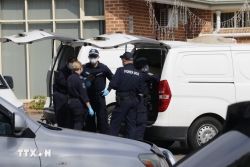
Investigators spent days combing the area for forensic evidence after Ms. Millar’s body was discovered nearby.
Police vehicles sealed off portions of the estate while officers searched roadsides, drainage areas, and surrounding spaces connected to the van’s movements.
Residents later described the atmosphere as deeply unsettling.
Some reportedly had no idea such violence had unfolded so close to where they lived or worked until police activity suddenly flooded the area.
Meanwhile, prosecutors continued building what they described as an overwhelming case against Singh.
CCTV evidence, forensic analysis, and physical findings inside the van reportedly became critical components during the trial.
Jurors were also shown evidence connected to Singh’s movements after the killing, including his actions the following morning.
That timeline would ultimately become one of the prosecution’s most powerful arguments.
Because according to the Crown, Singh did not behave like a man overwhelmed by accidental tragedy.
He behaved like someone attempting to continue life normally after a calculated act of violence.
That image now lingers heavily over the case.
A mother left dying in the street.
A body partially stripped.
Chemical fluid allegedly poured over evidence.
And a suspect reportedly clocking into work hours later as if the previous night had never happened.
Even now, after the life sentence, many believe the emotional impact of the case will continue haunting Wolverhampton for years.
Flowers and tributes left in memory of Ms. Millar reflected widespread grief over the circumstances surrounding her death.
Friends described her as loved, vulnerable, and deeply missed.
Meanwhile, the brutality of the case has reignited wider conversations about violence against women, predatory behavior, and the terrifying consequences that can unfold behind closed doors during moments of rage and control.
Yet for some observers, one final detail continues standing out above everything else.
Not just the violence.
Not just the injuries.
Not even the alleged attempt to destroy evidence.
But the unsettling possibility that parts of those final hours may still remain hidden somewhere between the industrial estate, the van, and the silence that followed afterward.
Because according to whispers still circulating around the investigation, there are detectives who privately suspect the complete truth about what unfolded inside that van may never fully emerge in public.