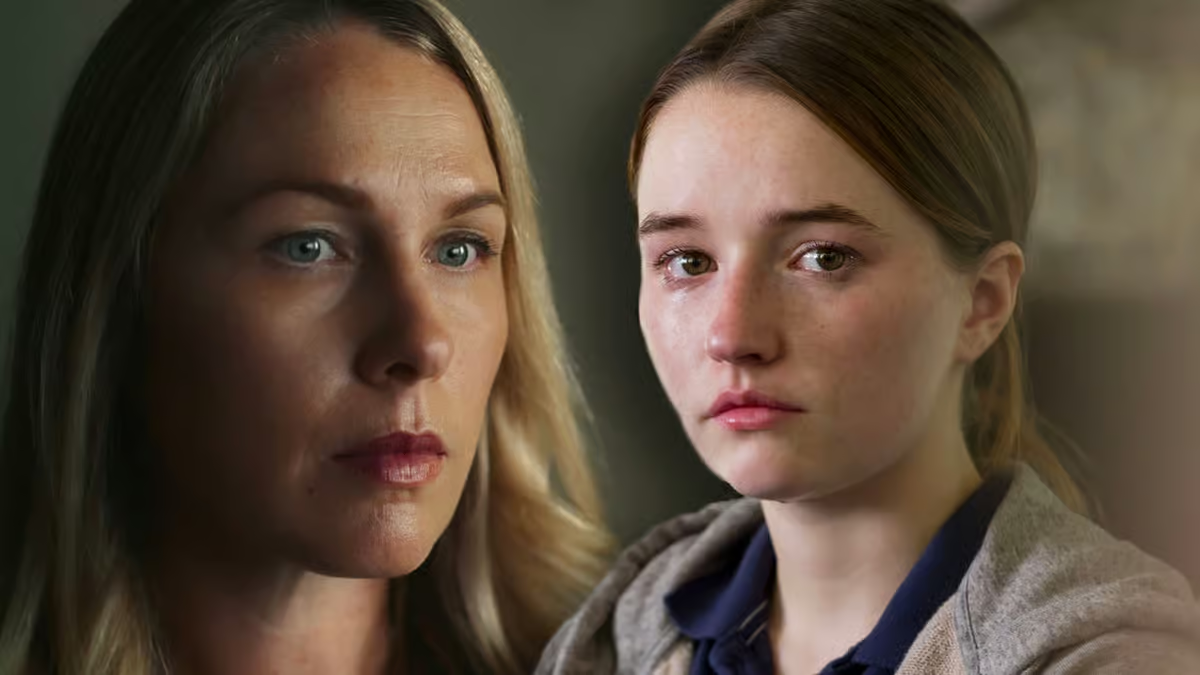
Netflix viewers thought they were starting a quiet coastal drama… Then one long-buried secret turned everything into a nightmare.
Netflix viewers are desperately warning each other about one under-the-radar limited series that hooks you from the very first scene and refuses to let go. What begins as what seems like a straightforward investigation into a horrific crime quickly spirals into something far darker, more heartbreaking, and more infuriating than anyone expected.
At first glance, it looks like a typical crime procedural. A young woman reports a brutal attack in her own home. But instead of compassion and support, she faces scepticism, invasive questioning, doubt from those closest to her, and eventually pressure that shatters her entire world. As the story unravels across two timelines, what appears to be an isolated – and possibly fabricated – incident slowly reveals a sinister pattern lurking just beneath the surface.
Two relentless female detectives, working states away, start connecting overlooked clues that everyone else missed. Their dogged investigation exposes disturbing realities about how the system treats victims – and forces everyone to confront why the truth was ignored for so long. Praised as one of Netflix’s most powerful and emotionally devastating dramas, Unbelievable grips you from the opening minutes and leaves you reeling long after the final credits roll, questioning everything you thought you knew about justice, trauma, and belief.
Many tuned in expecting a standard whodunnit crime story. Few were prepared for the gut-wrenching moment that reveals the biggest mystery wasn’t just who committed the crimes… but why nobody believed her in the first place.
The Accusation That Changed Everything

The series opens in 2008 in Lynnwood, Washington. Eighteen-year-old Marie Adler (played with raw, heartbreaking vulnerability by Kaitlyn Dever) reports a nightmare scenario: a masked intruder broke into her apartment, tied her up with her own shoelaces, blindfolded her, threatened her with a knife, and raped her. She provides a detailed account despite being in shock.
But almost immediately, things go horribly wrong. The male detectives assigned to her case – Detective Parker and Detective Pruitt – grow suspicious. Her story has inconsistencies (common in trauma survivors), she doesn’t react “the way a victim should,” and people in her life, including a former foster mother, plant seeds of doubt by mentioning her past “attention-seeking” behaviour. Under intense pressure, Marie eventually recants her statement. She is then charged with filing a false police report.
The fallout is devastating. Marie, already a survivor of a chaotic foster care system and years of instability, loses her housing support, her friends turn away, and she spirals into isolation and self-blame. The system that was supposed to protect her instead punishes her for coming forward. It’s a storyline that feels painfully real – and it is.
Three Years Later: The Detectives Who Wouldn’t Quit
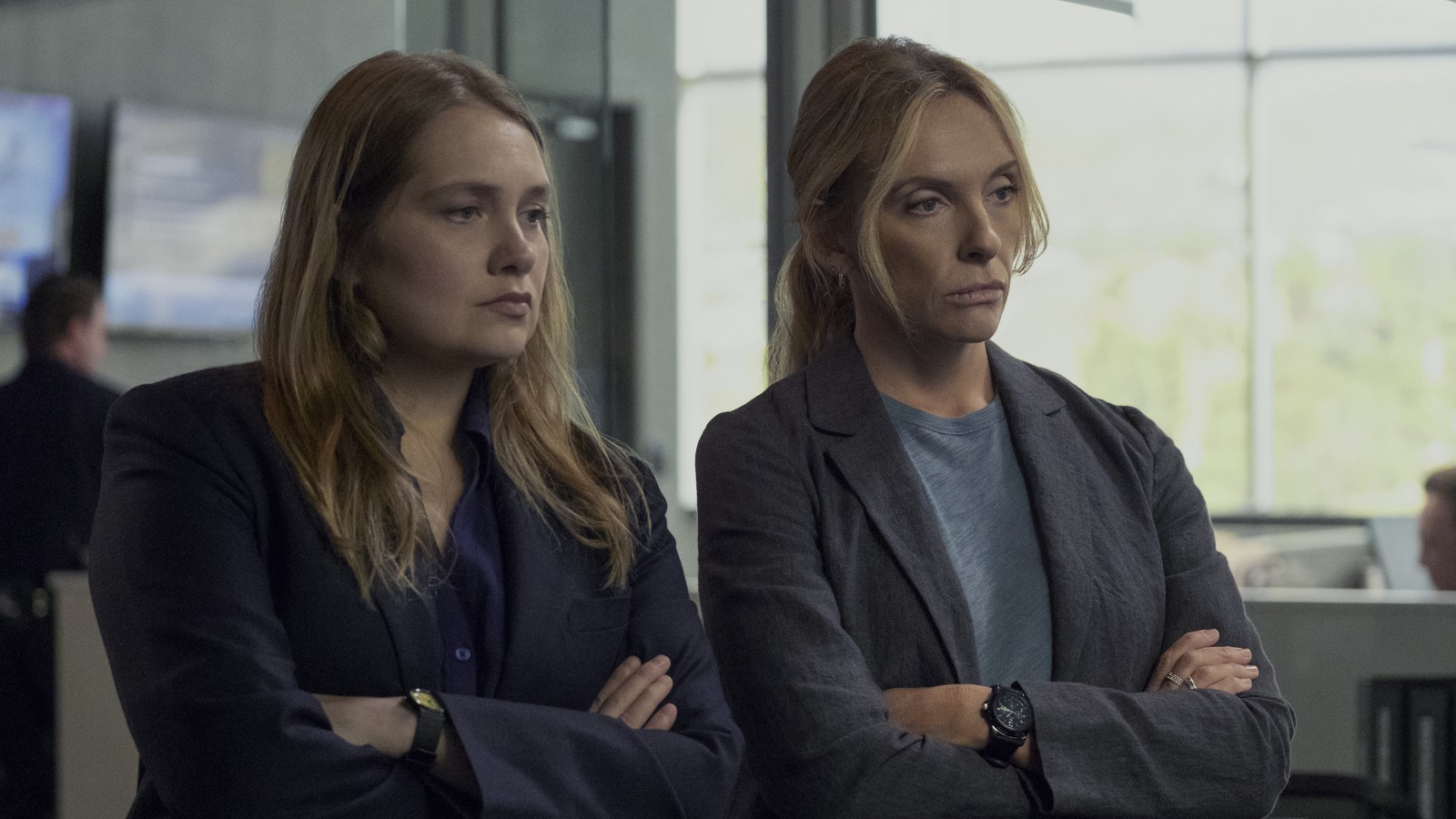
Meanwhile, in 2011 in Colorado, Detective Karen Duvall (Merritt Wever) is called to a strikingly similar assault. A young woman, Amber (Danielle Macdonald), has been raped in her home by a masked intruder using the exact same methods. Duvall, known for her empathetic and meticulous approach, immediately believes the victim and begins building the case with care.
She soon teams up with the more experienced, no-nonsense Detective Grace Rasmussen (Toni Collette in a powerhouse performance). As the pair dig deeper, they uncover a string of eerily similar attacks across multiple states. The same distinctive knots, the same calm, methodical perpetrator, the same chilling attention to detail. What started as one case becomes a hunt for a serial rapist who has been operating undetected for years.
The chemistry between Wever and Collette is electric – one gentle and compassionate, the other fiery and determined. Their partnership drives the investigation forward with intelligence and humanity, contrasting sharply with the mishandling of Marie’s original report. Viewers have hailed their performances as career-best, with both earning major award nominations.
The Painful Truth That Connects It All
As the detectives close in, the series masterfully weaves the two timelines together. We watch Marie trying to rebuild her shattered life – working dead-end jobs, forming tentative new connections, and carrying the weight of disbelief from everyone around her. Her performance by Kaitlyn Dever is quietly devastating; she conveys profound trauma without melodrama, making Marie’s pain feel viscerally real.
The biggest twist isn’t the identity of the rapist (though the reveal is satisfyingly tense). It’s the realisation that Marie was telling the truth all along – and that the failure to believe her allowed a predator to continue terrorising women for years. The series doesn’t shy away from showing the human cost: more victims, more trauma, and a young woman’s life nearly destroyed by systemic doubt.
Based on the Pulitzer Prize-winning article “An Unbelievable Story of Rape” by T. Christian Miller and Ken Armstrong (and the book A False Report), the miniseries stays remarkably faithful to the real 2008-2011 cases. The real Marie Adler’s story highlights how trauma responses are often misunderstood, how victims from unstable backgrounds are disproportionately disbelieved, and how one wrong turn in an investigation can have ripple effects.
Why Unbelievable Hits So Hard
What makes this eight-episode limited series stand out isn’t gratuitous violence or sensationalism. It’s the careful, respectful handling of sexual assault and its aftermath. Directors Susannah Grant, Lisa Cholodenko, and others focus on the psychological and emotional toll rather than graphic exploitation. The camera lingers on faces, reactions, and quiet moments of despair or determination.
Viewers report being unable to stop watching, often binging the entire season in one sitting despite the heavy subject matter. “It’s infuriating, heartbreaking, and ultimately hopeful,” one Reddit user wrote. Another added: “I cried multiple times. This should be required viewing for law enforcement.”
The series excels at showing the nuances: not all cops are villains, but biases, pressure for quick closures, and lack of proper training on trauma can lead to catastrophic failures. The male detectives aren’t cartoonishly evil – they’re overworked men who make assumptions that feel plausible in the moment, which makes their mistakes even more chilling.
Supporting performances are stellar too. Elizabeth Marvel as Judith, one of Marie’s former foster mothers, brings complexity to a woman whose doubt stems from her own experiences. The portrayal of the rapist himself is restrained but terrifying – a calculated, organised offender who treats his crimes like a twisted game.
The Real-Life Impact and Legacy

Since its 2019 release, Unbelievable has sparked important conversations about rape culture, victim blaming, and police reform. It contributed to broader awareness around how trauma affects memory and behaviour, challenging the “perfect victim” stereotype. In real life, after the serial rapist was caught, the original detectives faced scrutiny, and changes were made to training protocols in Washington state.
Critics showered it with acclaim: 98% on Rotten Tomatoes, universal praise for its writing, direction, and acting. Toni Collette and Merritt Wever’s partnership was particularly celebrated as a masterclass in female-driven storytelling. Kaitlyn Dever’s subtle, layered work as Marie earned her widespread recognition as one of the brightest young talents in Hollywood.
Many survivors have shared how the series validated their experiences – the doubt, the gaslighting, the isolation – while also showing the power of persistence and empathy when investigators truly listen. It’s not easy viewing, but it’s necessary.
The Heartbreaking Moments That Stay With You
Without spoiling key details, there are several sequences that have become legendary among viewers. Marie’s initial interview, where the weight of repeated questioning visibly crushes her spirit. The quiet scene where she admits the truth to a friend years later. The detectives’ “eureka” moments piecing together physical evidence like shoe prints, DNA, and a crucial storage unit discovery. And the final confrontation with justice – bittersweet, angry, and profoundly moving.
The series ends not with cheap catharsis, but with a realistic look at recovery. Marie’s journey toward healing is ongoing, a reminder that belief is just the first step.
Why You Need To Watch It Now
In an era of endless true-crime content that often prioritises shock value, Unbelievable stands apart. It’s empathetic, intelligent, and fiercely feminist without being preachy. It trusts its audience to feel the outrage and the hope. At just eight episodes, it’s perfectly bingeable yet lingers for days afterward.
Netflix viewers continue to recommend it years later with warnings: “Have tissues ready. It’s heavy but so worth it.” “This changed how I think about victim testimonies forever.” If you haven’t seen it yet, clear your schedule, prepare for an emotional rollercoaster, and dive in.
The truth, when it finally surfaces, is as powerful as it is painful. Unbelievable isn’t just a crime story – it’s a story about belief, resilience, and the cost of doubt. It reminds us that sometimes the most unbelievable thing isn’t the crime itself, but the failure to listen.
What did you think of Unbelievable? Did Marie’s story break your heart as much as it did for millions of others? Or are you still furious about how the system failed her? Share your thoughts and favourite (or most devastating) moments in the comments below. 👇