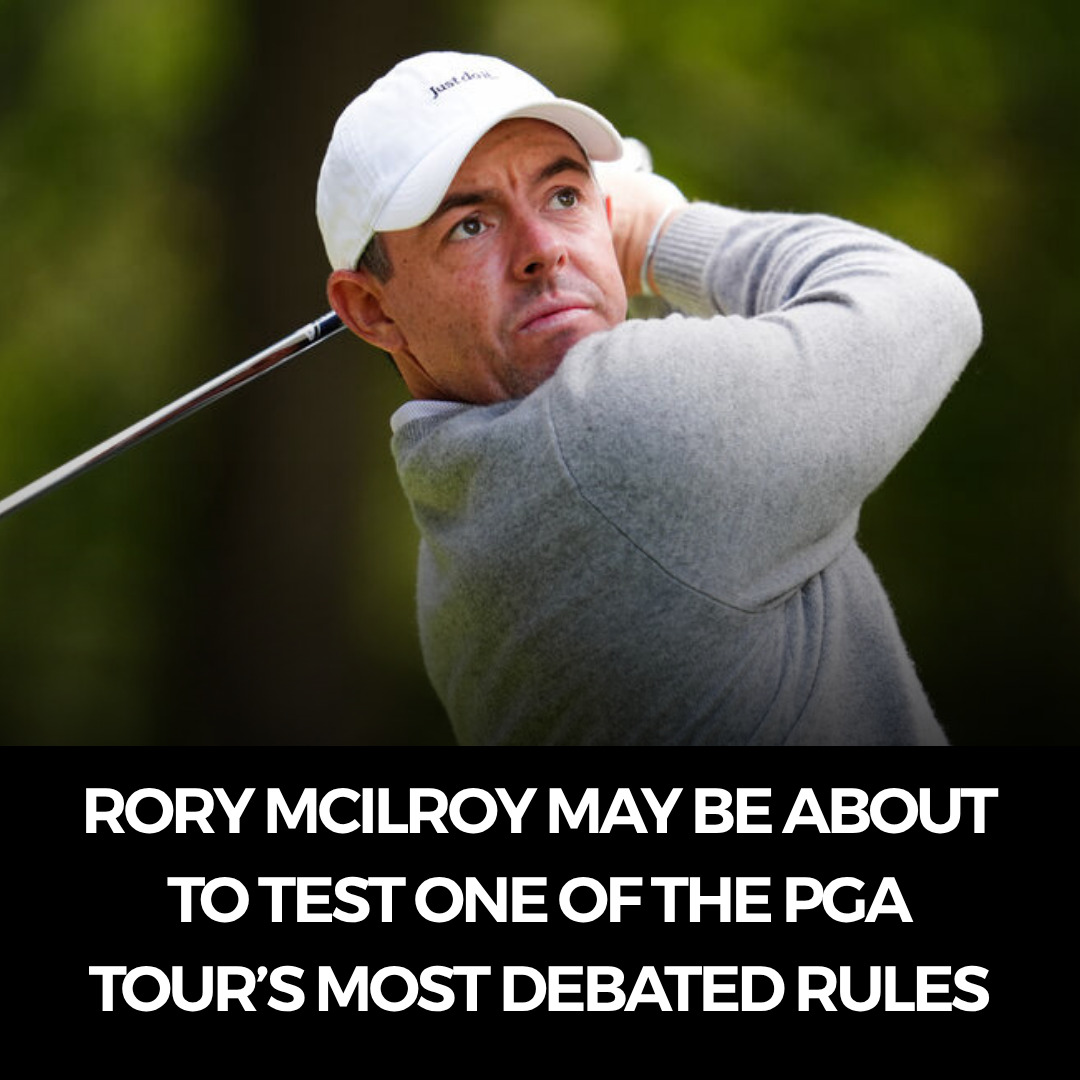
RORY MCILROY MAY BE ABOUT TO TEST ONE OF THE PGA TOUR’S MOST DEBATED RULES
Rory McIlroy’s decision to skip another major PGA Tour event has created an unusual situation. The four-time major champion may fall short of the normal requirement — but a special clause is offering him a potential escape hatch.

As the 2026 PGA Tour season winds down, one of golf’s biggest stars finds himself at the center of a controversy that touches on fairness, star power, and the integrity of the Tour’s regulations. McIlroy, long regarded as one of the game’s most talented and marketable players, has opted for a lighter schedule this year, prioritizing select events while bypassing others. This selective approach has put him on track to miss the standard 15-event minimum required for full membership retention — a threshold that has sparked debate among players, fans, and analysts alike.
The Man Behind the Swing
Rory McIlroy burst onto the professional scene as a prodigious talent from Northern Ireland. By his early 20s, he had already claimed multiple major championships, showcasing a powerful, fluid swing that combined distance with precision. His four major titles — the 2011 U.S. Open, 2012 and 2014 PGA Championships, and the 2025 Masters — cemented his status as one of the elite players of his generation.

Beyond his on-course achievements, McIlroy has been a vocal advocate for the PGA Tour, particularly during the turbulent period when LIV Golf emerged as a rival circuit. His loyalty to the traditional Tour structure, combined with his global appeal, has made him a cornerstone figure. However, recent years have seen him balance commitments across tours, family life, and personal well-being, leading to a more curated schedule.

In 2026, reports indicate McIlroy has skipped multiple Signature Events, positioning him below the 15-event threshold. While this might seem inconsequential for a player of his caliber, it directly challenges the Tour’s membership rules designed to ensure active participation from cardholders.
Understanding the PGA Tour’s 15-Event Rule
The PGA Tour’s eligibility and membership regulations are detailed in its player handbook. For most members, playing in at least 15 co-sponsored or approved tournaments per season is mandatory to maintain full status for the following year. This requirement aims to promote competitive depth, fan engagement, and the overall health of the Tour’s ecosystem.
There are nuances, however. Lifetime members — those with 20 or more PGA Tour wins or other significant achievements — enjoy certain exemptions. McIlroy reached this milestone years ago, granting him lifetime eligibility for majors and many Tour events. Yet the minimum event count remains a baseline expectation for active membership retention in some contexts.

Enter the special clause that has now come under scrutiny: “Notwithstanding the above, the Commissioner, upon application by a foreign member and for medical reasons or other extraordinary circumstances that the Commissioner, at his discretion, determines to be a valid reason for not playing in at least 15 PGA Tour co-sponsored or approved tournaments, may reduce the 15-minimum (or 12-minimum as the case may be) tournament requirement.”
This provision, intended primarily for international players facing travel burdens, scheduling conflicts with home tours, or personal hardships, gives Commissioner Jay Monahan significant discretionary power. According to recent reports, the PGA Tour has invoked or is prepared to invoke this clause for McIlroy, citing extenuating circumstances.

The Current Situation
As of late June 2026, McIlroy’s participation has fallen short of the standard. He has focused on high-profile events, including major championships, while skipping others. This strategy aligns with many top players who strategically target Signature Events and majors for maximum impact and earnings.
The Tour’s announcement or expected confirmation of the waiver has ignited discussions across golf media and social platforms. Critics argue it sets a dangerous precedent, suggesting favoritism toward star players. Supporters counter that McIlroy’s contributions — both on and off the course — warrant flexibility, especially as a foreign member juggling international commitments.

One golf commentator noted that the clause had rarely, if ever, been publicly applied in this manner before, raising questions about consistency. If granted, would similar waivers become more common for other international stars? How does this align with the Tour’s push for greater player engagement amid competition from rival leagues?
The Debate: Fairness vs. Practicality
The controversy taps into broader tensions within professional golf. On one side, rank-and-file players who grind through full schedules to earn their status see potential leniency for McIlroy as undermining the rules. Comments on social media and forums have ranged from accusations of “playing favorites” to acknowledgments that top talents drive the sport’s popularity and revenue.
On the other hand, defenders point out McIlroy’s history of loyalty during the LIV Golf saga. His willingness to represent the PGA Tour publicly and his role in negotiations helped stabilize the landscape. Additionally, as a Northern Irish player, the logistical challenges of frequent U.S. travel, combined with DP World Tour obligations and family considerations, provide reasonable grounds for the “extenuating circumstances” exemption.
This situation also highlights evolving dynamics in the sport. With a condensed Signature Event schedule and increased emphasis on quality over quantity, the 15-event rule itself faces relevance questions. Some analysts suggest the Tour may need to revisit its regulations to better reflect modern player realities without diluting competitive standards.
Implications for the Future
If McIlroy retains his status via the clause, it could influence how the PGA Tour handles similar cases moving forward. It might encourage other elite players to test the boundaries of scheduling flexibility. Conversely, a strict enforcement could signal a harder line on participation, potentially alienating stars who generate significant interest.
For McIlroy personally, the focus remains on performance. Fresh off competitive showings in recent majors, he continues to chase additional major victories and FedEx Cup success. His selective approach has not diminished his competitiveness when he does tee it up, as evidenced by strong stretches in 2026 events.
Broader implications extend to sponsorships, broadcasting deals, and fan engagement. Golf thrives on personalities like McIlroy, whose charisma and skill draw casual viewers. Balancing this commercial reality with equitable rule application poses an ongoing challenge for Tour leadership.
A Defining Moment for Golf Governance
Rory McIlroy’s case represents more than one player’s schedule. It tests the PGA Tour’s ability to enforce its own rules consistently while adapting to the demands of a global sport and its premier athletes. The discretionary clause, while designed for legitimate exceptions, now sits at the heart of a debate about privilege, merit, and the spirit of competition.
As the season progresses and decisions are formalized, the golf world will watch closely. Will this episode prompt rule refinements, or will it reinforce the status quo? For fans, the priority remains witnessing McIlroy’s unmistakable talent on the course — regardless of the bureaucratic backdrop.
In an era of rapid change in professional golf, McIlroy’s situation underscores a timeless truth: rules are essential, but their application in the face of exceptional circumstances will always invite scrutiny. How the PGA Tour navigates this will say much about its vision for the game’s future.