THIS MAY BE THE MOMENT THAT BROKE TWO OF TV’S TOUGHEST DETECTIVES FOREVER
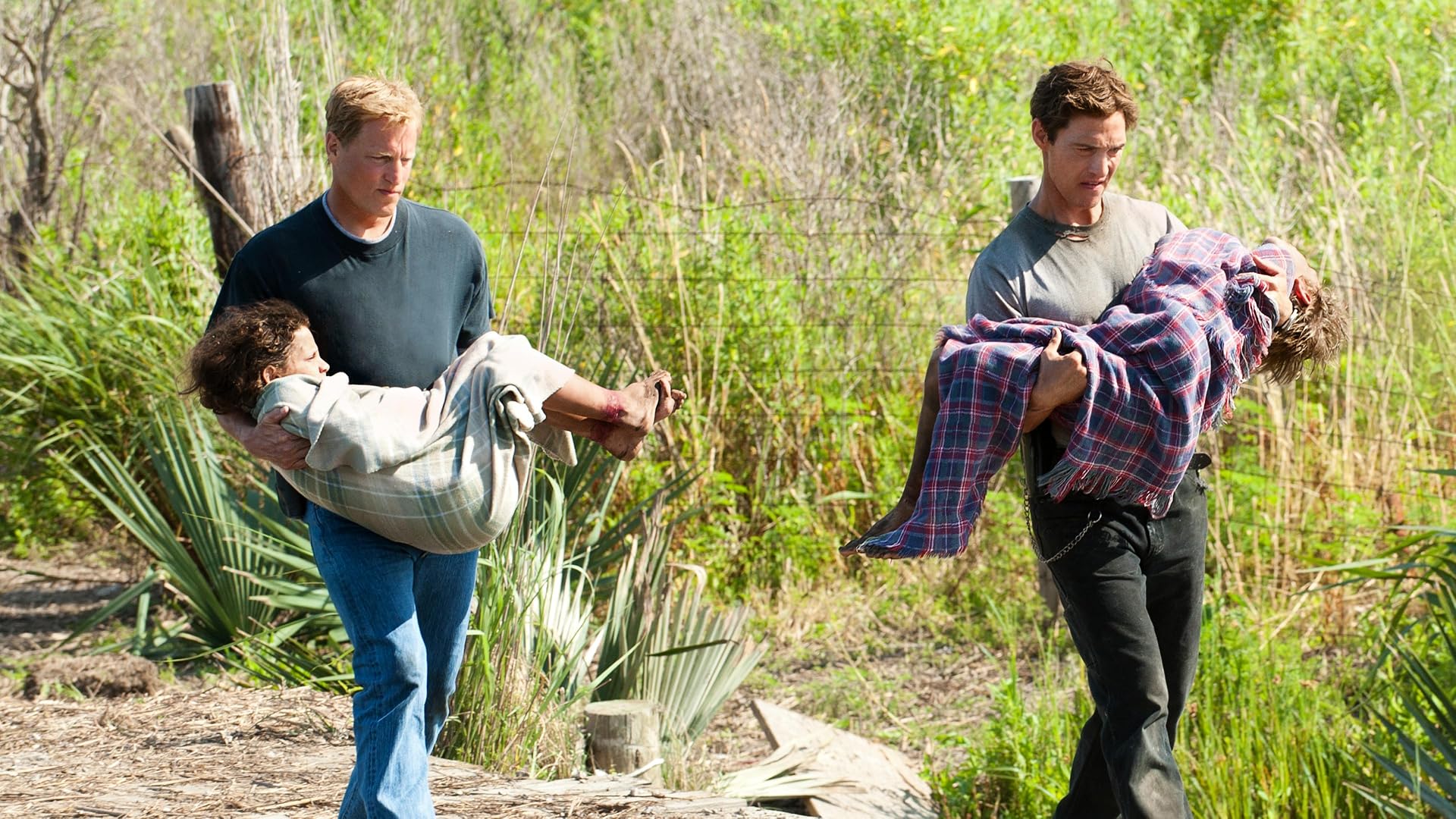
The image is seared into the minds of anyone who watched HBO’s groundbreaking first season of True Detective. Rust Cohle and Marty Hart — two of the most compelling anti-heroes ever put on screen — walk out of the green hell of the bayou in silence. One man’s face is carved from stone, the other’s is cracking under the strain. Between them, the small, fragile bodies of children who should never have seen such darkness. No sirens wail in triumph. No heroic music swells. Just the oppressive hum of insects and the squelch of mud under boots that will never feel clean again.
This was not a rescue bathed in glory. This was a descent into the abyss, and the men who climbed back out were forever changed.

The Long Road Into Darkness
To understand why this single walk out of the swamp hit with the force of a sledgehammer, you have to go back to the beginning of the case that consumed seventeen years of their lives.
It started with a body posed like a grotesque piece of art in a cane field — Dora Lange, antlers wired to her head, spiral symbols carved into her skin. Rust Cohle, the haunted former undercover narcotics detective with a brain like a steel trap and a soul already half-dead, saw patterns others missed. Marty Hart, the good-old-boy family man with a wandering eye and a quick temper, just wanted to close the case and go home to his wife and daughters.
What they found instead was a sprawling conspiracy stretching from backwoods meth labs to the polished corridors of power. A cult. A myth. The Yellow King. And children — always the children — at the rotten heart of it all.
By the time they tracked Reggie Ledoux, a tattooed psychopath running a meth operation deep in the swamps, the case had already cost them pieces of themselves. Rust’s marriage had collapsed years earlier after the death of his young daughter. Marty’s own family life was fracturing under the weight of his infidelities and the job’s demands. Neither man was whole when they finally closed in on Ledoux’s compound.
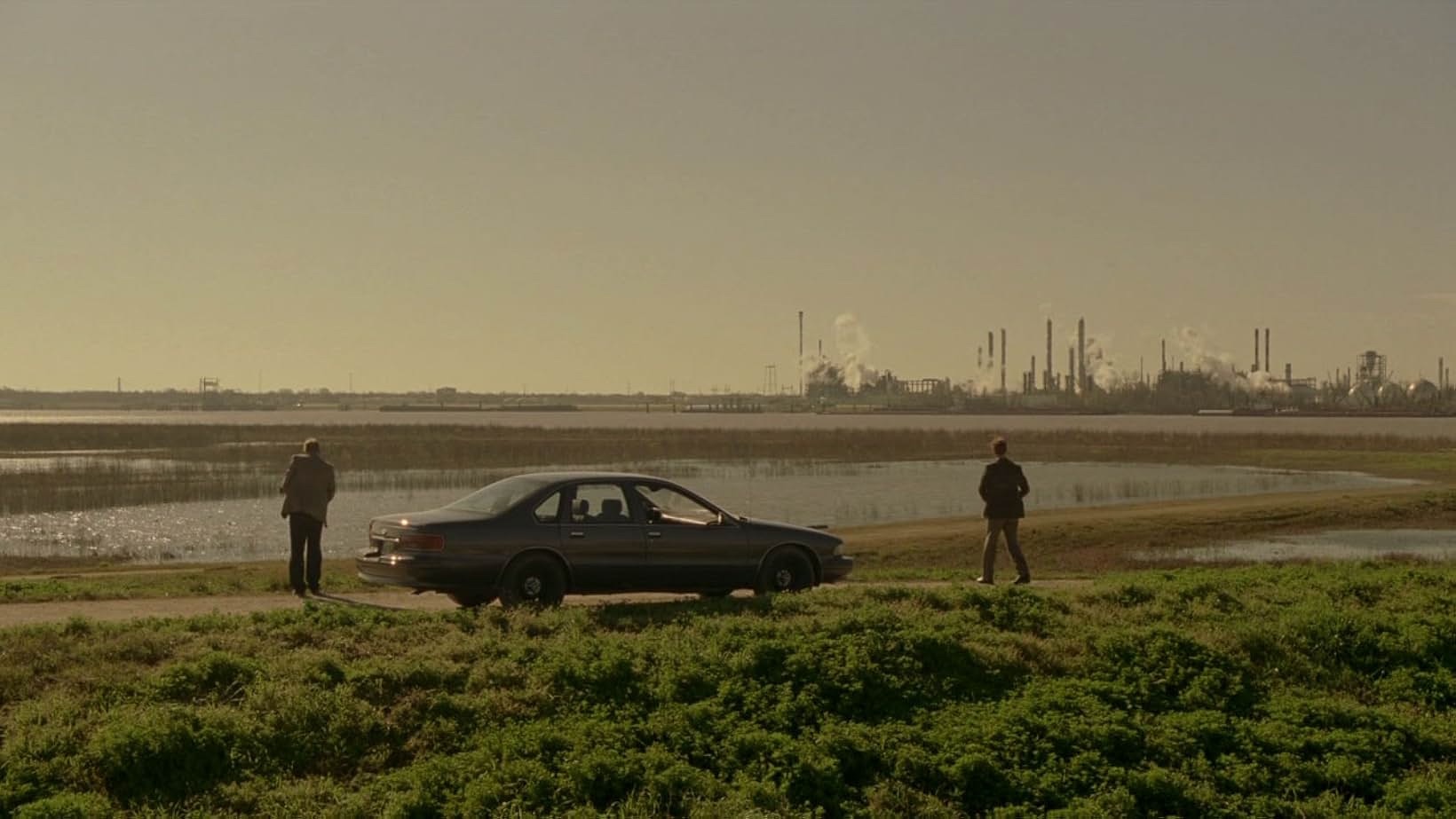
The Louisiana bayou itself felt like a character — thick, humid, alive with things that bite and sting. Filmed on location in real swamps and industrial outskirts, the setting swallowed light and hope. Tall grass whispered secrets. Black water hid bodies. And somewhere in that maze of trailers, shipping containers, and booby traps waited the truth no one was ready to face.
The Raid That Changed Everything
Episode 5, “The Secret Fate of All Life,” still stands as one of the most intense hours of television ever made. The tension had been building for weeks. A stolen videotape showing unspeakable acts. A frantic chase. Marty’s personal life imploding in real time. When the two detectives finally moved on the Ledoux compound, viewers knew something terrible was coming. They just didn’t know how terrible.
Marty went in first, rage already simmering. What he found inside a filthy shipping container stopped time.
Two children. Small. Broken. One already gone. The other alive but staring into a void no child should ever see. The horror of what had been done to them — the systematic abuse, the ritualistic terror, the casual evil of men who treated innocence like currency — was never shown in graphic detail. It didn’t need to be. The reaction on Marty Hart’s face said everything.
He executed Reggie Ledoux without hesitation, pumping bullets into the monster until the clip ran dry. It was not justice. It was fury. And in that moment, the “good cop” crossed a line he could never uncross.
Rust, ever the observer, moved with cold efficiency, taking out the remaining threat as Dewall fled and triggered his own explosive demise. But when the smoke cleared and the immediate danger was gone, the real work began — the part no training prepares you for.
They had to carry the children out.

Rust Cohle lifted the lifeless boy into his arms. The camera lingered on McConaughey’s face — that famous thousand-yard stare now focused on something far more intimate and devastating. For a man who had already lost a daughter, holding this small, still body must have felt like carrying his own ghost. He did not cry. He did not speak. He simply walked, jaw set, eyes forward, as if looking away for even a second would break what little remained of his carefully constructed armor.
Marty took the surviving girl. Harrelson’s performance here is a masterclass in quiet devastation. The loud, blustering detective who usually filled silence with jokes or anger had nothing left. His face was slack with shock, his movements careful, almost reverent. He had killed for these children, but it would never be enough to erase what they had endured.
They walked out together in near silence. No victory lap. No backslapping. Just two men and two children moving through the swamp toward whatever passed for daylight. The world outside would call them heroes. The cameras would flash. Promotions and commendations would follow. But in that moment, walking through the mud with the weight of innocence in their arms, both men knew the truth.
Some things cannot be fixed. Some darkness, once touched, never lets go.
The Silence That Spoke Volumes
What makes this scene so devastating is what it doesn’t show. There are no flashbacks to the horrors inside the container. No dramatic monologues about good and evil. The camera simply watches two men carry children and lets the audience feel the aftershock.
McConaughey’s Rust had spent the season delivering bleak philosophical monologues about time being a flat circle and humanity’s fundamental brokenness. In this moment, all that philosophy collapsed into something painfully human — the simple, unbearable act of carrying a dead child out of hell. His silence was not stoicism. It was the sound of a man whose worst worldview had just been confirmed in the most visceral way possible.
Harrelson’s Marty, the one who still believed in family and redemption and doing the right thing, had that belief shattered. The man who would later spiral into alcoholism, divorce, and a near-fatal confrontation with his former partner began his true unraveling here. Killing Ledoux felt righteous in the moment. Carrying the evidence of why he did it — a traumatized little girl — would haunt him for years.
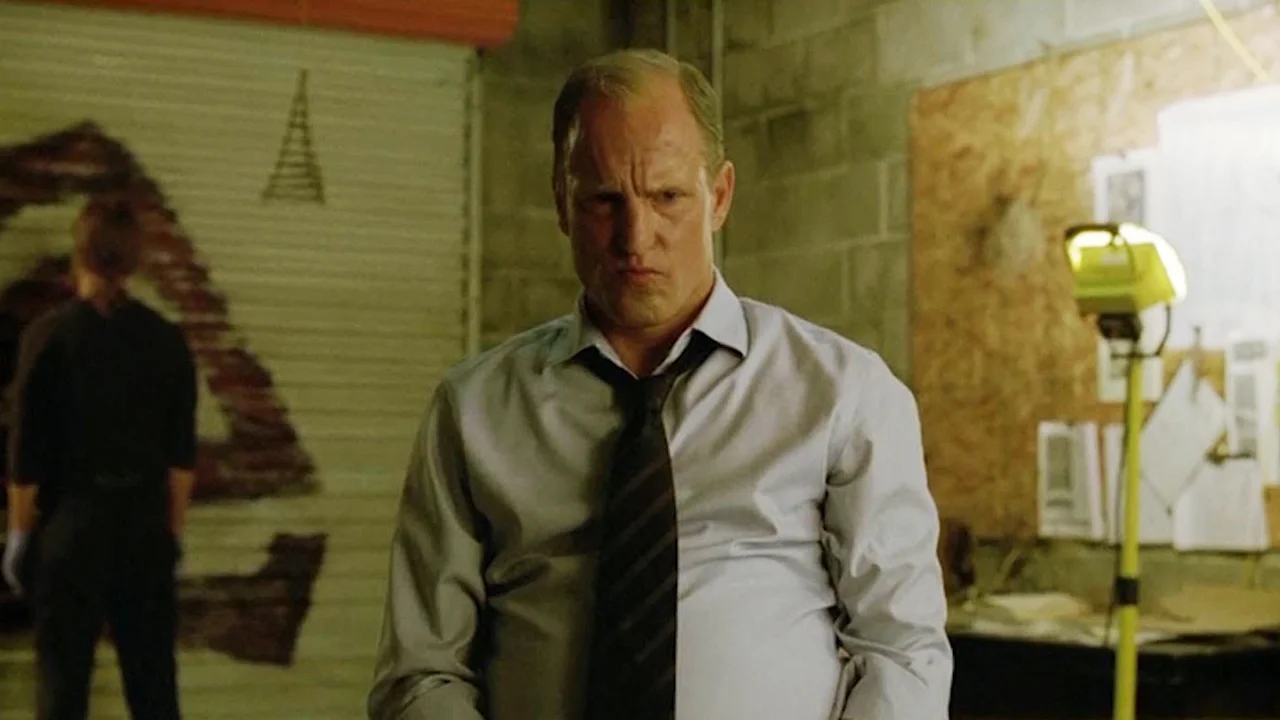
The partnership never fully recovered. The public hailed them as heroes who took down a monster and saved a child. Privately, the cracks widened. Marty drank harder. Rust withdrew further. The case that should have brought them closer instead exposed every fracture in their lives and their friendship. By the time they reunited in 2012 to finish what they started, both men were ghosts of who they had been before that walk out of the swamp.
Why This Moment Still Haunts Viewers
When True Detective Season 1 aired in 2014, it didn’t just become a hit — it became a cultural phenomenon. People didn’t just watch it; they obsessed over it. The long takes, the philosophical dialogue, the Louisiana atmosphere, and the performances created something rare: prestige television that felt like literature.
But it was moments like this — the raw, wordless humanity amid the cosmic horror — that gave the show its soul. Viewers who tuned in for a stylish crime procedural got something far more unsettling: a story about how evil doesn’t just destroy its victims. It infects the people who try to stop it.
The image of Rust and Marty carrying those children became instantly iconic. It was shared, memed, analyzed, and debated. Some saw it as the show’s emotional peak. Others recognized it as the point where the series stopped being about solving a crime and started being about surviving one.
More than a decade later, the scene still lands with the same sickening force. In an era of endless true-crime content and grimdark storytelling, True Detective Season 1 remains unmatched in its willingness to show the psychological cost of staring into the abyss — and the abyss staring back through the eyes of children who never asked to be part of anyone’s story.
The Men Who Walked Out Changed Forever
Matthew McConaughey and Woody Harrelson delivered career-defining performances, but it was this scene that proved they weren’t just acting. They were channeling something raw and real about masculinity, trauma, and the lies men tell themselves to keep functioning.
Rust Cohle had always known the world was broken. Carrying that boy out of the swamp simply gave him proof he could hold in his arms. Marty Hart had always believed he could compartmentalize — be a good detective, a good father, a good man. That belief died in the swamp alongside the child he couldn’t save.
They emerged as heroes to the outside world. Inside, they were never the same.
That is the true horror of True Detective Season 1. Not the Yellow King. Not the spirals. Not even the meth-fueled cultists in the bayou.
It is the look on two men’s faces as they carry frightened children out of the darkness and realize, too late, that some things you bring back with you can never be put down.
The silence between them said everything.
And millions of viewers are still listening.