PART 3 — THE PROMISE INSIDE THE FOOTLOCKER
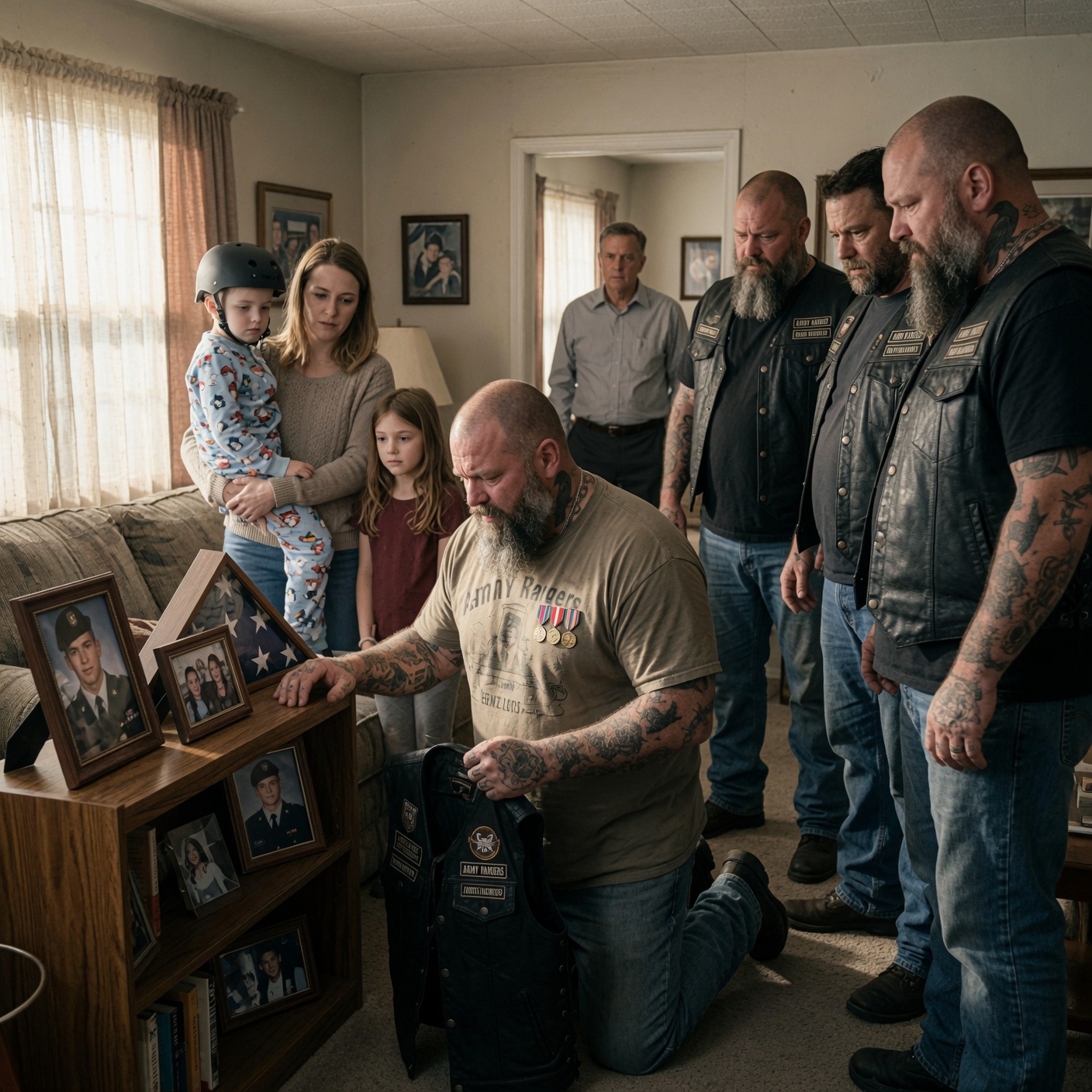
That evening, after the repairs were finished and the children had fallen asleep on the couch, I carried Ryan’s footlocker into the living room.
Jack and two older veterans sat quietly nearby.
I broke the seal.
Inside were photographs.
Letters.
A neatly folded patrol flag.
Ben’s first baseball glove.
Lily’s tiny ballet shoes.
And a video drive labeled simply:
For My Family.
Jack connected it to the television.
Ryan appeared on the screen wearing desert camouflage.
He smiled exactly the way I remembered.
“If you’re watching this…”
“…then things didn’t go the way I hoped.”
He laughed softly.
“So let me get the important part out first.”
“Emily…”
“This isn’t your fault.”
He turned toward the camera.
“Ben.”
“Lily.”
“If you’re old enough to understand this…”
“…I need you to remember something.”
He held up his dog tags.
“Courage isn’t about never needing help.”
“It’s about accepting it when good people offer.”
The room was silent.
Ryan smiled again.
“I’ve met incredible people in uniform.”
“And I’ve met incredible people wearing blue jeans, work boots, and leather vests.”
“Don’t judge either by what they wear.”
“Judge them by what they do when someone weaker needs them.”
Jack quietly wiped his eyes.
Ryan continued.
“If life ever becomes hard…”
“…there are brothers and sisters out there you haven’t met yet.”
“Trust the ones who protect others without asking for applause.”
The recording ended.
Nobody spoke for several minutes.
Finally, Ben walked over to Jack.
“My dad would’ve liked you.”
Jack smiled.
“I wish I’d met him.”
“So do I.”
The following weeks changed everything.
The county released the delayed assistance.
The property owner apologized publicly for how the eviction had been handled.
A local law firm volunteered to review every pending eviction involving veterans’ families.
Tom—the biker who owned a logistics company—offered me a full-time office position with flexible hours.
I accepted.
Months later, on Memorial Day, Jack invited us to ride with the club.
Forty motorcycles rolled slowly toward the veterans cemetery.
Ben sat safely behind Jack in a sidecar built especially for children.
Lily rode with another veteran.
At Ryan’s grave, every engine shut off.
No speeches.
No cameras.
Only silence.
Jack removed his gloves and saluted.
“We never served with Ryan,” he said quietly.
“But from today forward…”
“…his family rides with ours.”
Ben reached into his pocket and pulled out his father’s dog tags.
He didn’t place them on the grave.
He slipped them over his own neck.
Then he looked up at me.
“Mom…”
“We’re not alone anymore.”
I looked across the line of worn leather vests, gray beards, scarred hands, and quiet faces.
People often saw tattoos before kindness.
Motorcycles before sacrifice.
Leather before loyalty.
I almost had too.
But the men my landlord hired to put us out on the street became the people who made sure my children always had a way home.
And every year after that, when forty motorcycles stopped in front of our apartment—not because we needed help anymore, but because we were family—my children raced outside before the engines even went quiet.