The Architecture of Trauma: Analyzing Stephen Graham’s Career-Defining Performance in ‘The Virtues’
In the landscape of modern television drama, few actors possess the capacity for visceral, unvarnished vulnerability quite like Stephen Graham. While known internationally for his authoritative roles in high-octane crime sagas and period procedurals, Graham reached an artistic peak in the 2019 four-part miniseries The Virtues. Directed and co-written by Shane Meadows alongside Jack Thorne, the Channel 4 drama stands as a masterclass in psychological realism, presenting an uncompromising examination of childhood trauma, chronic alcoholism, and the painful mechanics of human redemption.
While viral social media posts and automated clickbait templates routinely flatten such complex television into dramatic shock-value hooks—promising “buried truths” and sensationalized plot twists—The Virtues demands a far more rigorous, analytical evaluation. The series is not a piece of melodramatic entertainment engineered for rapid digital consumption. Rather, it is a devastating, forensic character study that explores how deeply suppressed childhood trauma resurfaces in adulthood, and how the human psyche attempts to survive the catastrophic weight of forgotten pain.
The Collaborative Method of Shane Meadows and Stephen Graham
To understand the emotional density of The Virtues, one must examine the long-standing creative partnership between director Shane Meadows and Stephen Graham. Having previously collaborated on the seminal film and television project This Is England, Meadows and Graham developed a distinct narrative methodology grounded in extensive improvisation, naturalistic dialogue, and deep psychological authenticity.
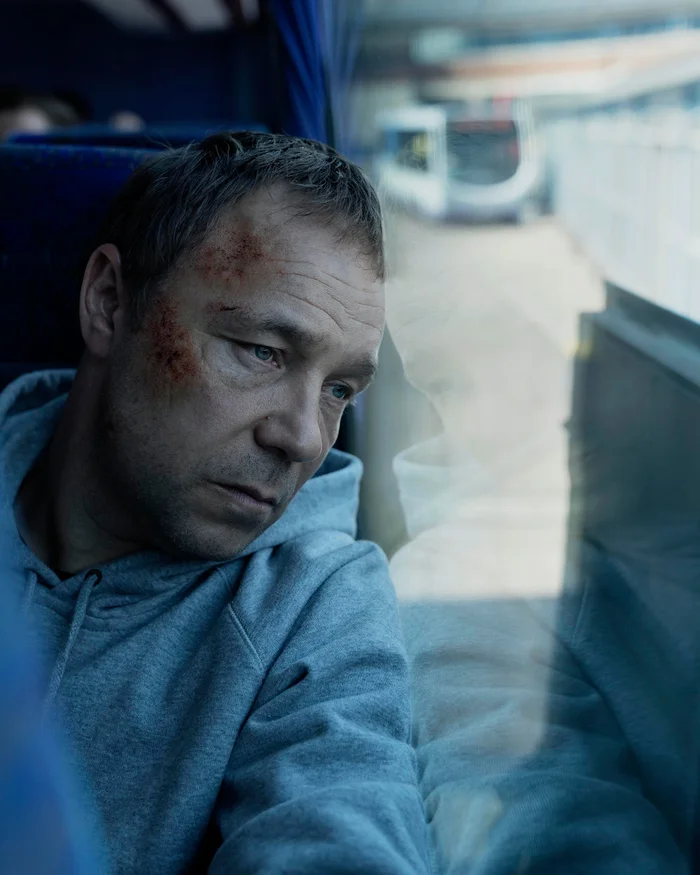
In The Virtues, Meadows crafts a narrative framework specifically tailored to Graham’s unique performative strengths. The story opens in Sheffield, where Joseph (Graham), a recovering alcoholic, faces a quiet personal collapse when his ex-partner and young son prepare to move permanently to Australia. Stripped of his primary emotional anchor, Joseph suffers a devastating relapse, spiraling into a harrowing, days-long bender that leaves him physically exhausted and emotionally broken.
Recognizing that his life in England has completely unraveled, Joseph boards a ferry to Ireland—a journey fueled not by clear intent, but by a subconscious, desperate need to reconnect with his estranged sister, Anna (Helen Behan), whom he has not seen since they were separated in the care system thirty years earlier. What begins as a hesitant attempt at family reconciliation gradually transforms into a painful psychological excavation, as Joseph’s return to his childhood environment unlocks terrifying, deeply buried memories of systemic abuse in an orphanage.
The Clinical Architecture of Trauma and Dissociative Amnesia
At the thematic core of The Virtues is the clinical reality of developmental trauma and dissociative amnesia. The series accurately illustrates how the human brain, particularly during early childhood, deploys extreme defensive mechanisms—such as blocking or repressing memories of severe physical and sexual abuse—to allow an individual to survive within an unbearable environment.
Graham’s performance captures the physical and psychological toll of repressed memory with extraordinary medical precision:
-
Somatic Expression of Anxiety: Long before Joseph consciously recalls the details of his childhood trauma, his body manifests the pain through involuntary tremors, panic attacks, severe alcohol dependency, and an overwhelming sense of existential dread.
-
Intrusive Memory Reconstruction: Rather than presenting Joseph’s memory recovery as a sudden, neat cinematic flashback, Meadows and Graham depict the return of trauma as fragmented, disorienting sensory intrusions—distorted audio cues, sudden visual flashes, and uncontrollable emotional dysregulation.
-
The Shattering of Identity: When the central “buried truth” finally surfaces—that Joseph was subjected to horrific abuse at the hands of a trusted caregiver in a Catholic children’s home—the realization does not provide immediate relief. Instead, it fractures his entire understanding of his past, forcing him to reconcile his adult struggles with the victimized child he once was.
Through this uncompromising depiction, The Virtues elevates the conversation surrounding trauma in media, demonstrating that suppressed pain does not vanish over time; it merely mutates into destructive behaviors until it is directly confronted and processed.
Deconstructing the “Clickbait Trope” in Psychological Drama
The contrast between the serious intent of The Virtues and the sensationalized digital marketing that often surrounds streaming dramas highlights a broader issue in modern media consumption. Algorithmically generated posts frequently frame narratives of trauma around tropes of “shocking twists” or “devastating secrets” to farm clicks from curious users.
In The Virtues, however, the revelation of Joseph’s past is not a contrived plot device designed for shock value. The narrative resists cheap sensationalism by treating the revelation as a solemn clinical reality. By embedding the revelation within the broader context of UK and Irish historical care home scandals, the series grounds Joseph’s individual suffering within a documented history of institutional failure and social neglect.
Helen Behan and Niamh Algar: The Mechanics of Co-Dependency and Healing
While Stephen Graham’s performance serves as the emotional engine of the series, The Virtues succeeds equally through the extraordinary depth of its supporting cast, particularly Helen Behan as Joseph’s sister Anna, and Niamh Algar as Dinah, a fiercely independent young woman harboring her own painful past.
The dynamic between Joseph and Anna provides a devastating look at how childhood trauma fractures families. Having been adopted into a loving home while Joseph remained trapped in the care system, Anna carries a quiet, debilitating survivor’s guilt. Behan plays Anna with a tender, protective warmth that creates a safe harbor for Joseph’s chaotic energy, illustrating the crucial role of familial support in the recovery process.
Concurrently, Joseph forms a complex, platonic bond with Dinah (Algar), Anna’s sister-in-law. Dinah is similarly haunted by a past trauma—the forced adoption of her infant son years earlier—and her shared anger mirrors Joseph’s internal rage. Their interactions avoid conventional romantic tropes, offering instead a profound portrayal of mutual recognition between two deeply damaged individuals who find comfort in each other’s unspoken pain.
Accountability vs. Vengeance: The Ethical Climax
In its final movement, The Virtues confronts one of the most difficult moral questions in narrative drama: the distinction between vengeance and true legal/emotional accountability.
Armed with the restored memory of his abuser’s identity, an enraged Joseph tracks down the elderly Craig (Mark O’Halloran), the man responsible for his ruined childhood. In a conventional revenge thriller, this confrontation would culminate in physical violence. However, Meadows and Graham subvert genre expectations to deliver a far more devastating and realistic climax.
When Joseph confronts the frail, dying Craig, he finds not a formidable monster, but a pathetic, unrepentant figure living in squalor. Physical violence, Joseph realizes, will not undo his years of suffering nor restore his stolen innocence. The true climax of the series lies in Joseph’s decision to choose survival over destruction—demanding an acknowledgment of the crime while choosing to reclaim his life alongside his sister and son.
The Legacy of ‘The Virtues’ in Contemporary Drama
The Virtues stands as a monumental achievement in television storytelling, representing the absolute pinnacle of Stephen Graham’s dramatic body of work. By pairing uncompromising artistic realism with deep psychological empathy, the series provides an irreplaceable exploration of childhood trauma, male vulnerability, and the difficult, non-linear path toward recovery.
In an era where digital media frequently reduces profound human tragedy to sensationalized clickbait, The Virtues serves as a vital reminder of the power of serious, unhurried art. Stephen Graham’s performance remains an unforgettable testament to human resilience—a masterwork that honors the real-world courage of survivors everywhere.