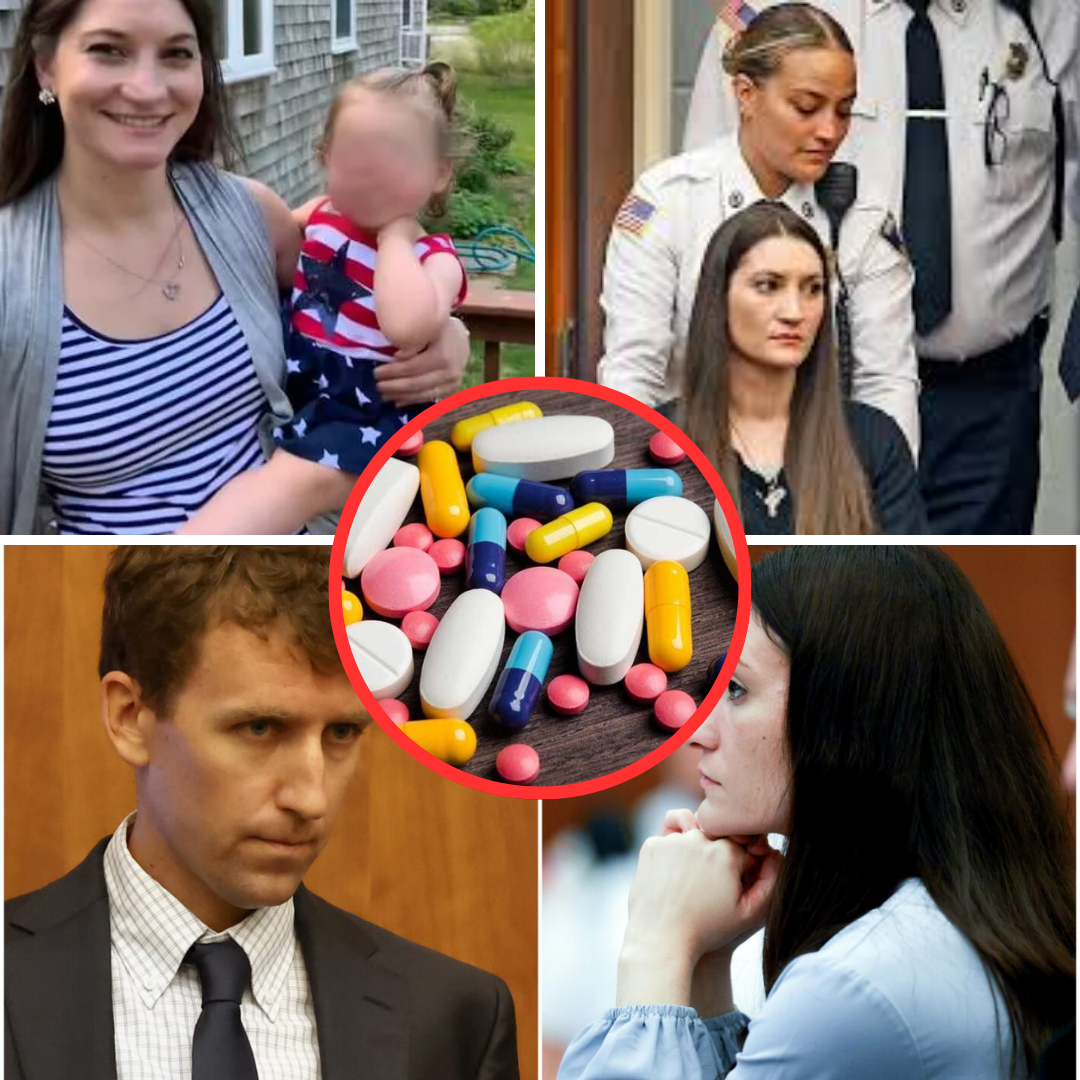
Toxicology Testimony Stuns Courtroom in Clancy Triple Murder Trial as Experts Detail Psychiatric Cocktail in Lindsay Clancy’s Blood
PLYMOUTH, Mass. — In a Plymouth County Superior Courtroom already heavy with the weight of three young lives lost, the latest chapter of the Lindsay Clancy murder trial delivered a moment that left legal observers, jurors, and spectators frozen in place. Forensic toxicologists took the stand and walked the jury through the precise chemical findings from blood, plasma, and urine samples taken from Lindsay Clancy on the night of January 24, 2023 — the night authorities say she strangled her children Cora, 5, Dawson, 3, and 8-month-old Callan with exercise bands before cutting herself and jumping from a second-story window of the family’s Duxbury home.
What emerged was not a single mysterious “foreign” compound that had somehow escaped initial detection. Instead, the testimony laid bare a complex mixture of multiple prescribed psychiatric medications, quantified after state crime laboratory screens were followed by specialized confirmatory testing at an outside laboratory. The results have intensified the central battle of the case: whether Clancy, a trained labor and delivery nurse and mother of three, was criminally responsible for the killings or whether severe postpartum mental illness, compounded by the medications she was taking, had so altered her mind that she could not form the intent required for first-degree murder.
The Testing Process and What Was Found
Massachusetts State Police Crime Laboratory forensic scientists, including Hillary Griffiths and others from the toxicology unit, described the standard multi-step process. Initial screens of Clancy’s blood and urine, collected at South Shore Hospital while she was being treated for injuries from the fall, detected benzodiazepines and other central nervous system depressants. No alcohol, THC, amphetamines, cocaine, fentanyl, opiates, or other common drugs of abuse were present.
Because the state lab’s initial testing primarily identifies substances rather than fully quantifying every concentration, samples were sent to NMS Laboratories in Pennsylvania for more detailed analysis. Dr. Justin Brower, a forensic toxicologist with NMS, testified about the levels of four key psychiatric medications detected in Clancy’s blood:
- Lamotrigine (Lamictal), a mood stabilizer also used for bipolar disorder and seizures: 6.1 micrograms per milliliter — squarely within the therapeutic range.
- Mirtazapine (Remeron), an antidepressant: 200 nanograms per milliliter — consistent with therapeutic use.
- Trazodone, another antidepressant often prescribed for sleep: 0.44 micrograms per milliliter — within expected therapeutic levels.
- Quetiapine (Seroquel), an antipsychotic that can also be used in lower doses for insomnia: 1,800 nanograms per milliliter — described as “a little elevated” or approximately double what might be expected from a typical therapeutic dose, yet nowhere near toxic or lethal concentrations. Experts noted that in genuine suicidal overdoses involving quetiapine, levels often approach or exceed 10,000 nanograms per milliliter.
Additional benzodiazepines were identified, including diazepam and its metabolites (nordiazepam, oxazepam, temazepam) along with lorazepam. Some of these appeared at subtherapeutic or low-therapeutic levels. The children’s postmortem toxicology reports, stipulated by both sides, came back completely negative for drugs or toxins.
The testimony was clinical, methodical, and devastating in its implications. Brower and other witnesses emphasized that the measured levels did not match a classic overdose or a deliberate attempt to end her life by swallowing handfuls of pills. “Usually people take handfuls of pills when they’re trying to harm themselves and take their own life, and this is not consistent with that,” Brower told the jury. At the same time, under cross-examination, he acknowledged a critical limitation: the numbers alone “don’t tell the entire story” of what was happening inside Clancy’s mind that day.
The Broader Medication History
The courtroom had already heard extensive evidence about the sheer volume of psychiatric medications prescribed to Clancy in the months leading up to the killings. Court records and pharmacy lists introduced by both the prosecution and defense showed a rapidly changing regimen that included sertraline (Zoloft), multiple doses of lorazepam, hydroxyzine, buspirone, fluoxetine, trazodone, and others. Clancy had sought help for anxiety, insomnia, and what her defense characterizes as a deepening postpartum mental health crisis after the birth of her youngest child.
Prosecutors have worked to undercut any narrative of reckless overmedication by pointing to pill bottles recovered from the home. Many still contained the majority of the prescribed pills, suggesting Clancy may not have been taking every medication at the maximum prescribed dose. Her former husband, Patrick Clancy, testified earlier that she was taking a smaller number of medications at any given time. The defense, led by attorney Kevin Reddington, has countered that the combination of drugs, the rapid changes in her regimen, and her documented struggles with sleep and intrusive thoughts created a dangerous pharmacological environment for a woman already vulnerable after childbirth.
Journal entries and medical notes presented earlier in the trial painted a picture of a mother tracking her own symptoms with clinical precision — recording nights of little or no sleep, the temporary relief some medications provided, and the sudden appearance of “horrible thoughts.” The toxicology results now sit at the center of the debate over how those medications interacted with an underlying mental health condition.
The Courtroom Reaction and the Larger Stakes
When the quantified results were laid out for the jury, the atmosphere in the courtroom shifted. Legal analysts following the trial described the testimony as a pivotal moment that forced both sides to confront the limits of forensic science in cases involving mental illness. The prosecution has maintained that Clancy acted with deliberate intent when she used the exercise bands on her children and that the toxicology findings — therapeutic or near-therapeutic levels of known prescribed drugs — do not support a claim that she was so impaired she could not understand her actions.
The defense has used the same evidence to argue the opposite: that a mother who had been cycling through multiple psychiatric medications while suffering severe insomnia and anxiety was operating under a profoundly altered mental state. They point to the absence of illegal substances or a massive overdose as consistent with a psychiatric crisis rather than a calculated crime followed by a staged suicide attempt. Clancy remains paralyzed from the waist down as a result of the fall; she has pleaded not guilty, with her team arguing she should not be held criminally responsible.
Outside the courthouse, the testimony has reignited public discussion about postpartum psychosis, the challenges of treating mental illness in new mothers, and the difficulty of translating blood levels into conclusions about a person’s capacity for intent. Experts not involved in the case have noted that therapeutic ranges are statistical averages; individual responses to psychiatric medications can vary dramatically, especially in the postpartum period when hormonal changes, sleep deprivation, and stress compound the effects.
What the Science Can and Cannot Prove
Forensic toxicologists were careful to stay within the bounds of their expertise. They identified the substances, measured the concentrations, and compared those numbers to known therapeutic, toxic, and lethal ranges. They could not, and did not, testify that any particular combination of medications “caused” the events of January 24, 2023. Nor could they rule out the possibility that the medications contributed to a loss of reality or impulse control in a woman already in crisis.
That scientific restraint has left the ultimate question — the one that will decide Lindsay Clancy’s fate — firmly in the hands of the jury. Did the presence of these medications, at the levels detected, support the prosecution’s theory of intentional murder? Or does the documented history of psychiatric treatment, insomnia, and the measured presence of multiple central nervous system drugs lend weight to the defense claim of a mind so compromised that criminal responsibility cannot be assigned?
As the trial continues, the toxicology evidence has become one of the most closely examined pieces of the case. It is not a single “strange substance” that appeared out of nowhere after an initial test missed it. It is a detailed record of the psychiatric medications a young mother was prescribed and was taking in the period leading up to one of the most heartbreaking family tragedies in recent Massachusetts history. The numbers are now in the record. The interpretation of what those numbers meant on the night three children died remains the contested ground on which the rest of the trial will be fought.
The jury has heard the science. The deeper question of responsibility, of a mother’s mind under the combined pressure of postpartum mental illness and a changing medication regimen, is one that science alone cannot fully answer. That judgment now rests with the twelve people who must decide whether Lindsay Clancy’s actions were those of a woman in control of her choices or a woman whose mind had already been altered beyond recognition.