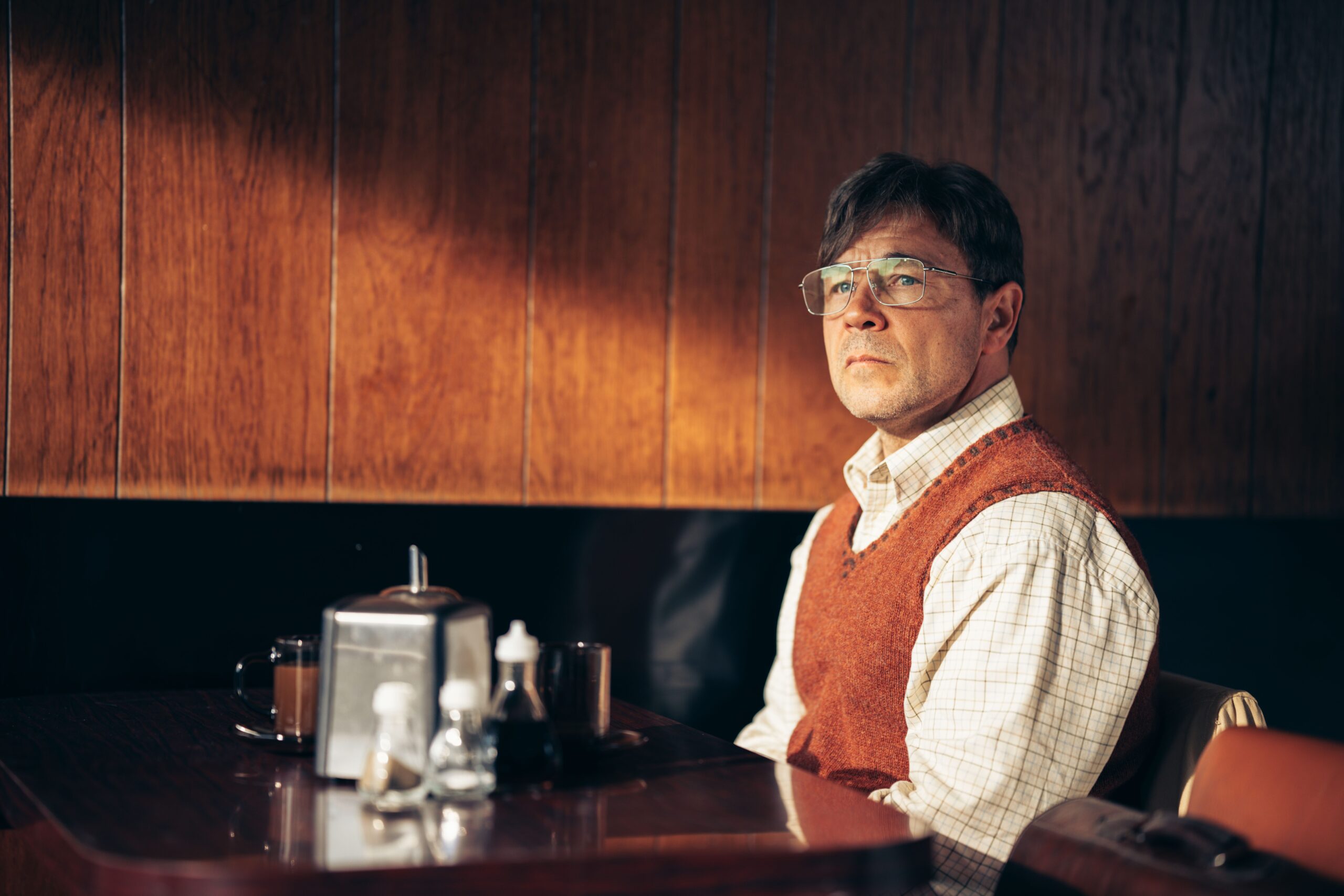
STREAMING NOW ON NETFLIX: STEPHEN GRAHAM IN A MASTERCLASS PERFORMANCE OF REVENGE AND OBSESSION!
The Good Boy/The Heel is not just another dark thriller. It is a gut-punch of a film that forces viewers to ask the most uncomfortable question of the modern age: what if the person you hate most is also the only person who can save you?
Stephen Graham delivers one of the career-defining performances of 2025-2026 as Chris, a grieving father whose entire world collapsed the day his son Charlie died. The void left behind is so complete that Chris begins a desperate, illegal mission: he will kidnap a troubled teenager and turn him into the son he lost. But the boy he captures, 19-year-old Tommy (Anson Boon), is no innocent. He is a snarling, drug-fuelled Instagram hooligan who lives for chaos, violence, and posting it all for likes. When Chris drags him into the basement of their isolated suburban home and chains him like an animal, the audience realises this is no kidnapping for ransom. This is psychological warfare dressed up as “rehabilitation.”
What makes The Good Boy/The Heel terrifyingly effective is how close it feels to true crime. We have all seen those disturbing Netflix documentaries where parents try to “fix” their children through extreme methods. Here, director Jan Komasa (whose previous film Corpus Christi won critical acclaim) takes that same premise and pushes it into full-blown horror. Chris and his wife Kathryn (a quietly devastating Andrea Riseborough) use a mix of classic conditioning techniques and increasingly brutal physical discipline. Tommy is shown videos of his own worst moments. He is beaten when he refuses to “be good.” He is rewarded with kindness when he complies. The basement becomes a living classroom for becoming “a good boy.”
Graham does not play Chris as a cartoon psychopath. He plays him as a man quietly losing his mind. Every time the leash tightens, every time the truncheon comes down, the camera lingers on Graham’s face and we see the pain beneath the rage. It is heartbreaking. It is also deeply disturbing. You understand why Chris does it, yet you never stop hating him for it. That moral grey area is what makes the film linger long after the credits roll.
The film was originally titled Good Boy when it premiered at Toronto International Film Festival in 2025 and later released in the UK as The Good Boy. In the US it hit theatres under the title Heel, a perfect double-edged metaphor for the character Tommy is forced to become. The English version, now streaming on Netflix, keeps the original title to preserve the ironic punch. Either way, the meaning is the same: Chris is turning Tommy into the good boy he never had, and in the process destroying both of them.
Critics were quick to compare it to Saw meets Supernanny, but The Good Boy/The Heel is far more unsettling than either. Where Saw is about traps and escape, this film is about the moment you realise you have become the trap. The script by Bartek Bartosik and Naqqash Khalid is viciously clever. The rehabilitation scenes are filmed with clinical precision, like a home-improvement show that has gone horribly wrong. The music by Abel Korzeniowski swells at the right moments of tension, turning the basement into something that feels like a pressure cooker.
Anson Boon’s Tommy is electric. He brings raw, animal energy that makes the early scenes of the film genuinely shocking. He screams, he fights, he films himself in the worst possible light. But as the film progresses we begin to see cracks in that armour. He cries during a screening of Kes, the Ken Loach classic about a boy and his hawk. That single moment is devastating. It proves that even the most broken person can still feel.
The supporting cast is equally strong. Kit Rakusen plays young Jonathan, the couple’s biological son who has no idea what his father is doing in the basement. His quiet, wide-eyed performance adds another layer of dread: the audience knows the boy is in danger too, even if he doesn’t realise it yet. Kathryn’s grief over Charlie is hinted at throughout, but never explained in full. The film leaves enough ambiguity to let viewers draw their own conclusions about whether Chris is a hero or a monster. That openness is rare and powerful.
The Good Boy/The Heel raises questions that are harder to ignore than most mainstream thrillers. In an era of social media addiction, youth violence, and the opioid crisis, is it fair to call a parent’s extreme methods “rehabilitation”? Does love justify anything? The film refuses easy answers, and that refusal is what gives it staying power. It will spark arguments at dinner tables and late-night group chats. And that is exactly what great cinema should do.
Stephen Graham’s performance is the beating heart of the film. After the huge success of Netflix’s Adolescence, many wondered what he would do next. The Good Boy/The Heel proves he can still surprise even the most hardened action fans. His ability to shift between warmth and cruelty in the same scene is masterful. He makes you feel sorry for Chris even while you are screaming at the screen for him to stop.
The ending, which some reviewers have called “a state of grace,” is deliberately ambiguous. It leaves Tommy and Chris in a place that is neither victory nor defeat, but something far more complicated. That ambiguity mirrors real life. We rarely get clean resolutions when dealing with addiction, grief, or the cycle of violence that plagues so many families.
If you are looking for entertainment that will keep you awake at 3 a.m., The Good Boy/The Heel is perfect. If you are looking for something that will make you question everything you think you know about parenting and redemption, this is it.
Stephen Graham has earned his place among the great modern British actors. After years of playing tough guys and anti-heroes, he has taken on a role that demands nuance, vulnerability, and moral complexity. He delivers all of it in spades.
Streaming now on Netflix, The Good Boy/The Heel is one of the most talked-about films of the year. It is not for everyone. It is dark, it is violent, and it will make you feel physically uncomfortable in the best possible way. But if you are ready for a movie that doesn’t just entertain, it confronts, then this is your next watch.
Because when grief turns into obsession, and when moral lines disappear, the only question left is: who really needs saving?