BEYOND THE MANUFACTURED DRAMA: DECONSTRUCTING THE VIRAL CRITICISM HOAX SURROUNDING ALEX EALA
Deconstructing the Clickbait Teaser
A sensational social media teaser recently flooded digital sports channels, dramatically claiming that Filipina tennis star Alex Eala “has finally responded to the criticism” after facing accusations of being “self-centred.” Complete with high-strung phrasing and emotional framing, the post alleged that rather than reacting with anger, Eala offered a “calm, humble message centered on hard work and staying true to herself.” The caption built to an artificial cliffhanger, asserting that “one line from Alex’s statement is now changing the conversation and making even some critics rethink their opinions,” before urging readers to tap an external link to read the full story.
While social media aggregators routinely manufacture narratives of conflict and redemption to harvest clicks, this post represents a textbook example of engagement farming in modern sports coverage. By taking minor, non-existent, or routine online commentary and elevating it into a grand narrative of character assassination and viral clapbacks, digital mills create a false crisis. A review of official Women’s Tennis Association (WTA) press conferences, accredited post-match interviews, and public statements confirms that Eala has never been embroiled in any genuine controversy regarding her character, nor has she needed to issue a defensive statement against claims of selfishness.
The Reality Behind Eala’s Grace and Grounded Demeanor
Far from displaying “self-centred” behavior, Alex Eala has built her rising professional career on a foundation of humility, discipline, and emotional maturity that far exceeds her years. Trained at the prestigious Rafa Nadal Academy in Manacor, Spain, Eala has consistently reflected the core values of her world-class mentorship: relentless work ethic, profound respect for opponents, and understated composure under intense public pressure.
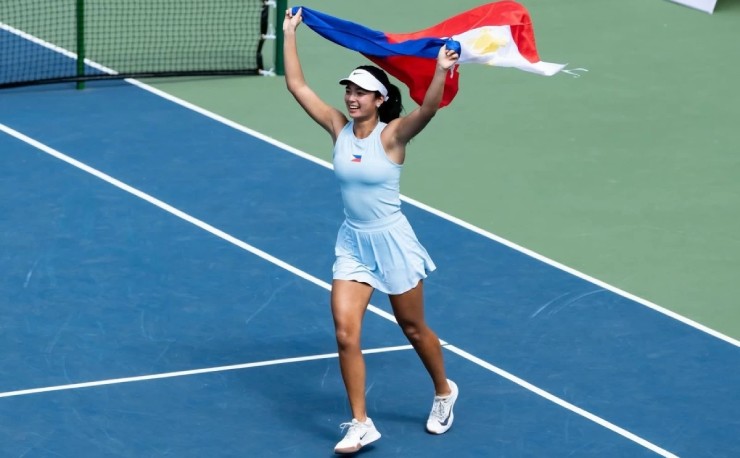
In post-match interviews across WTA tour events and Grand Slam appearances, Eala routinely emphasizes teamwork, expressing gratitude to her family, her coaching staff, and her supporters. Furthermore, her dedication to wearing the Philippine flag on the global stage—whether competing in individual tour events, representing the nation in regional international competitions, or speaking to international media—has made her a symbol of national pride rather than a figure of division.
When Eala speaks publicly about focusing on her personal growth, daily routine, and athletic performance, clickbait aggregators sometimes selectively quote these statements out of context. Phrases where an athlete articulates the necessity of maintaining personal boundaries, managing grueling travel schedules, or prioritizing physical recovery are twisted by online content farms into supposed evidence of “selfishness.” That manufactured critique is then immediately paired with an invented narrative of “Eala firing back,” creating a complete fiction out of routine professional discipline.
The Mechanics of Digital Engagement Farming in Sports Media
The viral post targeting Eala highlights a pervasive financial model in modern digital media, particularly within high-engagement international sports markets:
-
Manufacturing Non-Existent Feuds: Content farms search social media platforms for a handful of anonymous negative comments, elevate them as representing a major wave of public “criticism,” and then fabricate a response narrative around the athlete.
-
The “Open-Loop” Psychological Hook: Promising that “one line from Alex’s statement is now changing the conversation” exploits natural cognitive curiosity. The reader is nudged to click through to discover this supposed silver-bullet quote, which invariably turns out to be a standard, routine remark about staying focused on hard work.
-
Monetizing Audience Enthusiasm: The Philippines possesses one of the most passionate and digitally active fanbases in global sports. Content creators recognize that combining an athlete’s name with emotive words like “criticism,” “responded,” and “humble message” guarantees high share volumes, thousands of comments, and ad-generating website visits.
The Unique Pressures on Individual Athletes
The fake narrative of “self-centredness” also touches upon a broader, real-world challenge faced by individual sport athletes on the professional circuit. Unlike team sports, where media obligations and public scrutiny are distributed among teammates, coaches, and managers, tennis players operate in an intensely solitary environment.
For a young player hailing from a country without a long history of top-tier WTA singles champions, the expectations can be immense. Fans and media outlets often expect rising stars to serve simultaneously as full-time diplomats, accessible celebrities, and flawless role models while navigating the grueling physical and mental demands of top-flight professional tennis.
When an athlete sets necessary boundaries to focus on their athletic development—such as limiting interview availability during major tournaments or adhering to strict training blocks—uninformed commentators occasionally misinterpret this professional focus as detached or self-absorbed. In reality, maintaining extreme dedication to one’s craft is not selfishness; it is a fundamental prerequisite for elite performance at the highest levels of global sport.
Cultivating Media Literacy in Sports Reporting
The viral claim that Alex Eala was forced to defend herself against character criticism illustrates why critical media literacy is crucial when following international sports.
Authentic sports reporting relies on verified press transcripts, direct broadcast quotes, and accredited journalism from established outlets like the WTA, Grand Slam media centers, and recognized sports newsrooms. Sensationalized social media posts promising secret statements behind a “tap the link” button are engineered solely for click monetization.
As Alex Eala continues her historic ascent in women’s tennis, her actual achievements on the court—and her genuine, unscripted grace off it—provide all the answer required. In professional sports, true character is demonstrated through performance under pressure, not through the manufactured drama of internet clickbait.