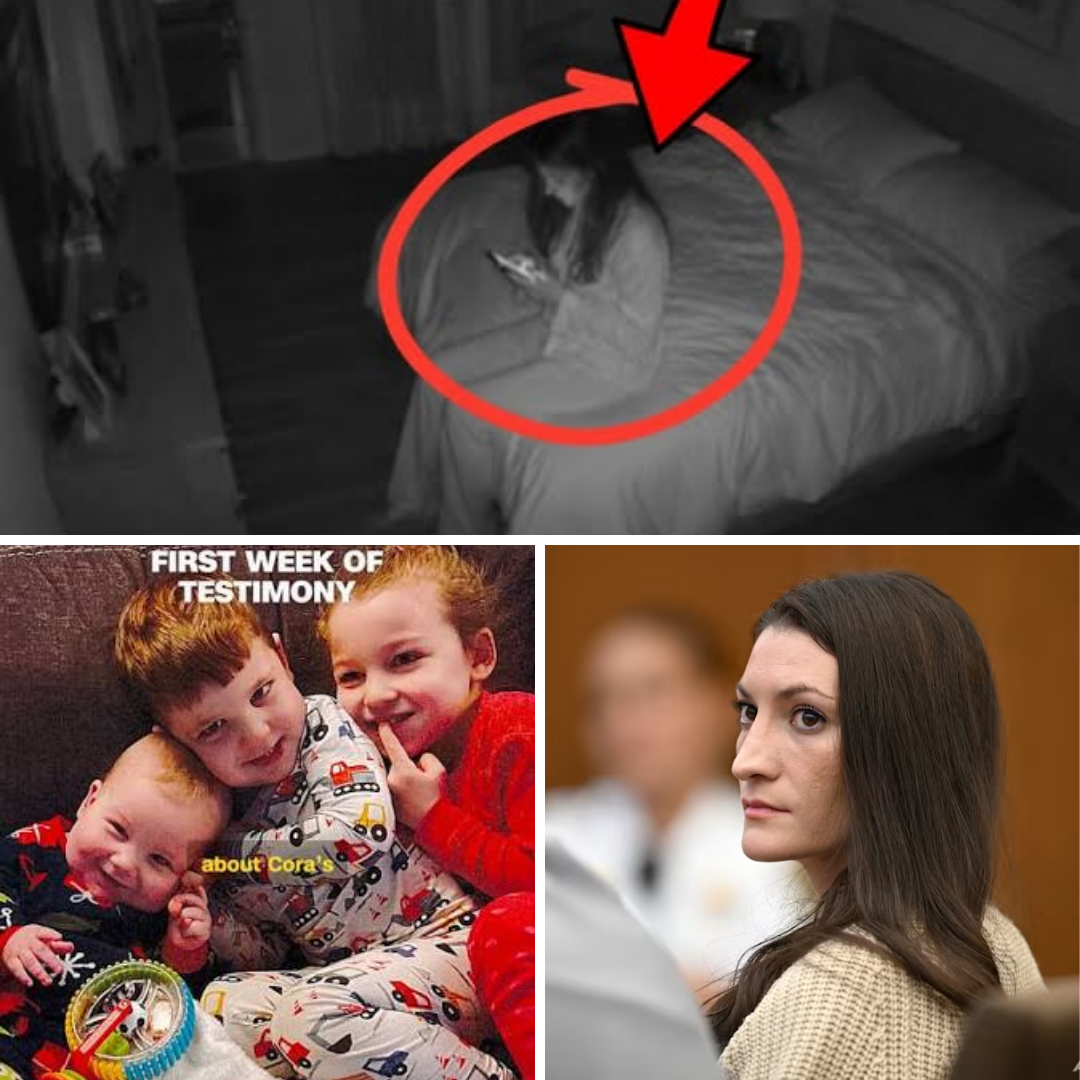
CALCULATED PREMEDITATION OR PSYCHIATRIC BREAK: UNPACKING THE DIGITAL FORENSICS IN THE LINDSAY CLANCY TRIAL
Deconstructing the Sensational Clickbait Teaser
A sensational social media teaser recently swept across true-crime forums, claiming that prosecutor filings in the Lindsay Clancy murder trial had exposed “chilling digital breadcrumbs” left inside the family’s Duxbury home. Featuring red alert emojis and breathless prose, the post asserted that data extraction reports revealed how the 35-year-old former labor and delivery nurse actively calculated a precise “25-minute window of complete isolation” by searching restaurant delivery times and mapping routes. It built up to a dramatic climax, asserting that courtroom observers froze when the lead prosecutor projected her final phone search onto the wall, proving that right before her husband drove away, she explicitly searched a secret, scandalous query.
While online content aggregators routinely embellish real judicial proceedings with fictional flourishes to farm clicks, this viral hook stems from actual forensic evidence presented in Plymouth Superior Court in Massachusetts. State police digital investigators indeed analyzed Lindsay Clancy’s iPhone, Apple Watch, and family computer data to construct a minute-by-minute digital timeline of January 24, 2023—the tragic evening her three young children, Cora, Dawson, and Callan, were killed. However, separating internet melodrama from sworn expert testimony reveals a much more nuanced legal debate between prosecution arguments of calculated premeditation and defense evidence of an acute, overwhelming psychiatric crisis.
The Verified Digital Trail: Apple Maps, Takeout, and the 25-Minute Window
The factual record established by state police cybercrime analysts and digital forensic experts centers on phone extractions, internet search logs, and cellular location data recovered from the Clancy household. During court hearings, investigators detailed the exact digital timeline leading up to the tragedy on January 24, 2023:
-
4:02 PM: Lindsay used her phone to search for “kids Miralax” on Google and subsequently accessed Apple Maps to check the driving distance and travel time from her home in Duxbury to ThreeV, a restaurant in Plymouth, Massachusetts.
-
4:47 PM: She searched the website of a local CVS pharmacy in Kingston to determine if they carried children’s laxatives and called the store directly to confirm availability. The pharmacy worker who answered later testified that Lindsay’s tone of voice was entirely pleasant, calm, and routine.
-
4:53 PM: Lindsay sent a text message to her husband, Patrick Clancy, who was working from his home office, asking if he would pick up takeout dinner from ThreeV. When Patrick suggested ordering from a closer establishment, she requested ThreeV specifically and asked him to review their online menu.
-
5:10 PM: She called ThreeV directly to place the order for two takeout meals. Surveillance cameras later captured Patrick leaving the house, entering CVS at 5:32 PM, and picking up the food at ThreeV at 5:54 PM. This errand created a physical window of absence lasting approximately 25 to 30 minutes.
The Prosecution Strategy: Proving Premeditation, Logic, and Rational Function
In Massachusetts criminal jurisprudence, securing a conviction for first-degree murder requires proving deliberate premeditation and demonstrating that the defendant was criminally responsible—meaning they possessed the cognitive capacity to appreciate the wrongfulness of their conduct and conform their behavior to the law.
Assistant District Attorneys Jennifer Sprague and Shanan Buckingham framed Lindsay’s digital interactions as the central pillar of their case for criminal responsibility. The prosecution argued that her decision to select a restaurant farther away from their residence was a deliberate tactical choice to guarantee an extended, uninterrupted window of solitude.
State attorneys argued that utilizing Apple Maps to calculate drive times, navigating pharmacy inventory websites, placing phone orders, and maintaining a composed demeanor during calls demonstrated intact executive functioning, spatial awareness, and logical foresight. According to the state’s narrative, these actions were inconsistent with someone suffering from a severe, disorganizing psychotic break.
Furthermore, prosecutors presented additional digital extractions from the preceding months, including phone notes where Lindsay expressed anxiety over her children and past search queries regarding prescription drug side effects and suicide methods. The state contended that Lindsay was a detail-oriented, organized individual who methodically planned a window of time away from her husband to carry out the killings before attempting suicide by jumping from a second-story window.
The Defense Rebuttal: Routine Motherhood, Overmedication, and Psychosis
Representing Lindsay Clancy, defense attorney Kevin Reddington offered a starkly different interpretation of the exact same digital footprint. The defense maintained that Lindsay was suffering from severe postpartum depression, undiagnosed bipolar disorder, and acute postpartum psychosis—a dangerous psychiatric emergency marked by profound delusions and auditory command hallucinations.
Cross-examination of state police forensic experts emphasized that her digital activity on the afternoon of January 24 reflected ordinary, everyday maternal duties rather than the cold calculations of a criminal mastermind:
-
Routine Domestic Activity: The defense argued that looking up laxatives for a child suffering from constipation, organizing dinner, and sending text messages asking her husband to pick up food were standard household routines that Lindsay performed daily.
-
Documented Mental Distress: Defense attorneys highlighted entries in Lindsay’s digital journal, stored in her phone’s notes app. In entries written shortly before the tragedy, Lindsay documented her overwhelming struggle with severe anxiety, insomnia, and feelings of emotional detachment, writing that “prescription medication stole me from my own body.”
-
Medical Over-Prescription: Medical records confirmed that in the four months leading up to the events, Lindsay had been prescribed a rapid succession of over a dozen different psychiatric medications, including benzodiazepines, antidepressants, and mood stabilizers.
Defense medical experts testified that Lindsay experienced a sudden, severe auditory hallucination—a male voice commanding her to harm her children and herself—and that her routine actions earlier in the evening were executed while she was in a state of profound psychiatric dissociation.
The Distortions of “Forensic Fandom” in Modern Crime Coverage
The viral spread of headlines claiming prosecutors projected a “secret final search” highlights the distorting impact of “forensic fandom” on social media platforms. Online true-crime content creators frequently isolate single digital exhibits—such as a routine map search or a brief phone call—and repackage them into dramatic, conspiratorial plot twists.
In reality, there was no secret, explosive final search query projected onto the courtroom wall. The digital evidence presented in Plymouth Superior Court consisted of documented maps, restaurant menus, and pharmacy calls.
By manufacturing fictional cliffhangers around complex judicial proceedings, clickbait aggregators distract from the critical, highly nuanced legal and psychiatric questions at the heart of the trial: how courts evaluate legal sanity, the impact of severe perinatal mental illness, and the threshold of criminal responsibility.