STREAMING NOW ON NETFLIX: BEN WHISHAW IN A MASTERCLASS OF OBSESSION, BETRAYAL AND HIGH-STAKES ESPIONAGE
A rain-slicked London street. Christmas lights bleeding into puddles. A double agent on the run. And a ruthless assassin who looks, for all the world, like the only friend she has left.
That is the exact pressure cooker in which Black Doves traps its audience — and refuses to let go.
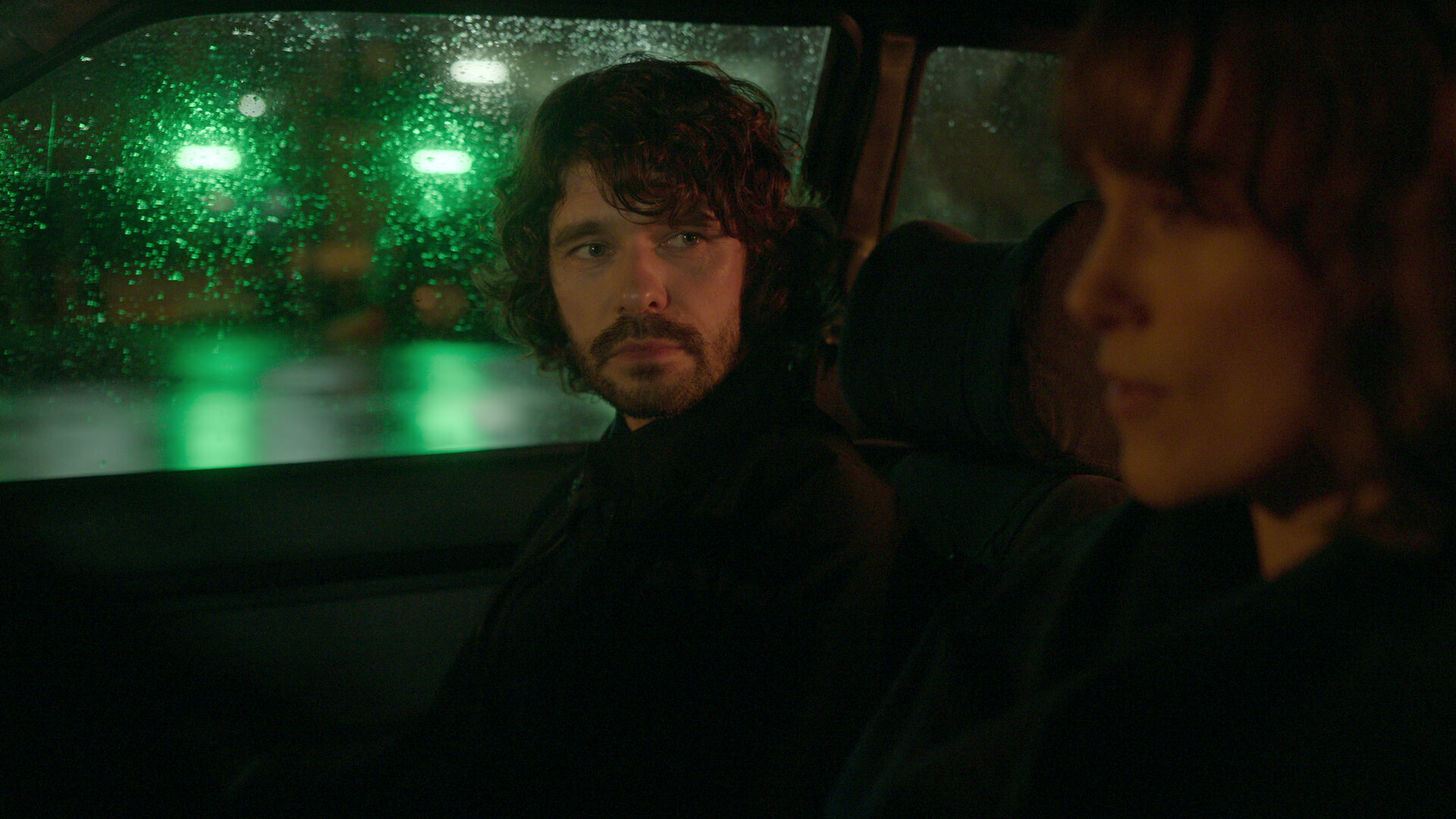
On Netflix now, Keira Knightley and Ben Whishaw deliver a chilling, edge-of-your-seat pairing in a story of lethal espionage and fatal secrets. Sitting together inside a shadowy car under flashing neon, the terrifying realization Sam comes to in that single moment proves why this series has become one of the platform’s most addictive late-night binges.
Black Doves is not a documentary. It is not a true-crime reconstruction in the strict sense. It is something more unsettling: a fictional spy thriller so tightly wound around real anxieties — secret lives, purchased loyalty, the cost of living a lie for ten years — that it feels like it could have been pulled from a classified file. Created by Joe Barton and set against a glittering, rain-soaked London Christmas, the six-episode series follows Helen Webb, the polished wife of Britain’s Defence Secretary. She hosts parties, manages twins, smiles for the cameras. She is also a professional spy.
For a decade she has been feeding her husband’s secrets to a mercenary organisation that sells industrial, political and diplomatic intelligence to the highest bidder. The organisation calls itself the Black Doves. Helen is one of its most valuable assets. Then her secret lover, a civil servant named Jason, is murdered on a park bench. Two other people die the same night. Suddenly the mask Helen has worn for ten years begins to crack.
Her handler, the ice-cool Reed (Sarah Lancashire), does not waste time. She pulls an old friend out of exile and puts him back in the field. That friend is Sam Young.
Ben Whishaw’s Sam is the performance that turns Black Doves from a stylish thriller into something that stays under the skin. He is a triggerman. He drinks champagne, calls people “love,” and can end a life with the same calm he uses to light a cigarette. He is also the man who trained Helen when she first disappeared into this world. He knows her real name. He knows what it cost her. He knows what it cost him. When Reed summons him back to London, it is not only to protect Helen. It is because the people who killed Jason may already be coming for her — and because Sam is the only person Reed trusts to stand between Helen and a bullet.
The early episodes move like a blade across wet pavement. Three murders that appear unconnected. A dead Chinese ambassador. A missing daughter. Accusations flying between governments. Helen’s carefully constructed family life — husband, children, nanny, Christmas jumpers — sitting on a knife-edge while she and Sam hunt through London’s underworld. The city itself becomes a character: Oxford Street lights reflected in rain, Liberty department store at night, kitchen fights among festive tea towels, the Thames at Christmas. Beauty and threat occupy the same frame.
What Black Doves understands, and what Whishaw embodies so completely, is that the most dangerous thing in this world is not the assassin across the street. It is the person sitting next to you in the car who knows too much.
The series keeps circling that idea. Helen and Sam are not lovers. Their bond is older and more complicated than romance. They share training, trauma, dark humour and the knowledge that neither of them can ever fully come in from the cold. Knightley plays Helen as a woman who has spent a decade becoming someone else and is now terrified of what will be left if the disguise is ripped away. Whishaw plays Sam as a man who already knows there is nothing left — and still cannot walk away from her.
Viewers have described his work as a masterclass in obsession. Not the loud, shouting kind. The quiet kind. The kind that lives in a glance held a second too long, in the way he watches a doorway, in the way his voice drops when he realises the trap they are in is tighter than either of them admitted. In one of the series’ most discussed sequences, the two of them sit in a car at night, neon flashing across the windscreen, rain hammering the roof. They are supposed to be hunting. Instead they are circling a secret neither wants to name. That is the moment the caption promises. That is the moment Sam understands something that changes the geometry of the entire mission.
Black Doves does not rush to explain everything. It withholds. It lets the audience feel the same claustrophobia as its leads: the sense that every ally might be an asset for someone else, that every confession might be a weapon, that the organisation they work for may not be as loyal as it claims. The Black Doves sell secrets. They do not swear allegiance to country or conscience. They swear allegiance to the bid.
That moral greyness is what gives the series its charge. Helen is a mother who loves her children and a spy who has spent years betraying the man those children call father. Sam is a killer who still wants, impossibly, a life that does not end in blood. Reed is the handler who recruited both of them and who will use them until they break. Around them swirl politicians, gangsters, foreign intelligence, and people who thought they were only selling gossip until the gossip got them killed.
The show has been praised for the chemistry between Knightley and Whishaw — two actors who can do more with silence in a parked car than many thrillers manage with a shootout. Critics have called it festive and vicious at the same time, a Christmas spy story that understands the holidays are when people pretend hardest and therefore when the lies are most dangerous. Season two is already in production. The first season ends not with neat answers but with the feeling that the trap has only tightened.
That is the point of the car scene the caption isolates. Two covert operatives, rain on the glass, neon on their faces, a dangerous secret between them. Sam’s realisation in that moment is not a speech. It is a look. It is the sudden knowledge that the person he was sent to protect may already be beyond protection — or that he himself may be the one who cannot be trusted.
Black Doves is streaming now on Netflix. It is six episodes of lethal espionage, Christmas lights and the kind of friendship that can get you killed. Ben Whishaw does not play a hero. He plays a man who has already done the worst things and still cannot stop trying to save the one person who remembers who he was before.
Sit with them in that car long enough and you will understand why the series refuses to let you look away. The rain keeps falling. The neon keeps flashing. And the secret they are both trying to protect is already in the back seat with them.