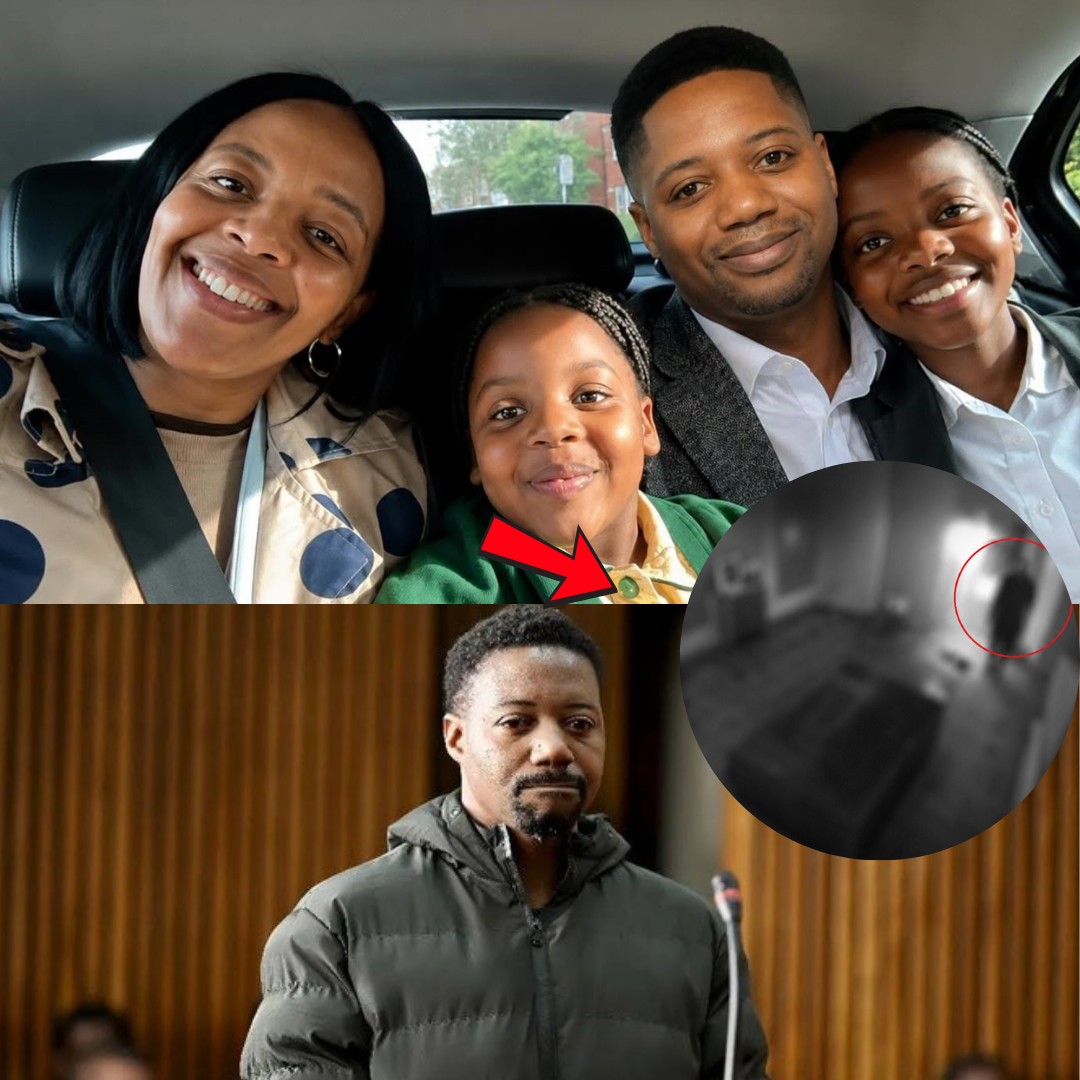
ENHANCED CCTV FOOTAGE: THE UNIDENTIFIED SILHOUETTE AT THE TSHUMA HOME
The £1.3 million house on Carnoustie Drive in Great Denham had been quiet for days when Bedfordshire officers forced the door on 6 July. Inside they found Nothabo Zandile Tshuma, 42, and her daughters Natalie, 15, and Nala, five. Post-mortem examinations later established that all three died from blunt force trauma. Formal identification followed. Neighbours laid flowers. Schools and colleagues issued tributes. Relatives in Zimbabwe prepared for a funeral that would eventually take place in Bulawayo.
Ndodana Mkhanyisi Tshuma, 45, known as Mark, a British citizen of Zimbabwean heritage and senior IT professional, had already left the country. Police released CCTV of him moving through Heathrow on Saturday 4 July with a suitcase, drinks and a boarding pass, passing an e-gate on a British passport. Detectives said he was believed to have travelled first toward Zimbabwe. He was arrested six days later in Kensington, Johannesburg, after an Interpol-led operation. South African officers also recovered an unlicensed firearm. The Crown Prosecution Service authorised three counts of murder. Extradition paperwork has been exchanged; hearings in Johannesburg were postponed in late August to 8 and 10 September after the defence asked for more time. The family of the victims described the delay as “difficult.”
That public timeline is now being tested by material that never reached the first press conferences.
Sources familiar with the forensic examination of the home system say the cameras were not simply switched off. Parts of the feed were corrupted or interrupted. Specialists were brought in to reconstruct damaged segments using enhanced processing of both image and residual audio. What they recovered, according to people who have reviewed the work, is a brief window of movement that does not match the movements already attributed to Tshuma on the night in question.
The figure is described as a silhouette rather than a clear face. Height, gait and the path it takes through the property are said to sit outside the pattern investigators had mapped for the primary suspect. One person who has seen the enhanced clips told associates that the shape appears after an interval when the house should, on the official reconstruction, already have been empty of that person. Another said the last usable frames occur immediately before the signal fails.
The pool technician who spoke with Tshuma on the Friday beforehand reported nothing unusual. That conversation has been used to pin one end of the timeline. The reconstructed home footage, if it holds, would sit at the other end and create a gap. Detectives have not publicly confirmed the existence of a second person on the property. They have also not ruled it out. In a case already stretching across three countries, silence on a technical finding is itself being treated as significant.
Questions that have circulated among relatives and people close to the inquiry are now colliding with this new material. There have been private discussions of wills, insurance arrangements and the speed with which Tshuma left the United Kingdom. None of those discussions have been tested in open court. The enhanced footage does not answer them. It only adds a shape that, according to those who have watched it, does not belong to the man already charged.
South African proceedings remain focused on the local firearms charge and the extradition request. British investigators continue to work with the National Crime Agency and international partners. The family has said they want answers, not further postponement. The house on Carnoustie Drive is no longer a crime scene in the operational sense, but the digital remnants of its security system have become one.
Enhanced analysis of damaged domestic CCTV is rarely as clean as television crime drama suggests. Frames drop. Light fails. Audio collapses into hiss. Specialists can isolate contrast, reduce noise and stitch fragments. They cannot always restore a face. What they can sometimes restore is timing: when a body moved, which doorway it used, whether it was still present when the recording died.
That is the conflict now being discussed in private briefings. The primary suspect’s known movements on the night do not, on the reconstructed timeline, account for the silhouette that appears in the last recoverable seconds. Insiders who have reviewed the recovered footage say the figure did not leave the frame. It was still there when the system went dark.
Whether that shape is an artefact of damaged data, a second person, or something investigators already understand and have chosen not to release will be decided in court, not in rumours. Until then the enhanced feed sits as an unresolved interval in a case that began with three bodies in a quiet Bedfordshire cul-de-sac and a man already on a plane.
The signal cut out. The silhouette remained.