THE HIGH-STAKES WWII RESISTANCE MISSION ON NETFLIX THAT SMUGGLED NAZI EVIDENCE TO LIGHT!
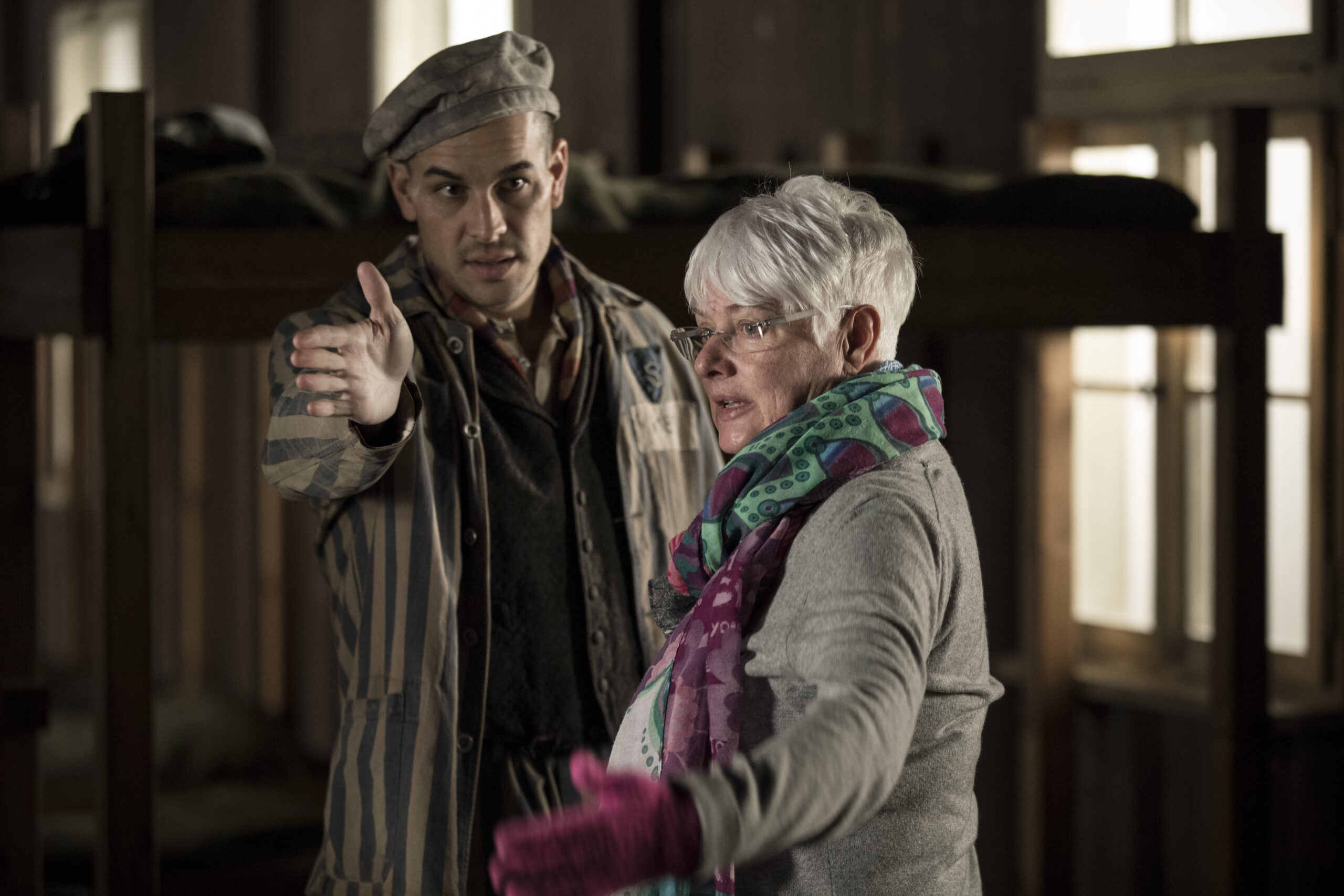
Behind the barbed wire of a brutal World War II concentration camp, a brave prisoner risks everything to preserve the undeniable evidence of human atrocities. On NETFLIX, Mario Casas delivers a physically transformative, harrowing performance as Francesc Boix in The Photographer of Mauthausen. Working under the strict eyes of his captors in the camp’s photography lab, Boix secretly steals and hides thousands of photo negatives before they can be burned. In this intense behind-the-scenes shot, director Mar Targarona guides Mario Casas through a crucial sequence in the crowded barracks. The shocking truth revealed in those preserved photographs proves that even in the darkest corners of the Third Reich, one man’s camera — and his nerve — could outlast the regime that tried to erase its own crimes.
The 2018 Spanish drama, now streaming and quietly finding a new wave of viewers, is not another polished wartime prestige picture. It is a taut, claustrophobic account of a real operation that unfolded inside Mauthausen, the Austrian camp the Nazis reserved for “incorrigible” political prisoners. Among the roughly 7,500 Spaniards sent there after Franco’s victory and the fall of France, more than 4,800 never left. Francesc Boix, a 20-year-old Catalan photographer and Republican veteran, arrived in January 1941. His German language skills and darkroom experience landed him in the Erkennungsdienst, the SS identification photography unit. There he developed portraits of new arrivals, recorded “accidents,” and processed the meticulous visual archive the camp command kept of its own machinery of death.
That archive became the weapon.
After the German defeat at Stalingrad in early 1943, Berlin issued orders to destroy photographic evidence of what had taken place behind the fences. Boix and a small circle of fellow Spanish prisoners — including the photographer Antonio García — began making extra copies and hiding negatives. They worked under the gaze of SS officer Paul Ricken, whose laboratory they staffed. Every extra print, every strip of film slipped into a pocket or a wall cavity, was a death sentence if discovered. The film reconstructs that tension with almost unbearable closeness: the darkroom trays, the sudden footsteps in the corridor, the crowded barracks where secrets were whispered between coughs and the rustle of lice-ridden blankets.
Director Mar Targarona, who co-produced the picture and collaborated with historian Benito Bermejo (author of the book that recovered Boix’s story), stages these moments without spectacle. In one sequence that matches the behind-the-scenes still circulating online, she directs Casas through a barracks scene in which the prisoners must decide, in real time, how to move the growing cache of negatives out of the camp. The actor, who dropped 12 to 14 kilograms on a severe diet to match the starved look of a long-term inmate, later said he broke down during a laboratory scene opposite his SS counterpart because the fear felt too immediate. That physical transformation is not vanity; it is the film’s argument that the body itself was evidence.
The smuggling network reached beyond the wire. Prisoners assigned to the nearby Poschacher quarry befriended a local Austrian woman, Anna Pointner, who had already been throwing food over the fence. In the autumn of 1944 they passed her bundles of negatives. She hid them in a crevice in her garden wall. When American troops liberated Mauthausen on 5 May 1945, Boix retrieved what could be saved — he later testified that some 20,000 negatives had been concealed, of which roughly a thousand survived in usable form — and immediately began photographing the first hours of freedom with a confiscated German camera. Those images, too, entered the record.
In January 1946 Boix became the only Spaniard to testify at the Nuremberg International Military Tribunal. Standing before the court, he identified Heinrich Himmler, Ernst Kaltenbrunner and Albert Speer in photographs taken during official visits to the camp and its quarry. The pictures showed the men walking past working prisoners, inspecting the very installations they later claimed not to have known. Kaltenbrunner, head of the Reich Security Main Office, was convicted of war crimes and crimes against humanity and hanged. Speer’s presence at the site undercut parts of his “I only ran the factories” defence. Additional photographs were used at the subsequent Dachau trials. The images the SS had taken of their own operations — executions staged as escapes, bodies arranged for the camera, the skeletal condition of inmates — became, in the hands of a prisoner they had forced to develop them, the prosecution’s silent witnesses.
The film does not pretend Boix acted alone. It shows the Spanish communist underground inside the camp, the rivalries and the necessary alliances, the moment when García, ill in the infirmary, entrusted the hidden archive to Boix. Historians still debate the exact number of negatives and the precise division of labour. What is not in dispute is the outcome: a visual record that the Nazis themselves created and then tried to burn, preserved by men who had every reason to look away.
Boix never fully escaped the camp. He settled in Paris, worked as a photographer for the communist newspaper L’Humanité, and died in 1951 at the age of 31 from kidney failure linked to the years of malnutrition and abuse. He was 30 when the last of his testimony was given. The photographs outlived him.
The Photographer of Mauthausen is available on Netflix at a moment when audiences continue to seek stories that refuse to let the record be closed. Targarona’s film is not comfortable viewing. It is 110 minutes of muted colour, sudden violence, and the particular dread of a man who knows that the next negative he hides may be the one that kills him — or the one that, years later, hangs a commandant. The shocking truth those frames still prove is simple and unfinished: the people who ran the camps documented their work with bureaucratic pride. One prisoner, and the network that protected him, made sure the world could not look away.