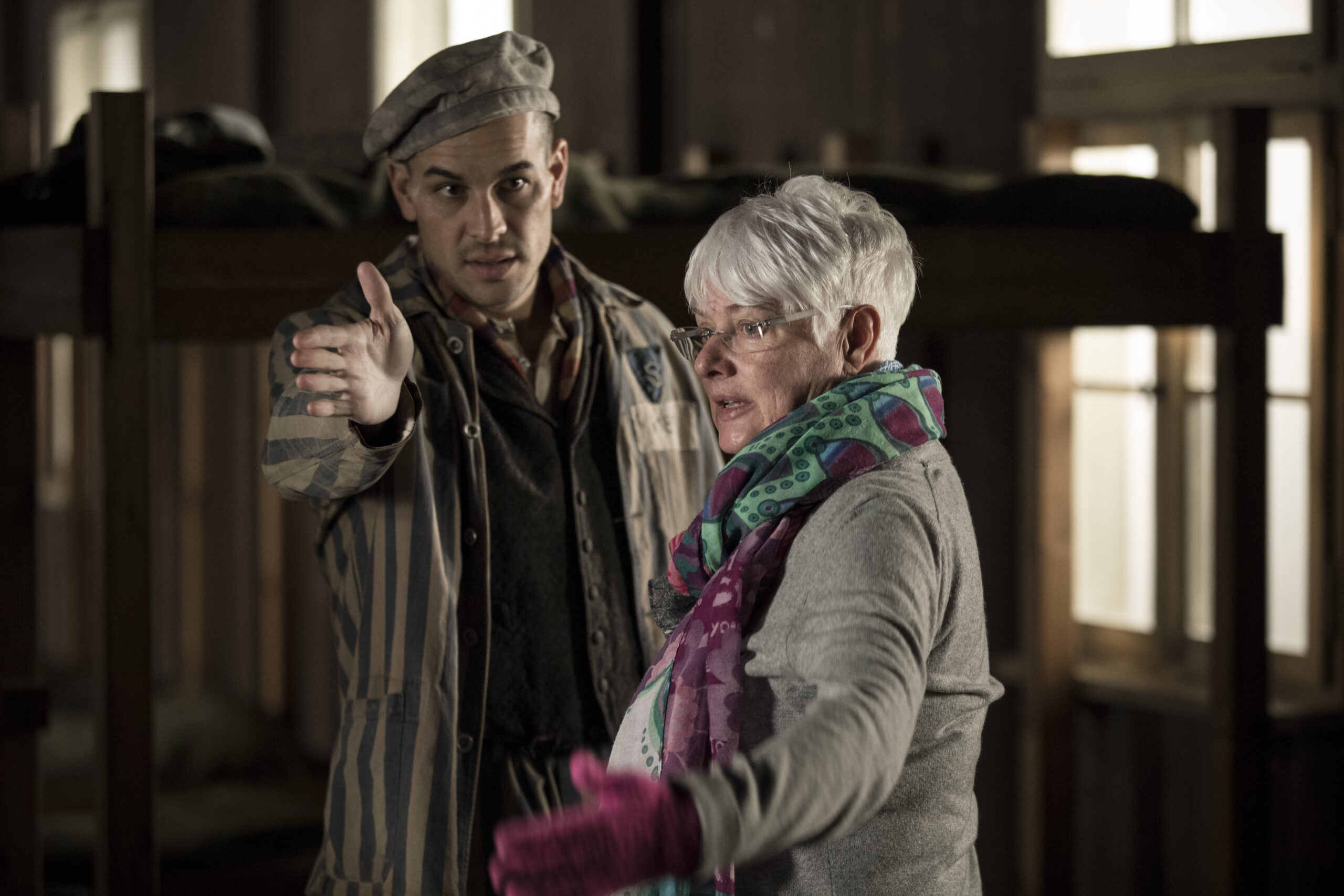
STREAMING NOW ON NETFLIX: MARIO CASAS IN AN INCREDIBLE SHOWCASE OF HISTORICAL COURAGE AND UNYIELDING SURVIVAL
When the only way to expose absolute evil is to survive inside its very center, the camera becomes both weapon and death sentence. On Netflix, Mario Casas delivers one of the most physically and emotionally punishing performances of his career in The Photographer of Mauthausen, capturing the suffocating dread and quiet defiance of a man who operated a secret underground resistance from within a Nazi labor camp. Every photo frame represents a life-or-death gamble against a ruthless regime that documented its own crimes with chilling bureaucratic precision—and then tried to burn the evidence.
Directed by Mar Targarona, the 2018 Spanish historical drama is based on the true story of Francesc Boix, a young Catalan Republican and photographer who fought in the Spanish Civil War, fled into exile in France, and was captured after the German invasion. In 1941, at just twenty years old, he was deported to Mauthausen, the notorious Austrian concentration camp complex reserved for political prisoners, “red Spaniards,” and those the Nazis considered irredeemable. Of the more than 7,000 Spanish Republicans sent there, thousands never left. Boix would spend four years inside its walls.
What saved him—and what would later condemn his captors—was a skill the SS found useful. Assigned to the camp’s photographic identification service, the Erkennungsdienst, Boix worked under SS officer Paul Ricken. His official duties included taking mugshots of incoming prisoners, recording deaths, and helping produce the visual record the regime itself created. The Nazis photographed everything: arrivals, punishments, executions, official visits by high-ranking figures, and the daily machinery of terror. They believed the images would serve their own purposes. Boix understood they could serve another.
In The Photographer of Mauthausen, Casas plays Boix not as a conventional action hero but as a man who learns to live inside the machine while quietly sabotaging it. The performance is built on stillness as much as outburst. Casas lost more than twelve kilograms for the role, his face hollowed, his movements economical and watchful. Targarona worked closely with him on set to craft every gesture inside the wooden barracks and the cramped photo laboratory—the way a prisoner’s shoulders drop when an SS officer enters, the fraction of a second a glance is held too long, the careful handling of fragile negatives that could mean execution if discovered.
The film does not look away from the camp’s rituals of humiliation and sudden violence. New arrivals are stripped, photographed, and sorted. Weak prisoners vanish. Failed escapes end in public examples. Yet Targarona’s approach is more than a catalog of horrors. The middle stretch of the film shifts into something closer to a high-stakes thriller. As news of the war’s turning point filters in—Stalingrad, the advancing Allies—the prisoners realize the photographic archive they have been helping to create will be destroyed. The order comes: burn the evidence. What follows is a clandestine operation of smuggling, concealment, and desperate coordination among Spanish inmates who form an underground network. Negatives are hidden, passed, buried. Each transfer is a gamble. One slip, one search, one informant, and the entire group dies.
Critics have noted that these sequences carry the tension of a prison-break picture, complete with close calls and a Hitchcockian sequence involving hidden film. Then the film reminds the viewer, with sudden and terrible force, that this is not a genre exercise. The reality of Mauthausen reasserts itself. The wooden barracks, the quarry, the electrified fences, the constant presence of death—these are not backdrops. They are the condition of every choice.
Targarona, a producer-turned-director whose previous work included producing films such as The Orphanage, approached the material with historical consultants and a determination to reconstruct the look and texture of the camp. Cinematography leans into a muted palette that echoes the black-and-white photographs at the story’s heart. The result feels lived-in rather than merely illustrated. Supporting performances, particularly Richard van Weyden as the fastidious and dangerous Ricken and Alain Hernández as a fellow prisoner in the lab, give the world around Casas a sense of constant, unpredictable threat.
The historical stakes are enormous. The photographs Boix and his comrades preserved—estimates of the surviving negatives vary, with Boix himself later speaking of thousands—became evidence. After liberation in May 1945, Boix testified at the Nuremberg trials and later at the Dachau proceedings against Mauthausen personnel. The images showed not only the conditions inside the camp but the presence of senior Nazi officials. They helped prove what many would later try to deny: that the system was known, visited, and systematically documented by those who ran it.
The Photographer of Mauthausen is not an easy watch. It is 110 minutes of compressed dread, moral compromise, and stubborn refusal to let the record disappear. Casas’s Boix is a man who understands he is complicit in the propaganda apparatus even as he works to turn it against itself. Survival requires usefulness to the enemy. Resistance requires stealing from that same usefulness. The film never lets the audience forget the cost of either choice.
Streaming now on Netflix, the movie arrives at a moment when historical memory is again contested and visual evidence is both more abundant and more easily dismissed. Boix’s story is a reminder that sometimes the most dangerous act is not taking up arms but keeping the pictures. In the final months of the war, as the regime prepared to erase its own paper trail, a group of starving prisoners in wooden barracks decided the world would see what they had seen.
Every frame they saved was a bet that someone, someday, would look. In The Photographer of Mauthausen, Mario Casas makes that bet feel immediate, personal, and almost unbearably heavy. The film does not offer easy catharsis. It offers witness. And it asks, without raising its voice, what we are prepared to risk to keep the record from burning.