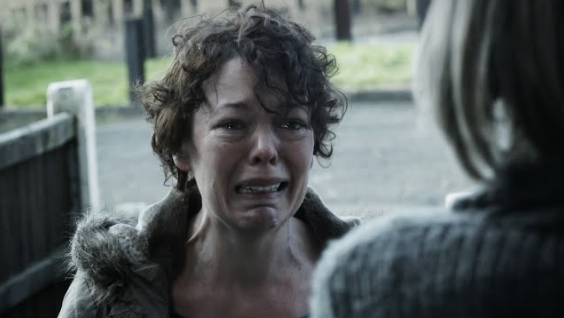
Unraveling the Anatomy of Betrayal: Olivia Colman Leads Netflix’s Dark True-Crime Drama ‘Landscapers’
Few actors possess the rare ability to navigate the fine line between fragile vulnerability and chilling restraint quite like Academy Award winner Olivia Colman. In her compelling return to television drama, Colman anchors HBO and Netflix’s Landscapers, a bleak, darkly surreal four-part limited series inspired by the notorious real-life 1998 murder of William and Patricia Wycherley. Directed with bold stylistic invention by Will Sharpe (The White Lotus) and written by Ed Sinclair, the series takes a routine true-crime narrative and transforms it into a devastating psychological study of delusion, codependency, and the tragic consequences of long-buried domestic secrets.
Rather than relying on standard police procedural formulas, Landscapers examines how ordinary individuals construct elaborate fantasies to insulate themselves from harsh realities. Anchored by phenomenal lead performances, the production offers a deeply disturbing look at what happens when a web of lies spanning more than a decade finally unravels under the weight of judicial scrutiny.
A Quiet Couple and a Quietly Buried Crime
The narrative centers on Susan and Christopher Edwards, played with remarkable nuance by Olivia Colman and David Thewlis. To their neighbors, the middle-aged British couple appears entirely unremarkable—soft-spoken, reclusive, and hopelessly devoted to one another. However, beneath this bland exterior lies a staggering secret that remained hidden for fifteen years.
In 1998, Susan’s elderly parents, William and Patricia Wycherley, vanished from their modest home in Mansfield, England. For over a decade, Susan and Christopher kept up the illusion that the couple was alive, continuing to collect their pensions, redirection of mail, and selling off their assets while draining hundreds of thousands of pounds. The illusion collapses when Christopher, destitute and living in exile in Paris, makes a desperate phone call to his stepmother, leading to the discovery of two human remains buried in the Wycherleys’ backyard garden.
When the couple voluntarily returns to the United Kingdom to face police interrogation, Detective Chief Inspector Emma Lenton (Kate O’Flynn) prepares for a straightforward confession. What investigators encounter instead is an extraordinary tale of psychological trauma, conflicting narratives, and deeply ingrained romantic delusion.
Olivia Colman’s Masterclass in Tragic Delusion
Olivia Colman delivers an astonishing performance as Susan Edwards, capturing a complex woman whose inner life is entirely detached from physical reality. Susan is obsessed with classic Hollywood cinema, spending vast sums of stolen money on rare memorabilia—autographed photographs of Gary Cooper, vintage movie posters, and old collectibles—even as she and her husband face literal starvation.
Colman portrays Susan not as a calculating, cold-blooded criminal mastermind, but as an emotionally stunted survivor of severe childhood trauma. Every soft, hesitant sentence, every tearful glance, and every desperate retreat into movie-star fantasies reveals a fragile psyche that constructed a romanticized reality to escape the horrors of her youth.
Opposite Colman, David Thewlis delivers a deeply moving performance as Christopher Edwards. Bound by an intense, protective devotion to his wife, Christopher functions as Susan’s knight in shining armor, willing to shoulder blame, financial ruin, and legal consequences to insulate her from the harsh truth of her actions. Their relationship forms the tragic core of the series—a dark, codependent pact built on mutual necessity and shared delusion.
Cinematic Experimentation and Conflicting Realities
What elevates Landscapers far above standard true-crime television is director Will Sharpe’s daring visual language. The series constantly breaks the fourth wall, shifting from desaturated black-and-white film noir sequences to brightly lit studio sets, complete with visible camera crews and theatrical backdrops.
These stylistic shifts mirror the fractured psychological state of the characters. When Susan describes her past, the narrative shifts into romanticized Westerns or golden-age Hollywood romances, complete with swelling orchestral music and heroic lighting. However, as police interrogations progress, the cinematic facade literally falls away, exposing the cold, damp reality of an interrogation room and a grim British prison cell.
This theatrical approach forces the audience to constantly question the nature of truth. Was the double homicide a spontaneous act of self-defense against abusive, extortionate parents, as Susan claims? Or was it a cold, financially motivated execution planned to fund an unsustainable lifestyle?
The Overlooked Detail That Breaks the Case
As investigators dig deeper into the physical evidence, the central mystery shifts from how the Wycherleys died to who actually pulled the trigger. Susan maintains throughout her interviews that her mother shot her father during a heated domestic dispute, after which Susan shot her mother in a fit of sudden emotional distress.
However, forensic ballistics and financial records tell a vastly different story. The turning point in the investigation arrives when forensic experts analyze the trajectories of the bullet wounds and the timeline of bank transfers made immediately following the deaths.
Investigators uncover a crucial, long-overlooked detail: the physical evidence demonstrates that the firearm was discharged by someone with technical proficiency, and bank records prove that high-value financial transfers were initiated hours before the alleged violent altercation occurred. This revelation dismantles Susan’s self-defense narrative, exposing a calculated effort to secure financial control that sealed the couple’s fate.
The Ultimate Consequence of a Shared Fantasy
In its heartbreaking final movements, Landscapers moves beyond the mechanics of the trial to examine the human cost of living a lie. Found guilty of murder and sentenced to life imprisonment with a minimum term of twenty-five years, Susan and Christopher Edwards are ultimately separated by the very legal system they sought to evade.
The tragedy of the story lies not merely in the brutal crime committed in a quiet suburban garden, but in the complete destruction of two lives spent running from the past. Susan’s desperate attempt to build a fairytale world through Hollywood cinema ended in total isolation, while Christopher’s unquestioning devotion led him to a life behind bars.
Landscapers stands as a masterpiece of contemporary television drama. Guided by Olivia Colman’s career-defining performance and exceptional creative vision, the series offers a sobering, deeply empathetic exploration of trauma, love, and the devastating consequences of burying the truth.