PART 3 – They Thought an Angry Father Would Come East and Hand Them the Story They Wanted. They Got Gate Footage, Hospital Photographs, and a Man Who Refused to Leave the Building Where His Child Could Still Say His Name.
I did not get on the highway.
That will always be the sentence I measure myself against, on nights the desert is too quiet and the barn still tries to play behind my eyes.
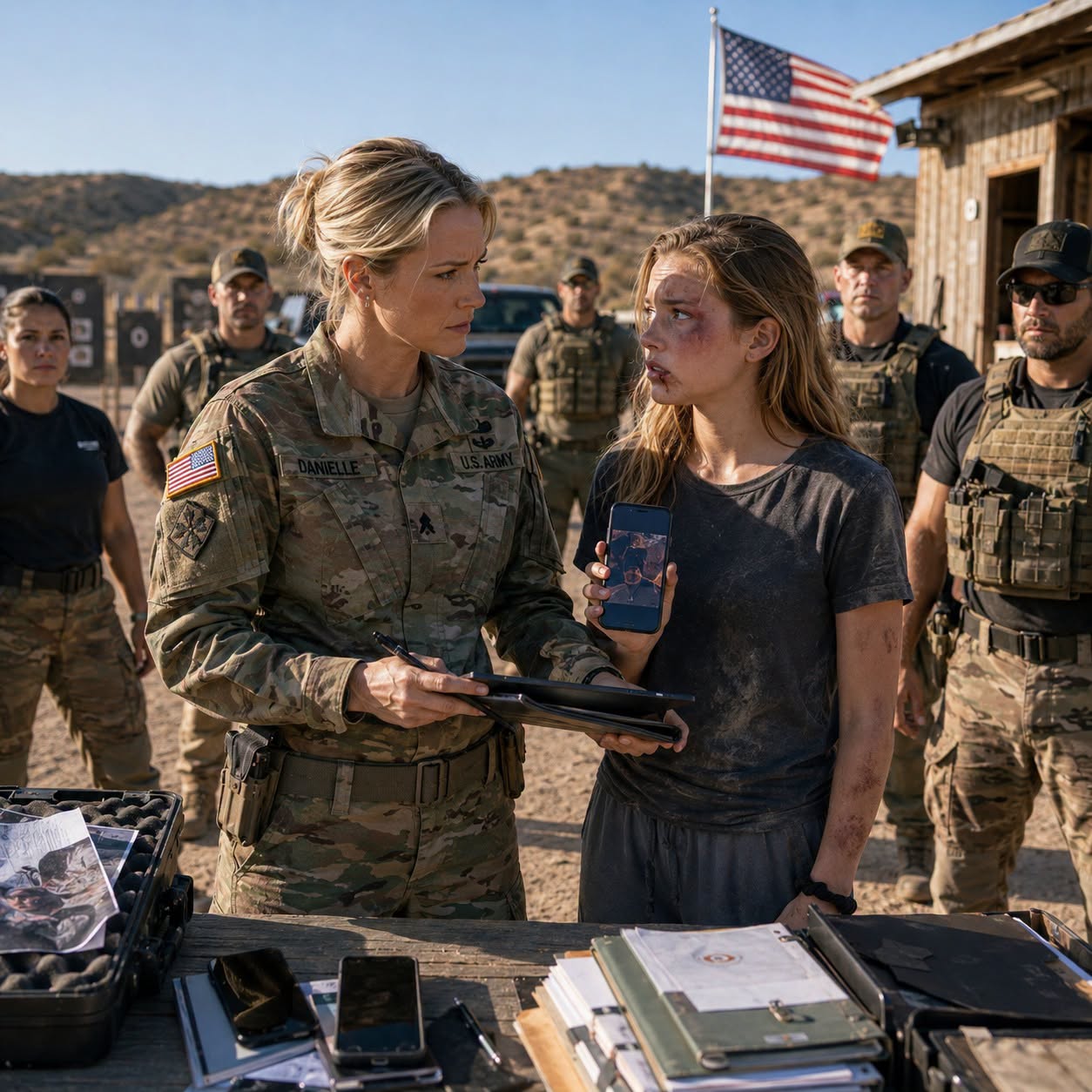
Rachel took the phone from my hand before my thumb could become a different man. She photographed the photograph. She logged the number. She called people whose names do not belong in a father’s mouth at midnight and whose work is the unglamorous opposite of revenge: warrants, jurisdictions, the slow violence of paper.
“They want you in Kentucky,” she said. “If you go, Hadley loses the only adult who did not stand in a doorway. If you go, Cella becomes a conversation you had with a fist. We send this to the people who can enter that house with authority instead of grief.”
Hadley sat up despite the ribs.
“If they hurt her because of me—”
“They hurt her because of them,” I said. “You told the truth. That is not the crime in this story.”
She cried then, at last, the way a person cries when the body has finished performing survival and remembered it is seventeen. I held the unburned wrist. I did not promise her a movie ending. I promised her I would still be in the building in the morning.
The morning brought two states into one conference room that smelled of dry-erase markers and fear dressed as procedure. New Mexico. A prosecutor who had handled worse barns. A federal voice on speaker when the words minors, filmed, and interstate audience arrived in the same paragraph. I gave them copies, not speeches. Gate video. Hospital photographs. Fuel receipts. The Honda. The prepaid phone I had not opened like a weapon. Roman’s logs, which proved I had stayed where a calm man stays.
I did not narrate the footage. I did not need to. Rooms like that know how to watch.
Kentucky tried its old hymn. Runaway. Unfit father. A program waiting on the ridge with a bed and a smile. It sounded thinner in a New Mexico morning, with a citation of burns and a doorway named Dane.
Warrants are not thunder. They are signatures. I was not there when they moved on the ridge. I was in a hospital chair teaching Hadley how to eat a sandwich without apologizing to it. Roman texted that the range was still a range. Rachel texted that Cella had been found in the house that sent the picture, frightened, unharmed enough to speak, which is a grim kind of mercy and also enough.
The Sunday table did not survive being inventoried.
County contracts paused. The wilderness program’s license acquired the kind of questions it had never had to answer while Conway talked about family. A sheriff who admired trucks discovered that envelopes photograph as well as daughters do. Brett’s barn, which had believed a black wall and a laptop were a kingdom, learned that an audience can be traced by people who do not live on the ridge. I know this the way a civilian is allowed to know it: through counsel, through news that used words like alleged until alleged became booked, through the look on Rachel’s face when she said, “You can come to the hearing. You cannot come to the door.”
Dane’s polo did not help him in a room without fundraiser smoke. Sandra’s cookies did not help her when a judge looked at a wrist. She called once more, smaller.
“I didn’t know how far it went.”
“You knew enough to tell her not to look.”
There was nothing else useful to say to a woman who had chosen a table over a child. The law would say the rest in a language that does not care about Thanksgiving.
Hadley turned eighteen in a rented kitchen near the range, with Aaron burning the toast and Roman pretending not to wipe his eyes. No ridge. No extra chairs. She asked if Cella could visit when the attorneys said visiting was no longer a trap. I said yes. She asked if I hated her mother.
“I hate the doorway,” I said. “The rest is a long road I will not make you walk for me.”
The cigarette scar faded into a pale fact. Some facts do not leave. They only stop being the whole of a girl.
I still have the first prepaid phone in an envelope I do not open. Not as a trophy. As a reminder that the hottest engine in a father’s chest is the one that will ruin the case and the child together if you let it drive.
They filmed her because they thought a lens belonged to them.
They learned a lens is only a witness.
And a witness, properly kept, can take a table apart more cleanly than a man on a highway ever could.
THE END