PART 2 – They Thought an Angry Father Would Come East and Hand Them the Story They Wanted. They Got Gate Footage, Hospital Photographs, and a Man Who Refused to Leave the Building Where His Child Could Still Say His Name.
Rachel flew in before the coffee in the hospital cafeteria had earned the name.
She did not ask to see the tape. She asked who had touched the bag, who had touched the Honda, who had written the first sentence on a chart. Then she sat beside Hadley’s bed and spoke to her as if a seventeen-year-old were a witness, not a prize two households were tugging.
“You don’t have to give me the barn today,” Rachel said. “You have to stay in a building with locks that do not belong to them.”
Hadley nodded, then winced at the nod. Even agreement had a price.
By afternoon Kentucky had found its voice. A message through Sandra’s lawyer: Hadley was a runaway. Holt had a history of instability. A wilderness program on the ridge stood ready to “receive her for her own safety.” The language wore a polo shirt. Under it, the same hands.
Rachel read it twice.
“They’re not asking for their child,” she said. “They’re asking for their problem back.”
I walked the corridor until the vending machines knew my face. Roman sent range logs like prayer beads: courses running, names signed, fuel tallied, my truck on the property at hours a judge could count. The Garritys wanted a father on I-40 with a temperature and no alibi. I gave them a man on camera teaching a class about patience.
Sandra called at dusk.
I put her on speaker because Rachel pointed at the table and I had promised not to be a private storm.
“Bring her home, Holt. This is a misunderstanding that got loud.”
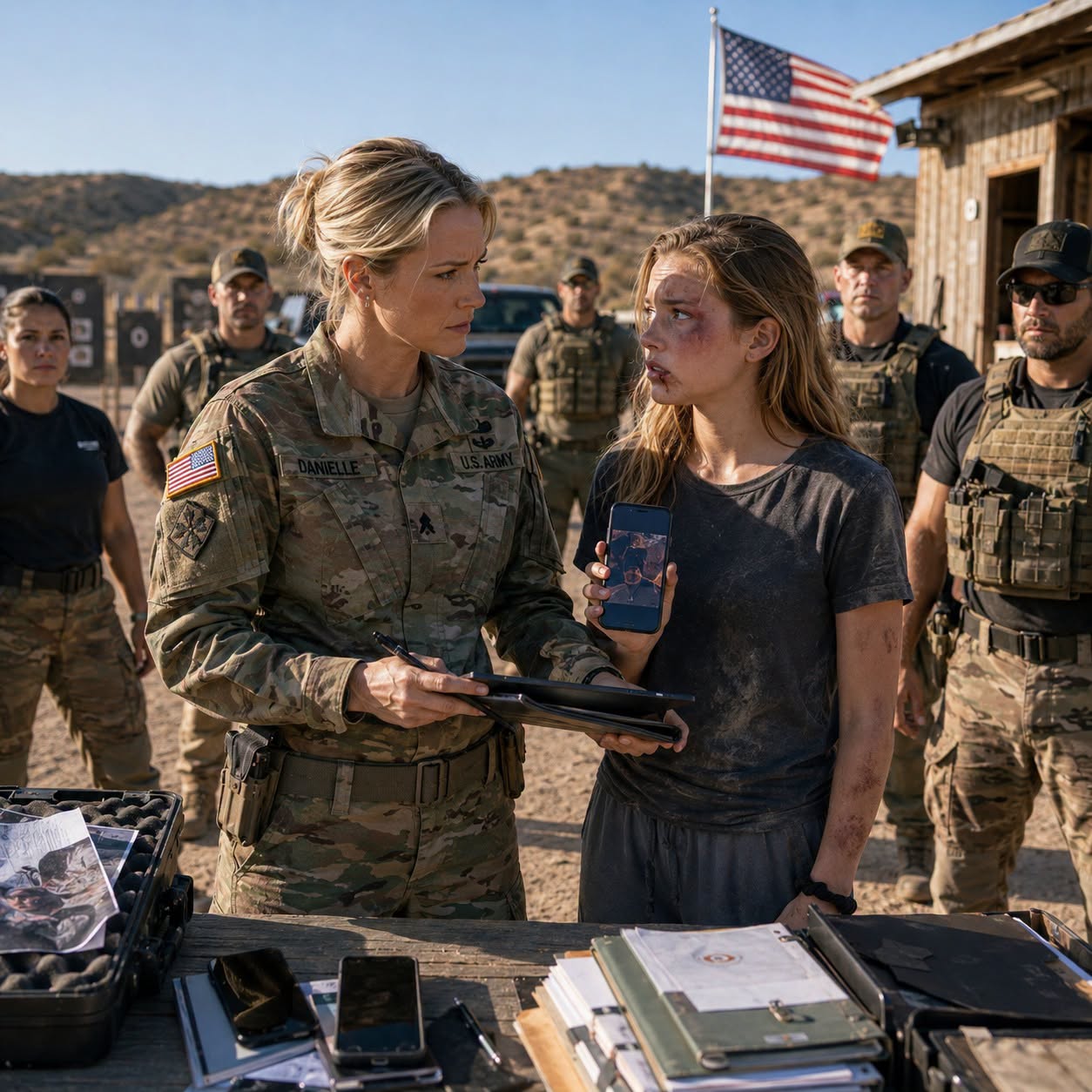
“She folded at my gate with a burn on her wrist.”
A pause. In it I heard a kitchen I had not been invited into for years.
“She shouldn’t have gone looking through other people’s things.”
“She looked at a crime and used the word police. That is not trespass. That is the last working part of a conscience.”
“You don’t understand this family.”
“I understand a doorway, Sandra. I understand a man who stands in one and watches.”
Her voice sharpened into the tone court had liked.
“If you keep her, they will come for your license, your contracts, your name. Conway doesn’t lose children to men who live in the desert.”
Rachel leaned toward the phone.
“This call is over. Further contact goes through counsel. If anyone from Garrity Ridge attempts to remove her from a New Mexico facility, I will treat it as what it is.”
The line died with the particular click of someone who had expected a different daughter’s father.
Hadley had heard enough. She picked at the tape on her ribs.
“Cella texted the prepaid,” she said. “Before I gave it to you. Just once. She said they knew it was her. She said she was sorry about the barn.”
“Did she say where.”
“No. She said the Sunday table had extra chairs.”
Which meant the house was counting heads.
Night made the hospital window into a black mirror. I saw myself in it and did not like the man who wanted a highway. I went downstairs and signed my name on a visitor sheet that would prove I had remained in the building with the fluorescent lights and the girl who still said Dad as if the word might work if she pronounced it carefully enough.
At 11:40 Rachel woke me in the chair.
“Don’t watch it alone,” she said.
We used a laptop that was not mine. Headphones I would throw away. Hadley had given permission and then turned her face to the wall, which was its own kind of bravery.
I will not write what the barn looked like.
I will write what it proved.
Time stamps. Voices I knew from Thanksgivings. A laugh that had asked me to pass rolls. Dane in the doorway, not a blur, not a rumor. Brett speaking to a lens as if an audience out there had paid for a lesson. Eleven bodies. My child’s voice trying to stay in one piece.
Rachel stopped it before the end. She did not ask if I was fine. She wrote names. She wrote the shape of a business that was not a barn at all: county money, a program for children other people had already failed, a sheriff who admired trucks, a website that believed distance made a man anonymous.
“This is not a custody fight anymore,” she said.
“I know.”
“Then you need to hear the next sentence without getting in a vehicle. The foundation isn’t Conway’s mouth. It’s the invoices the county signs. The licenses. The people who eat roast and call it law. You do not kick a barn door. You take the paper out from under the table.”
My phone lit on the arm of the chair.
Unknown number. Kentucky area code.
A photo.
Not Hadley.
Cella.
Sitting at a table I recognized, Conway’s bourbon at the head, her face turned too quickly toward someone else’s camera. Under it, a line with no name attached.
Family handles its own. Send ours back. Or the cousin explains the phone in person.
Hadley, behind us, had not been asleep after all.
She saw the picture over my shoulder and made a sound I hope I never hear again.
Rachel closed the laptop.
And the desert outside Las Cruces, which had always been large enough to hold a man who wanted to drive east, suddenly felt too small for the choice I still had to make.
TO BE CONTINUE…