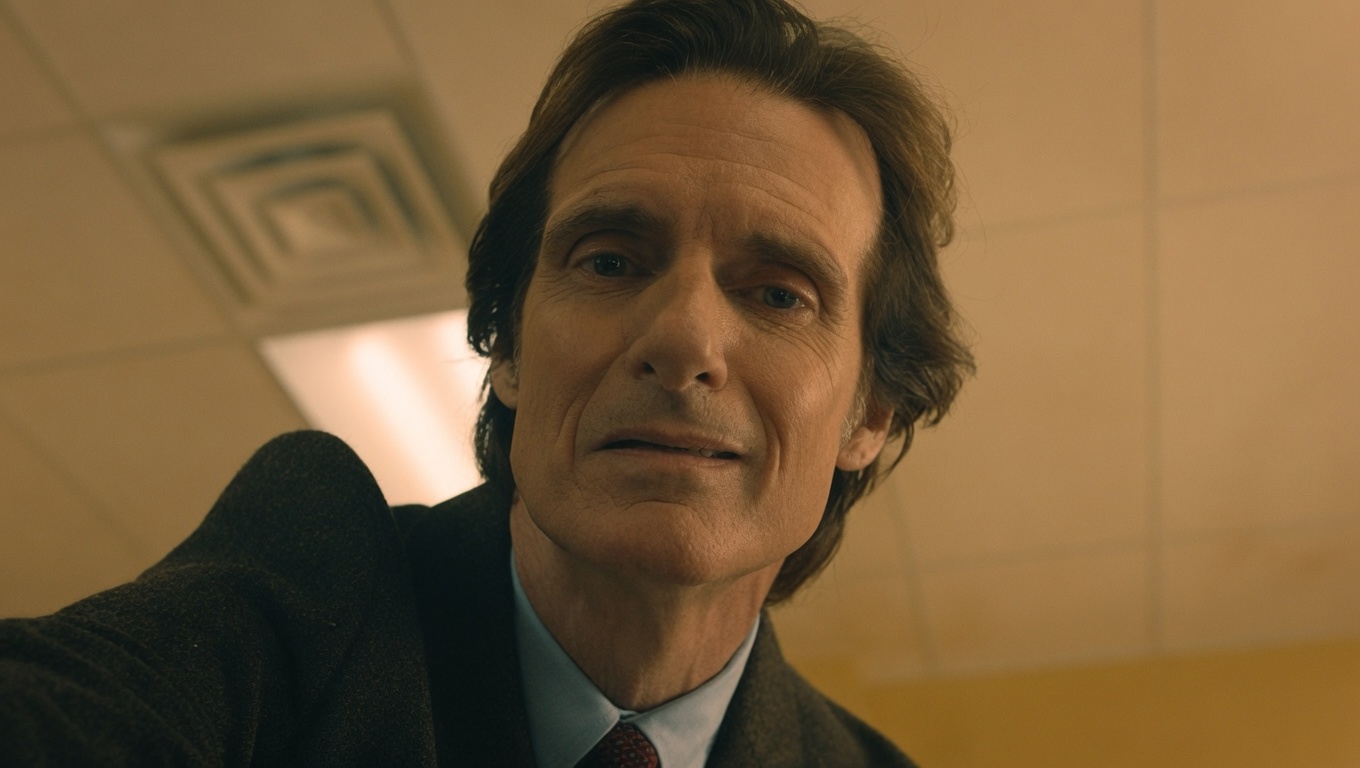
EVERYONE TALKS ABOUT VICTOR’S MELTDOWNS IN FROM… BUT THEY’RE MISSING THE MOST INCREDIBLE PART OF SCOTT MCCORD’S PERFORMANCE
While fans often focus on Victor’s terrifying breakdowns and unsettling behavior, it’s the quieter moments that reveal just how extraordinary Scott McCord really is. The way he portrays Victor’s innocence, heartbreak, and decades of buried trauma can make viewers feel deeply protective of him one moment — then completely uneasy the next. 💔😨 Few actors can balance vulnerability and fear so effortlessly, transforming a character who could have been one-dimensional into one of the most complex and emotionally devastating figures on television. And one subtle scene that most viewers overlooked may have revealed the real reason Victor has never been able to escape his past… 👀
In the nightmarish world of MGM+’s hit series From, where an unsuspecting town traps residents in an endless cycle of terror with bloodthirsty creatures emerging after dark, few characters have captured hearts and haunted minds quite like Victor Kavanaugh. Played with breathtaking nuance by Canadian actor Scott McCord, Victor isn’t just the town’s longest-surviving resident and eccentric artist — he’s a living embodiment of unresolved trauma, arrested development, and quiet resilience. While explosive meltdowns and crayon drawings of horrors dominate discussions, it’s McCord’s masterful handling of the silences that elevates the performance to Emmy-worthy territory.
Since the show’s debut, McCord has crafted a character who feels both childlike and ancient, a man whose emotional growth froze the day tragedy struck his family in the late 1970s or early 1980s. Now, deep into later seasons, Victor continues to be a fan favorite — not because of cheap scares, but because McCord makes you feel the weight of forty-plus years of isolation, guilt, and fragile hope.
The Man Behind the Crayons: Victor’s Traumatic Core

Victor’s backstory is the stuff of nightmares. As a young boy, he arrived in the town with his family. When the creatures attacked, his mother urged him and his sister Eloise to hide. Victor obeyed and survived — but the guilt of not protecting Eloise, whose death he suppressed for decades, shattered him. He emerged to find everyone else slaughtered, forcing him to grow up (or rather, not grow up) entirely alone in the cursed town.
This history informs every tic, every hesitant sentence, and every protective clutch of his beloved lunchbox. McCord doesn’t play Victor as “crazy” or comic relief. Instead, he delivers a “traumatic regressive” state — a soul frozen in childhood, trapped in an adult body. His wide, youthful eyes convey innocence one second and bottomless sorrow the next. It’s acting that demands total commitment, and McCord delivers it flawlessly.
Fans on Reddit and social media frequently praise how McCord uses subtle physicality: the slight hunch of shoulders as if expecting danger, the way he rocks gently when overwhelmed, the childlike wonder mixed with bone-deep weariness. “Scott McCord is giving us a masterclass,” one viewer noted. “Victor could have been cartoonish, but he’s heartbreakingly real.”
Quiet Brilliance: Beyond the Meltdowns

Yes, Victor’s outbursts — screaming, rocking, or frantically drawing warnings — are iconic and terrifying. But McCord shines brightest in the understated scenes where dialogue is minimal and emotion does the heavy lifting.
Consider his interactions with newcomers like the Matthews family. When Victor bonds with young Ethan, McCord layers the relationship with protective big-brother energy mixed with recognition of his own lost childhood. He sees himself in Ethan — another innocent boy facing the town’s horrors — and the tenderness McCord brings to those moments is devastating. There’s no grand speech; just soft-spoken advice, shared drawings, and a quiet fear that history will repeat itself.
His evolving friendship with Tabitha (Catalina Sandino Moreno) adds maternal layers. The lunchbox handover — a monumental act of trust — speaks volumes. McCord plays it with trembling vulnerability, as if handing over a piece of his shattered soul. In interviews, he described it as an “act of love,” reflecting the deep homework he did on Victor’s psyche.
Even in group scenes, McCord’s listening is active. His micro-expressions — a flicker of recognition, a suppressed flinch, a hopeful glance — convey decades of buried knowledge about the town’s cycles, the Boy in White, the bottle tree, and the Man in Yellow. He makes Victor the emotional anchor of the ensemble without ever overpowering it.
The Overlooked Scene That Says It All

One subtle moment that flew under the radar for many viewers — possibly in Season 4 — offers a profound clue to Victor’s inability to escape his past. In a quiet forest sequence, Victor steps away from the group for a mundane need… but McCord turns it into something layered and revealing. The hesitation, the hyper-awareness of his surroundings, the brief return to childlike solitude — it underscores how the trauma has wired him for perpetual survival mode. Even the most ordinary acts are tainted by the town’s grip.
This isn’t filler. It’s McCord showing us why Victor remains stuck: every moment, no matter how small, triggers the same hypervigilance from that fateful night. The scene humanizes him further while hinting at deeper lore — perhaps Victor’s “immunity” or unique connection to the town stems from this arrested state, making him both victim and unwitting key to the mystery.
McCord has spoken about the emotional toll of these scenes, especially reunions with his on-screen father Henry (Robert Joy). Their father-son arc, marked by lost decades, guilt, and desperate reconnection, produced raw, dialogue-light performances where eye contact alone carried the weight of a lifetime of abandonment and regret. “There’s this lifetime that’s been lost,” McCord reflected in interviews, noting how he drew on Victor’s guilt to fuel authentic vulnerability.
Why McCord’s Performance Elevates the Entire Series
From thrives on mystery, monsters, and mounting dread, but it’s the human cost — embodied so powerfully by Victor — that keeps audiences invested. McCord prevents the show from becoming pure horror by grounding it in profound empathy. You don’t just fear for Victor; you ache for the boy he never got to be.
His versatility shines in contrasts: playful excitement when sharing drawings with children, paralyzing fear during creature warnings, and quiet determination when aiding escapes or uncovering truths. This range transforms Victor from potential side character into a tragic protagonist whose journey mirrors the town’s larger enigma.
Co-stars and creators have lauded McCord’s dedication. He brings personal backstory elements and collaborates closely with writers, ensuring authenticity. His theater background and work in animation and voice acting add layers of physical and vocal precision that make Victor unforgettable.
The Broader Impact: Trauma, Representation, and Fan Love
In an era of prestige television, McCord’s portrayal stands out for its sensitive handling of childhood trauma manifesting in adulthood. Victor represents survivors who carry invisible scars — regressing as a coping mechanism while retaining sharp insight. It’s a performance that invites compassion and sparks important conversations about mental health, PTSD, and resilience.
Fans have created art, theories, and tributes celebrating McCord. Many say his work makes From rewatchable, as new details in Victor’s expressions reveal clues on subsequent viewings. Social media is filled with calls for awards recognition, with some arguing he’s delivering one of the best supporting performances in genre TV.
As the series delves deeper into cycles, the Boy in White, and possible escapes, Victor’s role grows. McCord’s ability to convey hope amid despair positions him as the heart of the story — a reminder that even in darkness, innocence and connection matter.
A Performance for the Ages
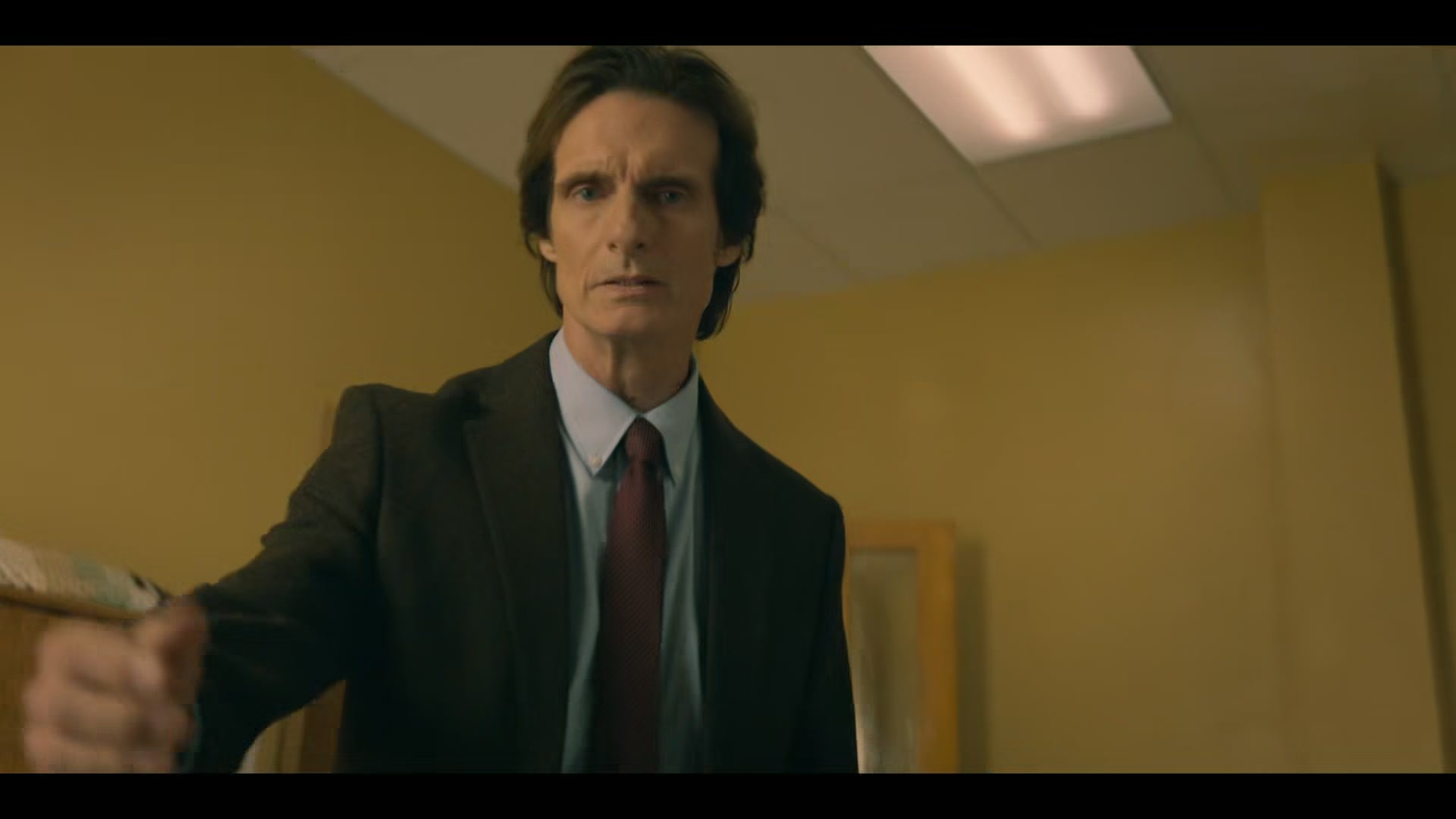
Scott McCord didn’t just play Victor — he became him in a way that blurs lines between actor and character. In quieter moments, away from the screams and shadows, he delivers television acting at its most profound: raw, empathetic, and utterly human.
While the monsters prowl and the town tightens its grip, it’s McCord’s nuanced work that lingers long after the credits roll. He makes us protective, uneasy, hopeful, and heartbroken — sometimes all at once. In a crowded field of horror dramas, this is the kind of layered performance that defines careers and elevates entire series.
As From continues to unravel its mysteries, one thing is clear: Victor Kavanaugh, and the brilliant man bringing him to life, are at the center of it all. Scott McCord isn’t just acting — he’s revealing the soul of a survivor, one subtle, devastating beat at a time. And in doing so, he’s given us one of TV’s most unforgettable characters.
The town may never let its residents go, but thanks to McCord, Victor — and the profound humanity he represents — will stay with viewers forever.