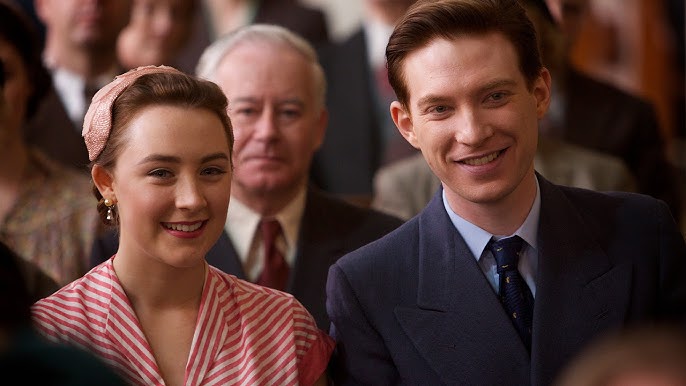
Most period dramas are remembered for grand romances and sweeping declarations of love. This one stays with viewers for a far more painful reason: the life that might have been.
While most period dramas are remembered for sweeping estates, passionate kisses in the rain and declarations of undying love, Brooklyn lingers in the soul for a far more painful and profoundly human reason: the quiet tragedy of paths not taken, the loneliness of reinvention, and the heartbreaking cost of choosing between two worlds that both feel like home.
Saoirse Ronan’s masterful portrayal of Eilis Lacey, a young Irish woman caught between the familiar comforts (and limitations) of her small-town life in 1950s Enniscorthy and the vibrant, hopeful future she is building in Brooklyn, New York, captured something deeply relatable about starting over. This beautifully crafted drama doesn’t rely on melodrama or high-stakes action. Instead, it tenderly explores the loneliness of immigration, the courage required to build a new identity, and the way every homecoming changes you forever. Every letter from home carries hidden weight. Every promise to a new love feels both exhilarating and terrifying. And every choice, no matter how small, demands a sacrifice.
Even years after its 2015 release, audiences and critics continue to praise Brooklyn as one of the most emotionally authentic, visually stunning, and heartbreakingly relatable dramas ever put on screen. With its Oscar-nominated performances, lush period detail, and bittersweet storytelling that feels both timeless and deeply personal, the film remains a touchstone for anyone who has ever left home — or wondered what might have been if they had stayed.
But it is one pivotal moment — the discovery that a single, seemingly inconsequential lie (or omission) has quietly altered everything back home — that transforms Eilis’s impossible decision into an utterly devastating one, leaving viewers reeling long after the credits roll.
The Story of Two Worlds and One Young Woman’s Impossible Choice

Directed by John Crowley and adapted by Nick Hornby from Colm Tóibín’s acclaimed novel, Brooklyn follows Eilis Lacey as she emigrates from Ireland in the early 1950s. Sponsored by a kindly priest (Jim Broadbent), she leaves behind her widowed mother and sister Rose for the unknown opportunities of America. The journey is brutal — seasickness, homesickness, and the harsh realities of boarding house life in a strange city test her spirit from the start.
Yet Brooklyn slowly reveals its magic. Eilis blossoms through night classes in bookkeeping, a supportive community of fellow Irish immigrants, and, most significantly, a sweet and charming romance with Tony Fiorello (Emory Cohen), an Italian-American plumber whose warmth and optimism help her see a future she never imagined possible.
Just as Eilis begins to truly feel at home in her new life — complete with a budding career and deepening love — tragedy strikes back in Ireland. She is called home for a family emergency, stepping back into the familiar rhythms of Enniscorthy. What should be a temporary visit quickly becomes emotionally complicated. The town that once felt suffocating now holds a different kind of comfort. Old friendships rekindle, and a gentle, responsible local suitor named Jim Farrell (Domhnall Gleeson) enters her life, offering the stability and belonging she left behind.
The contrast is exquisite and excruciating. Crowley’s direction captures the sensory details of both worlds with poetic precision: the grey, rain-soaked Irish coast versus the vibrant colours and energy of Coney Island; the rigid expectations of small-town Ireland versus the hopeful hustle of postwar America.
Saoirse Ronan’s Career-Defining Performance

At the centre of it all is Saoirse Ronan, delivering what many consider her most nuanced and heartbreaking work. From the shy, nervous girl stepping off the boat to the confident young woman navigating two romances and two futures, Ronan embodies Eilis with quiet power. Her expressive eyes convey volumes — the flicker of guilt, the spark of ambition, the crushing weight of indecision.
Ronan earned an Oscar nomination for Best Actress, and it’s easy to see why. She never reaches for big, showy moments. Instead, her performance lives in the silences: the way she hesitates before answering a question about her life in America, the subtle shift in posture when she walks the streets of her hometown again, and the devastating realisation that she cannot have both worlds.
Supporting turns are equally strong. Emory Cohen brings genuine sweetness and vulnerability to Tony, making him far more than a romantic ideal. Domhnall Gleeson, as the reserved but sincere Jim, creates a compelling alternative future that feels equally valid. Julie Walters as the no-nonsense boarding house owner Mrs. Kehoe provides much-needed humour and wisdom, while the late great Michael Gambon and others round out a flawless ensemble.
The Small Lie That Changes Everything

The emotional core of Brooklyn crystallises in that gut-wrenching moment when Eilis discovers that one small deception — or rather, an omission born of complicated circumstances and good intentions — has fundamentally altered the landscape back home. Without spoiling the precise revelation, the news forces her to confront how her absence and partial truths have rippled outward, affecting the people she loves most.
What was meant to be a temporary bridge between two lives suddenly becomes an impossible chasm. The decision she faces — to return to the vibrant future she has earned in Brooklyn or to embrace the familiar comforts (and unresolved feelings) in Ireland — carries enormous weight. There are no villains here, only human beings trying their best in impossible situations. Every option demands sacrifice. Every path forward leaves something precious behind.
Viewers frequently cite this sequence as the moment the film moves from tender coming-of-age story to profound meditation on loss. The quiet tears, the internal conflict captured in Ronan’s face, and the gentle but devastating conversations that follow have left countless audience members reaching for tissues in darkened cinemas and living rooms alike.
Visual Poetry and Period Authenticity
Cinematographer Yves Bélanger bathes the film in warm, nostalgic light that makes both Ireland and Brooklyn feel alive and tactile. The costumes by Odile Dicks-Mireaux perfectly capture the era’s fashion — from Eilis’s simple Irish cardigans to the elegant dresses she wears on Brooklyn dates. The production design immerses you completely: crowded transatlantic ships, bustling department stores, Irish pubs filled with music and melancholy.
Michael Brook’s score, featuring haunting piano and traditional Irish motifs, swells at exactly the right moments without ever overpowering the intimate storytelling.
Why Brooklyn Resonates So Deeply in 2026

In an age of constant movement — globalisation, immigration debates, remote work, and young people leaving hometowns for bigger opportunities — Brooklyn feels more relevant than ever. It captures the universal experience of being torn between roots and wings, between who you were and who you are becoming.
Immigrant communities still relate to the boarding house scenes and the comfort of familiar accents in a strange land. Those who have returned home after years away understand the strange sensation of being both insider and outsider. And anyone who has ever loved two people — or two versions of life — at once recognises the agony of Eilis’s choice.
The film earned three Oscar nominations, including Best Picture, and won the hearts of audiences worldwide. It remains a staple on “best dramas” lists and comfort rewatch recommendations, precisely because it refuses cheap resolutions. Its bittersweet ending honours the complexity of real life: growth requires loss. Love requires courage. And sometimes the bravest thing is choosing yourself.
The Life That Might Have Been
What makes Brooklyn so haunting is its gentle insistence that both paths were valid. There is no clear “right” choice — only different versions of a meaningful life. The film respects the audience enough to let them feel the full weight of what Eilis leaves behind, whatever she ultimately decides.
In the end, it is not a story of grand romance triumphing over all. It is a story about quiet courage, the loneliness of becoming, and the grace required to move forward when every option breaks your heart a little.
Viewers often emerge from Brooklyn changed — more empathetic to the hidden struggles of those who leave home, more appreciative of the sacrifices made by previous generations, and more aware of their own “what ifs.”
As one fan beautifully summarised online: “It didn’t just make me cry. It made me call my parents. It made me think about the roads not taken.”
If you haven’t seen it, prepare for a tender, unforgettable journey. If you have, you already know — some films don’t just tell a story. They hold up a mirror to your own heart and quietly ask: What would you choose?
The life that might have been remains one of cinema’s most powerful and painful questions. Brooklyn asks it with exquisite grace.