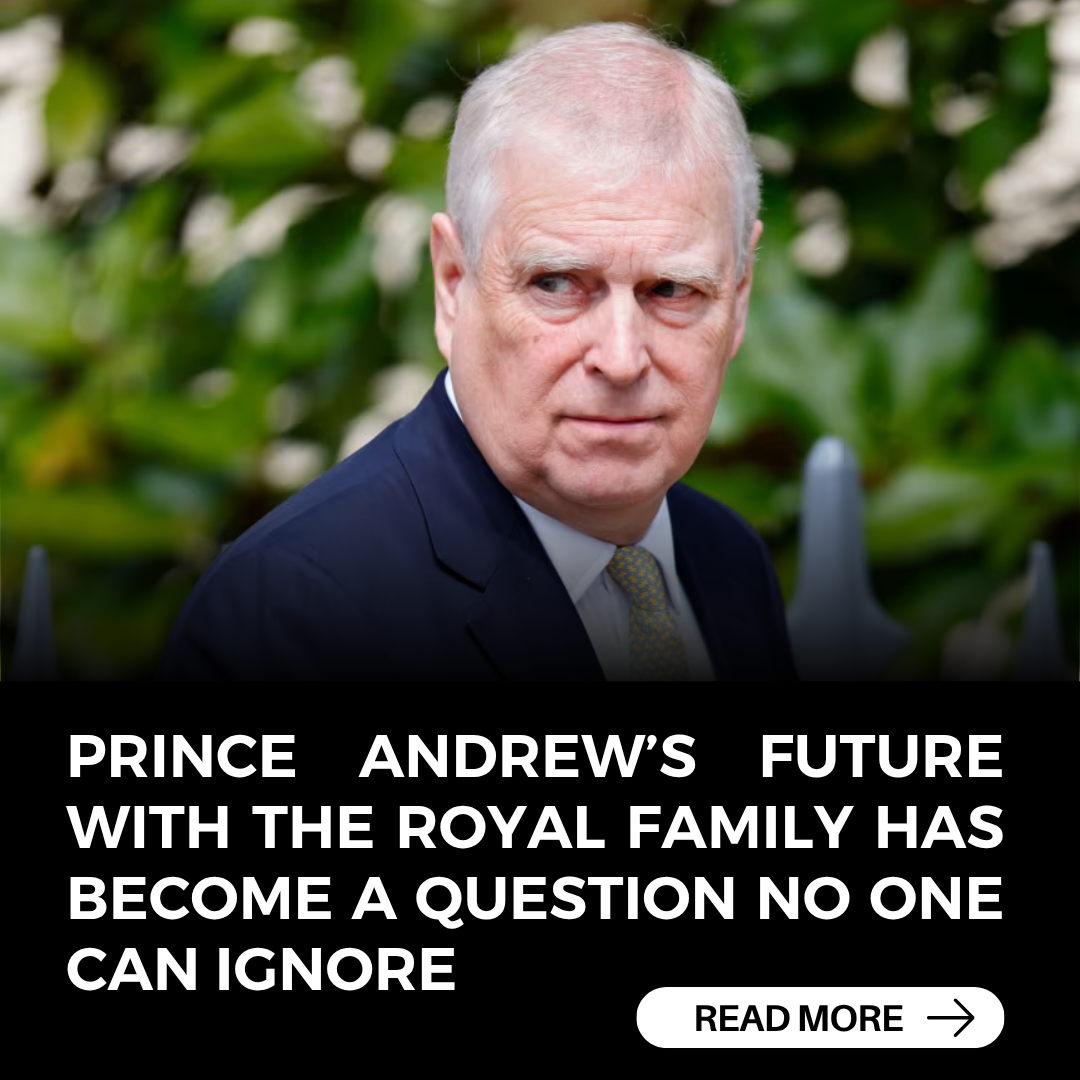
PRINCE ANDREW’S FUTURE WITH THE ROYAL FAMILY HAS BECOME A QUESTION NO ONE CAN IGNORE
Years after stepping away from public duties, Prince Andrew remains one of the most debated figures connected to the monarchy. But as the Royal Family continues to move forward, many are asking what his place will look like from now on.
:max_bytes(150000):strip_icc():focal(1013x709:1015x711)/Prince-Andrew-interview-082624-169aace29511459dad63d9da5f337059.jpg)
The once-charismatic second son of Queen Elizabeth II, known for his naval service, high-society connections, and energetic public persona, has transformed into a symbol of royal controversy. Stripped of his titles, evicted from his grand residence, and now facing serious legal scrutiny, Andrew Mountbatten-Windsor— as he is formally known—finds himself increasingly isolated from the institution that defined his life.
A Life of Privilege Shattered by Scandal
Prince Andrew’s fall from grace is not sudden but the culmination of years of accumulating damage, primarily linked to his association with the late Jeffrey Epstein, the convicted sex offender and financier. Their friendship, which included multiple meetings even after Epstein’s 2008 conviction, thrust Andrew into the spotlight in the most unflattering way. The 2019 BBC Newsnight interview, intended to clear the air, backfired spectacularly. Andrew’s defensive responses, claims of not sweating, and awkward denials of allegations from Virginia Giuffre became memes and fodder for critics worldwide.
Giuffre accused Andrew of sexual abuse when she was 17, allegations he has always vigorously denied. A 2022 civil settlement saw him pay millions without admitting liability, but the reputational harm was irreversible. Queen Elizabeth II stood by her son longer than many expected, but following her death in 2022, King Charles III took decisive action to protect the monarchy’s image.
:max_bytes(150000):strip_icc():focal(749x0:751x2)/queen-elizabeth-11-60ae8ded653e463ca3fece55107007b4.jpg)
In October 2025, amid renewed scrutiny from Epstein-related document releases and Giuffre’s posthumous memoir, Andrew relinquished his royal titles, including Duke of York, and other honours. He is now simply Andrew Mountbatten-Windsor and has been removed from the line of succession in practical terms, though formal legislative changes are still under discussion. He was also forced to vacate Royal Lodge, his long-time Windsor home, and relocate to more modest accommodations on the Sandringham estate.
The Brotherly Rift and King Charles’s Tough Stance
The relationship between King Charles III and his younger brother has been strained for years, but recent events have made the divide stark. Insiders describe Charles as having reached the limits of familial tolerance. In February 2026, on Andrew’s 66th birthday, he was arrested by Thames Valley Police on suspicion of misconduct in public office related to his Epstein ties. King Charles issued a rare personal statement emphasizing that “the law must take its course” and offering full cooperation from the family.
This marked a significant shift. While Queen Elizabeth often protected Andrew, Charles has prioritized the monarchy’s future. Andrew has reportedly been banned from key events like Garter Day, absent from Trooping the Colour balcony appearances in 2026, and largely excluded from family public gatherings. His daughters, Princess Beatrice and Princess Eugenie, maintain closer ties to the family, but Andrew himself lives a more private, diminished existence.

Financially, Andrew’s situation remains precarious. Reports suggest King Charles continues some private support, but Andrew has faced pressure to downsize and even sublet properties. His move to Sandringham has been delayed or adjusted, highlighting ongoing negotiations and the King’s desire to draw firm boundaries.
Public Perception and the Monarchy’s Image
The British public and international observers have mixed views, but the consensus leans toward fatigue with the saga. Polls indicate stable support for the monarchy overall, driven by interest in Prince William and Princess Kate, but calls for greater financial transparency have grown louder, especially given Andrew’s continued private funding. Younger generations, in particular, question the relevance of figures like Andrew in a modern institution.
Royal experts argue that the family’s strategy of sidelining Andrew has helped contain the damage. By continuing public duties without him—attending services, state visits, and community engagements—the royals signal that the institution endures beyond individual scandals. However, the Epstein shadow lingers, with conspiracy theories and renewed document releases keeping the story alive in tabloids and online forums.
Andrew maintains his innocence, framing his actions as duty-bound and denying any criminal wrongdoing. Yet, his absence from major events like Easter services and VE Day commemorations in 2026 underscores a new reality: he is no longer a working royal and may never reclaim even a ceremonial role.
What Lies Ahead for Andrew?
Speculation about Andrew’s future is rife. Will he fade into quiet retirement on the Sandringham estate, supported discreetly by family? Or could further legal developments force even more drastic measures, such as full removal from the line of succession via Parliament? Government sources indicate no immediate plans for legislative action, but the door remains open depending on investigation outcomes.
For the Royal Family, particularly under King Charles and the future reign of Prince William, distancing from Andrew appears essential for credibility. The monarchy’s survival depends on public trust, and associations with scandal erode that foundation. Andrew’s daughters continue their own paths—Beatrice and Eugenie balancing family life with occasional royal-adjacent roles—but their father’s controversies cast a long shadow.
Some observers wonder if Andrew could ever rehabilitate his image through philanthropy or private endeavors, much like other royals have navigated personal crises. However, the depth of his Epstein connections makes redemption challenging. Legal proceedings, if they advance, could prolong the media storm well into the coming years.
In many ways, Andrew embodies the tensions within the modern monarchy: the pull between familial loyalty and institutional duty. Queen Elizabeth’s era tolerated more personal indulgences; Charles’s reign demands accountability and focus on service. As the family evolves—embracing a slimmer, more professional model—figures like Andrew represent the past that must be managed carefully to secure the future.
A Lingering Question for the Institution
The question of Prince Andrew’s place is not just about one man but the monarchy’s adaptability. With global scrutiny intensified by social media and relentless news cycles, the Royal Family must balance compassion with pragmatism. Andrew’s story serves as a cautionary tale: privilege comes with responsibility, and once lost, public favor is hard to regain.
As 2026 unfolds, Andrew Mountbatten-Windsor lives in relative seclusion, his once-prominent role reduced to whispers and speculation. The Royal Family presses on with its duties, its image somewhat insulated but forever marked by the controversies. Whether Andrew finds peace in exile or faces further reckonings remains uncertain. What is clear is that his future within—or apart from—the Royal Family is a question that refuses to fade, forcing the institution to confront uncomfortable truths about legacy, forgiveness, and survival in the 21st century.
The monarchy has weathered storms before, from abdications to divorces. Andrew’s chapter tests its resilience once more, reminding us that behind the pageantry and tradition lie very human struggles. For now, the family moves forward, leaving the question of his reintegration unanswered, perhaps permanently.