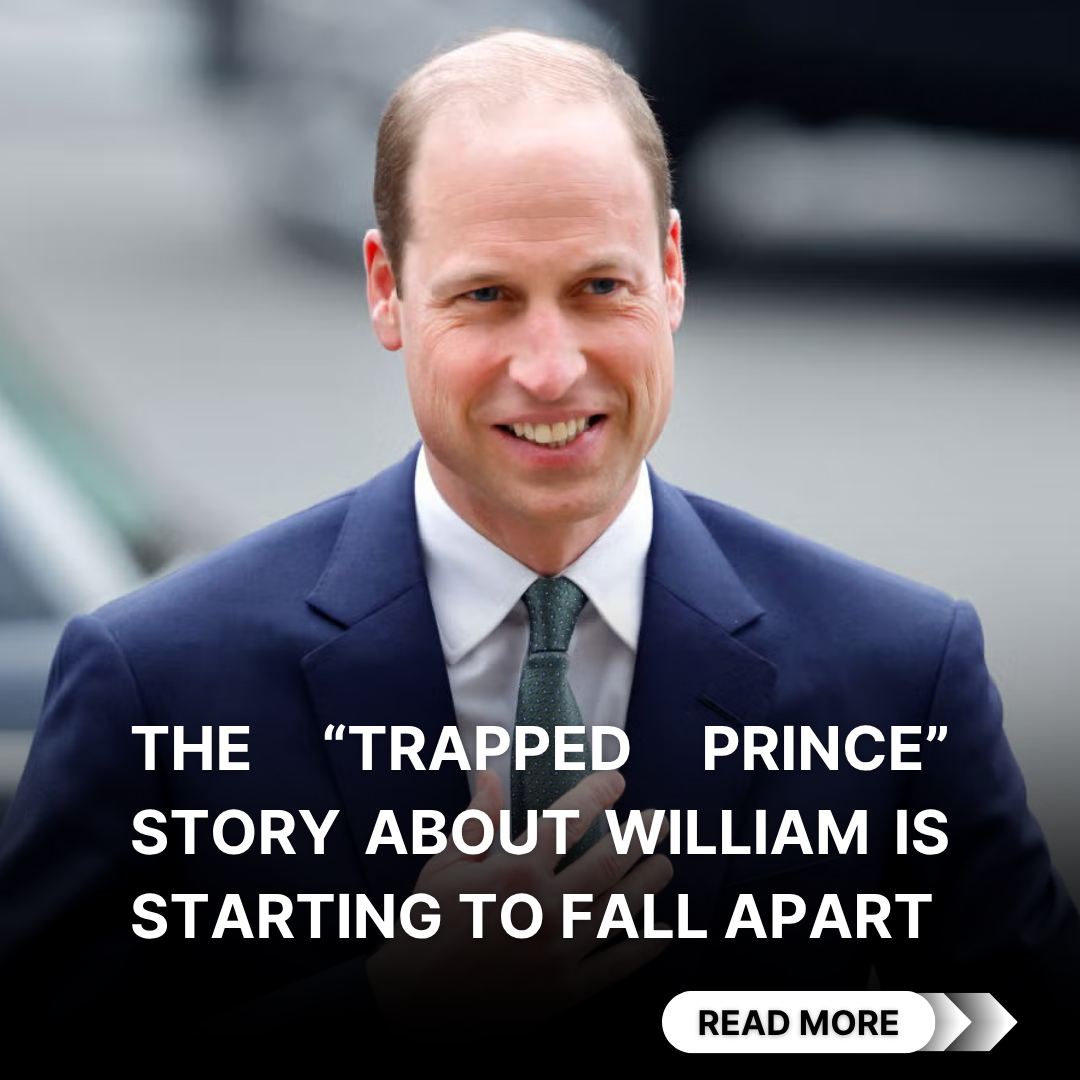
THE “TRAPPED PRINCE” STORY ABOUT WILLIAM IS STARTING TO FALL APART
For years, the world saw Prince William as a man limited by duty and tradition. The narrative painted him as the dutiful heir, constrained by the weight of expectation, the shadow of his parents’ turbulent marriage, and the rigid protocols of an ancient institution. He was often portrayed as cautious, reserved, and perhaps even reluctant — a future king patiently waiting in the wings while navigating personal challenges and family rifts. But behind the Palace walls, a different picture may be emerging — one that changes how people view the future King.


Recent years have shown Prince William stepping into his role with a quiet confidence and a modern sensibility that challenges the “trapped” label. As of 2026, with King Charles III managing health concerns and the monarchy facing ongoing scrutiny, William is demonstrating leadership that blends respect for tradition with a forward-looking vision. Far from being confined, he appears to be carving out space for authenticity, family, and relevance in a rapidly changing world.
The Origins of the “Trapped Prince” Narrative
The image of Prince William as constrained has deep roots. Born in 1982 as the eldest son of the then-Prince Charles and Diana, Princess of Wales, William grew up under intense public scrutiny. The breakdown of his parents’ marriage, Diana’s tragic death in 1997, and the relentless media pressure shaped a young man who learned early the cost of royal life.
Commentators often highlighted his careful approach to public life. Unlike his younger brother Harry, who sought a more independent path, William embraced his destiny as heir. His marriage to Catherine Middleton in 2011 was a fairytale moment, but it also locked him further into the royal framework. For many observers, William embodied the tension between personal desire and institutional duty — a prince who might yearn for normalcy but was bound by centuries of protocol.
This perception was reinforced during periods of family strain. The rift with Harry and Meghan Markle, which escalated after their 2020 departure from royal duties, cast William as a figure caught between loyalty to the Crown and familial bonds. Reports of distance and differing approaches to reconciliation painted him as someone operating within strict boundaries.
Additionally, King Charles’s emphasis on duty, environmentalism, and architectural passions sometimes framed William as the more reserved successor, waiting for his moment while adhering closely to established norms. Polls and media discussions occasionally questioned whether the monarchy could remain relevant, with William seen as inheriting both the throne and its challenges.
A Shift in Public and Private Demeanor
Yet, by the mid-2020s, cracks in this narrative have become evident. Prince William has increasingly shown openness that defies the stoic, duty-bound stereotype. In October 2025, during a video conversation for World Mental Health Day, he held back tears while discussing suicide prevention and the impact of loss. His empathy and willingness to engage emotionally marked a departure from traditional royal reserve.
Further demonstrating this evolution, in February 2026, William appeared on BBC Radio 1’s Life Hacks to talk candidly about mental health. He admitted it had taken him “a long time to understand my emotions” and emphasized the need for male role models to normalize these conversations. He spoke of building a personal “toolkit” for emotional well-being and encouraged self-understanding — words that resonated far beyond palace walls.
This vulnerability is not performative. Insiders note William’s determination to parent differently from previous generations. He has prioritized family time, scaling back schedules during school holidays for George, Charlotte, and Louis. Family photos from 2025 and 2026 show a warm, engaged father — a contrast to narratives of emotional distance in royal upbringing.


William’s approach to fatherhood reflects a broader philosophy. He has spoken about avoiding the “same mistakes” as his parents and fostering open communication with his children. This focus on family as a foundation, rather than a secondary concern to duty, signals a man who is redefining royal priorities without abandoning them.
Modernization Through Action: Earthshot and Beyond
One of the strongest counters to the “trapped” narrative is William’s proactive environmental leadership via the Earthshot Prize. Launched in 2020, the initiative awards solutions to planetary challenges and has grown into a global platform. In 2025, he attended events in Brazil, showcasing his ability to operate on the international stage independently.
Advisers highlight that William cares deeply about tradition but is unafraid to modernize where it makes sense for his generation. His work emphasizes practical impact over ceremony, aligning with younger audiences who value relevance.
In joint appearances with King Charles, such as at COP-related events, William has supported his father while subtly charting his course. Reports suggest he plans a slimmer monarchy with fewer working royals and a focus on efficiency — potentially reducing properties and hangers-on while maintaining core duties.
His handling of family matters further illustrates agency. On issues involving Prince Harry and Meghan, William is described as taking a firmer stance, prioritizing accountability and institutional protection. This decisiveness — including decisions around estates and reconciliation — shows a future king comfortable making tough calls rather than being passively constrained.
Balancing Tradition and Change
Critics might argue that any deviation from protocol risks destabilizing the monarchy. Yet William’s evolution appears measured. He participates in grand events like Trooping the Colour and state visits while injecting authenticity. His 2026 Tatler cover, featuring a striking portrait, positioned him as a “King-in-waiting” ready for the future.
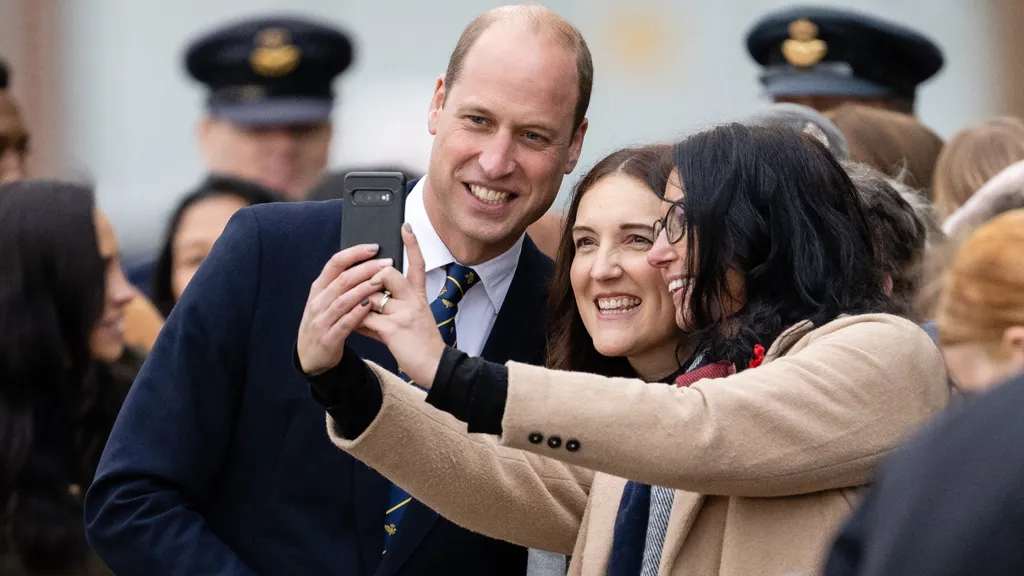
Public approval for the monarchy has faced pressures, but William and Catherine remain popular faces of its continuity. Their work on mental health, conservation, and community issues bridges generational gaps. William’s openness about emotions and parenting humanizes the institution without undermining its dignity.
Royal experts note this is not a rejection of his father’s legacy but an adaptation. Charles pioneered areas like environmentalism and the Prince’s Trust; William builds on them with contemporary tools and emotional intelligence. He is close to his father and has been a key supporter during health challenges.
Looking Ahead: The Future King’s Vision
As 2026 unfolds, the “trapped prince” story feels increasingly outdated. William is balancing multiple roles — husband, father, heir, and global advocate — with evident purpose. His children are growing up in the spotlight, with George particularly being prepared for his own future responsibilities.
Challenges remain: ongoing family rifts, public skepticism toward the institution, and the personal toll of constant scrutiny. Yet William’s trajectory suggests resilience and adaptability. He is not breaking with tradition but evolving it — proving that duty and personal agency can coexist.
The monarchy’s survival depends on remaining meaningful to the public it serves. Prince William’s emerging portrait — one of emotional depth, decisive leadership, and family-centered values — offers a compelling vision for that future. The man once seen as limited by his position is revealing himself as someone capable of expanding it.
Far from trapped, Prince William appears to be stepping boldly into his destiny, reshaping perceptions one authentic moment at a time. As the world watches the next chapter of the House of Windsor, it may well be William who writes a story of renewal rather than restriction.