BEFORE THE HOLLYWOOD FAME: ROBERT DE NIRO’S LOST 1968 CULT CLASSIC IS REVEALED AND A QUIET MOMENT IN HIS PERFORMANCE MARKS THE BEGINNING OF A LEGEND… In 1968, Robert De Niro took his first bold step onto the big screen with a film deeply imbued with a free and rebellious spirit. Without a fixed script, he transformed into the character Jon in the heart of bustling New York, freely improvising through raw and daring camera angles. The film once earned praise from the most demanding critics thanks to its ahead-of-its-time spirit. However, beneath the wild arrogance of youth, a rare improvised moment by De Niro in the film quietly foreshadowed the entire face of modern cinema to come…
Long before Robert De Niro became one of the most respected actors in Hollywood, he appeared in Greetings, a controversial 1968 comedy directed by Brian De Palma. Far removed from the celebrated crime dramas and powerful performances that would later define his career, this little-known film captured the rebellious spirit of its era. Unconventional, provocative, and loosely structured, it offered an early glimpse of a young actor working within a form of cinema that challenged traditional storytelling.
Although Greetings has largely faded from public attention, its place in film history remains significant. It was the first narrative feature to receive an X rating, a distinction that reflected the changing boundaries of mainstream cinema during the late 1960s. More than a curious footnote in De Niro’s early career, the film represents an important meeting point between experimental filmmaking, social commentary, and the emergence of an actor who would eventually become a Hollywood legend.
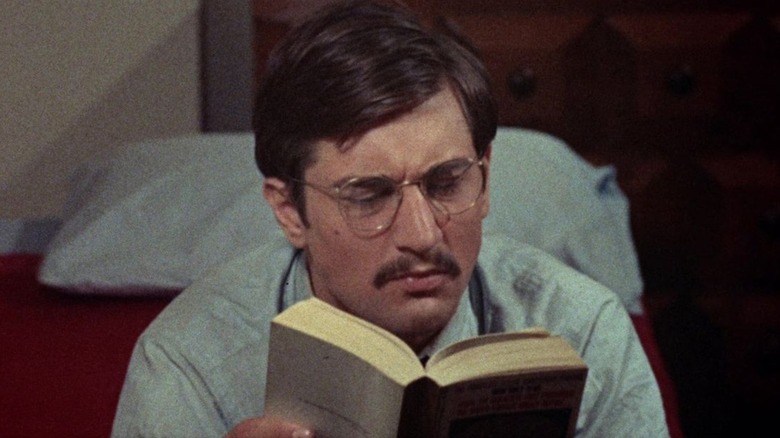
A Young Robert De Niro in Brian De Palma’s Experimental World
Released in 1968, Greetings was only the second feature film directed by Brian De Palma, following the experimental Murder a la Mod, which had appeared earlier that year. It also marked the beginning of De Palma’s working relationship with De Niro, a collaboration that would continue with The Wedding Party in 1969, Hi, Mom! in 1970, and The Untouchables in 1987.
In Greetings, De Niro plays Jon Rubin, an aspiring filmmaker whose interests include voyeurism. His friends, Paul, played by Jonathan Warden, and Lloyd, played by Gerrit Graham, complete a trio of young men navigating the political, cultural, and personal concerns of contemporary America.
Rather than following a conventional dramatic structure, the film unfolds through loosely connected situations and conversations. Its characters discuss the Vietnam War, the assassination of John F. Kennedy, and the growing influence of computers on everyday life. Their experiences reflect a society grappling with political uncertainty, technological change, and shifting cultural values.
Jon’s ambition to make films also creates an intriguing connection with De Palma himself. The character can be interpreted as a possible reflection of the director’s own interests, particularly his fascination with cameras, observation, and the act of filmmaking.
A Controversial Comedy Ahead of Its Time
One of the most remarkable aspects of Greetings was its original X rating. At the time, the classification did not automatically carry the same association with pornography that it acquired later. Instead, it indicated that the film contained material considered unsuitable for younger audiences, including nudity and profanity.
These elements helped make the movie controversial when it reached theaters. Mainstream cinema was still adjusting to changing attitudes toward sexuality and language, and what might seem relatively ordinary to contemporary audiences could provoke strong reactions in 1968.
The film’s unconventional approach extended beyond its subject matter. De Palma frequently took his camera into the streets of New York, capturing the city in a loose, guerrilla-style manner. The resulting atmosphere gave the movie a spontaneous quality, making it feel less like a carefully constructed Hollywood production and more like an open-ended conversation with the world around it.
This approach also anticipated aspects of the New York no-wave filmmaking movement, which would emerge more fully later in the 1970s. Although Greetings preceded that movement, its experimental spirit and unconventional relationship with narrative helped place it within a broader tradition of independent cinema.
The Critical Response and the Film’s Lasting Significance
The initial response to Greetings was mixed. Writing for The New York Times, Howard Thompson criticized the film as largely strained and unfunny, objecting to its nudity and frequent profanity. His reaction illustrated the cultural divide surrounding movies that deliberately challenged established cinematic conventions.
Roger Ebert offered a more appreciative assessment in his 1969 review, awarding the film three out of four stars. While acknowledging that it did not entirely succeed as a comedy, he recognized its charm, freshness, and openness. He also compared its sequence of comedic episodes to the work of Laurel and Hardy, emphasizing that comedy did not necessarily require an elaborate plot or a conventional emotional journey.
Ebert’s observations help explain why Greetings remains interesting despite its limitations. Its loose construction may frustrate viewers expecting a traditional narrative, but that same quality gives the film its distinctive character. Instead of relying on a tightly organized story, it explores the absurdities and contradictions of its time through conversations, encounters, and fragmented comic situations.
An Early Glimpse of a Hollywood Legend
For audiences who know Robert De Niro primarily through his later acclaimed performances, Greetings offers a chance to see him at a much earlier stage of his career. His portrayal of Jon Rubin belongs to a film that is raw, irreverent, and far removed from the polished productions that would eventually establish his reputation.
The movie does not reveal a fully formed legend, nor does its experimental style guarantee that every scene succeeds. Its significance lies instead in documenting an early moment when De Niro was working within an unconventional cinematic environment and exploring the possibilities of screen performance.
Today, Greetings remains a relatively obscure title, but its historical importance is difficult to dismiss. It captures the rebellious energy of late-1960s New York, reflects the changing limits of American cinema, and marks an early collaboration between De Niro and De Palma.
For those interested in experimental filmmaking and the beginnings of a celebrated acting career, this forgotten comedy offers a valuable glimpse into a period when both artists were still finding their creative identities. Before Hollywood fame, Greetings preserved a young De Niro within a restless, unconventional film that continues to reveal something about the changing possibilities of cinema.