STEPHEN GRAHAM’S DARKEST TV ROLE YET IS BLOWING AUDIENCES AWAY — AND ONE CHILLING DETAIL AT THE END CHANGES EVERYTHING YOU THOUGHT YOU KNEW…
The acclaimed British actor, celebrated for his emotionally devastating performance in Adolescence, has taken an extraordinary turn into darkness as Jurek Walter, a manipulative murderer whose terrifying influence extends far beyond the walls of the psychiatric hospital holding him.
And while the ten-part crime drama delivers the chilling atmosphere viewers expect from a serial-killer thriller, it is Graham’s unnervingly restrained performance that makes the series particularly difficult to forget.
A SERIAL KILLER WHO DOESN’T NEED TO ESCAPE TO TERRIFY HIS VICTIMS
Based on Lars Kepler’s bestselling crime novels Lazarus and The Sandman, Nocturne begins with a discovery that threatens to reopen one of the darkest chapters in a detective’s career.
When one of Jurek Walter’s long-missing victims unexpectedly resurfaces, retired detective Jonah Lynn, portrayed by Liev Schreiber, is drawn back into an investigation he believed was behind him.
But the discovery raises disturbing questions.
What happened during the missing years? How much does Walter know? And could the imprisoned murderer still be manipulating events beyond his confinement?
As Jonah searches for answers, FBI agent Saga Bauer, played by Zazie Beetz, undertakes a dangerous undercover mission designed to uncover the truth directly from Walter.
Her decision places her within reach of a man whose greatest weapon may be his extraordinary ability to understand human vulnerability.
For Graham, the character represents something considerably more unsettling than a conventional television villain.
STEPHEN GRAHAM REVEALS THE TERRIFYING SECRET BEHIND HIS TRANSFORMATION
Although Graham has portrayed violent criminals throughout his career, he admitted that becoming Jurek Walter required an entirely different approach.
Speaking to Decider, the actor explained that he studied material about serial killers while developing the character, but concentrated particularly on Walter’s physical presence.
He wanted to create someone whose menace could be felt even without an overt threat.
That decision transforms Walter into a uniquely frightening figure.
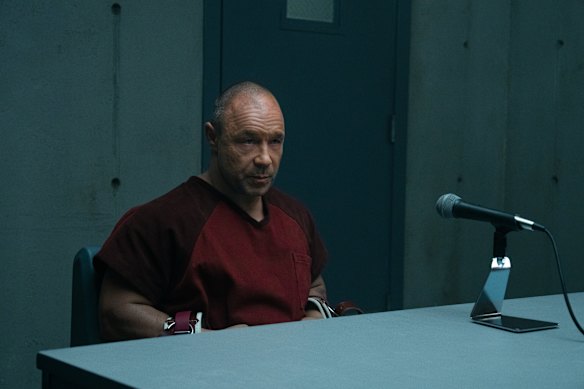
Rather than relying on dramatic outbursts or obvious displays of brutality, Graham uses controlled movements, intense observation and an unsettling stillness to suggest the violence lurking beneath the surface.
Even conversations that appear harmless carry an unmistakable sense of danger.
Walter’s interactions with Jonah become psychological confrontations, while his relationship with nurse Karl, portrayed by Rory Culkin, introduces another disturbing dimension to his personality.
Every encounter reinforces the same terrifying possibility: Walter may understand the people surrounding him far better than they understand him.
CRITICS ARE PRAISING A PERFORMANCE THAT GETS UNDER THE SKIN
The psychological thriller has attracted an enthusiastic critical response, with the supplied review reporting an 85 percent Rotten Tomatoes score and a Metacritic rating of 70.
Critics have highlighted Graham’s performance alongside the drama’s sustained tension and exploration of grief, guilt and emotional trauma.
Following Adolescence and A Thousand Blows, the series further demonstrates Graham’s remarkable ability to disappear into deeply complicated characters.
Yet Nocturne presents a particularly disturbing challenge.
Walter is not simply a murderer whose crimes must be explained. He is a psychological force capable of exploiting the emotional weaknesses of those determined to expose him.
And that distinction makes the investigation increasingly dangerous.
THE CHILLING DETAIL THAT CHANGES EVERYTHING
Perhaps the most unsettling aspect of Nocturne is the realization that physical imprisonment does not necessarily mean psychological defeat.
Walter begins the story behind locked doors, apparently separated from the outside world.
But as Jonah and Saga investigate his crimes, the central question becomes whether they are uncovering his secrets — or allowing themselves to be drawn into another carefully constructed manipulation.
It is this disturbing possibility, rather than any single act of violence, that gives the thriller its lasting power.
Because the most frightening thing about Jurek Walter is not simply what he has done. It is the possibility that even from behind a locked door, he may still be controlling the game.