FACED WITH IRREFUTABLE PROOF BROUGHT TO LIGHT IN THE INTERROGATION ROOM, THE PERPETRATOR ULTIMATELY ADMITTED TO HIS H.E.I.N.O.U.S ACT. THE HIDDEN REASON BEHIND HIS ACTIONS SENT SHOCKWAVES THROUGH THE ENTIRE COMMUNITY.
BEND, OREGON — What began as an ordinary drive home for lunch reportedly turned into a nightmare when a local carpenter spotted an armed teenager approaching an elementary school. Within moments, he faced a decision that could determine whether more children would survive.
According to the account, Kaylub Giamanco, a father whose own children attended Silver Rail Elementary School, was driving past the building when he noticed a young man carrying a shotgun.
His immediate thought was not about his own safety.
It was about the children inside.
“There’s children, there’s babies in there,” Giamanco recalled in the interview attributed to Oregon Public Broadcasting.
What followed was a desperate sequence of events involving an emergency call, a confrontation inside the school, and a teacher whose reaction would leave the father deeply shaken.
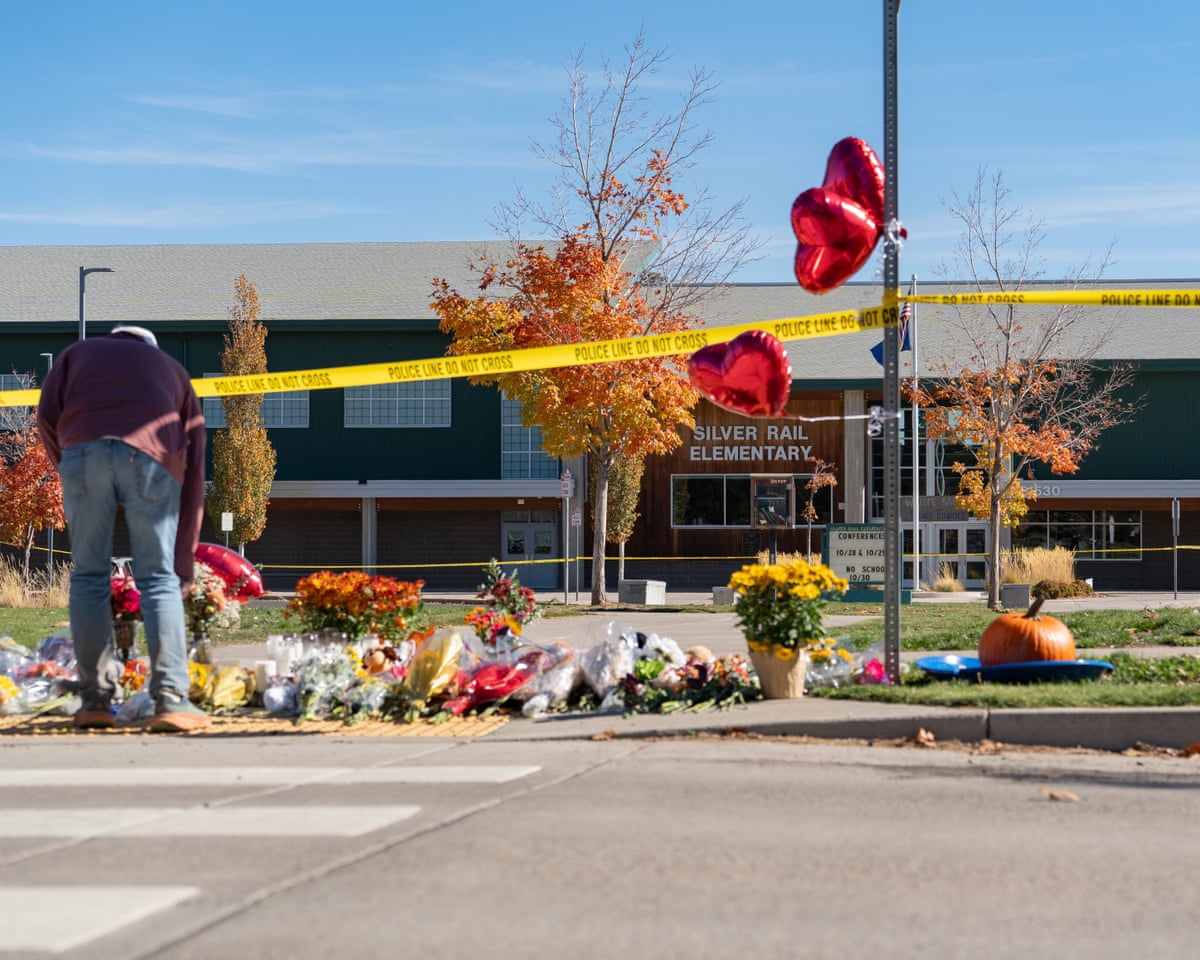
A Frantic Emergency Call Before a Life-or-Death Decision
Giamanco reportedly pulled into the school parking lot after seeing the armed teenager moving across the grounds.
He immediately instructed his phone to contact 911.
But as the emergency dispatcher began asking questions, his fear intensified.
The dispatcher reportedly wanted to establish whether he recognized the suspect and gather details about the developing emergency.
Giamanco understood that emergency operators had procedures to follow. Yet he believed every passing second placed more children in danger.
“I’m sorry. I have to go in. People are going to die,” he recalled saying.
Rather than remain outside, he approached the building.
By that point, according to the supplied narrative, three students and a teacher had already lost their lives.
For Giamanco, the immediate priority was preventing further casualties.
The Terrifying Scene Behind the Classroom Door
As he approached a window, Giamanco reportedly witnessed a teacher struggling with the armed teenager.
He realized the suspect had not noticed him.
That brief advantage became crucial.
Giamanco described opening the door, entering the room, and firing at the gunman.
The confrontation unfolded within seconds.
But the most emotionally devastating moment came immediately afterward.
The teacher, who had been struggling with the attacker, reportedly saw Giamanco holding a weapon and believed another gunman had entered the building.
She fled in terror.
Giamanco later recalled seeing the fear in her eyes.
Although he had entered intending to protect her, she had no way of immediately understanding who he was or why he was armed.
That misunderstanding revealed the terrifying confusion inside the school: even someone attempting to stop the violence could initially appear to be another threat.
A Final Movement That Changed Everything
According to Giamanco’s account, the confrontation was not yet over.
After the teacher escaped, he looked toward the wounded gunman and reportedly saw him reaching for his weapon.
Fearing the teenager might resume firing, Giamanco discharged his firearm again.
The suspect died at the scene, according to the supplied narrative.
Only afterward did the full emotional weight of the incident begin to emerge.
Giamanco had reportedly stopped an immediate threat, but he could not undo the devastating losses already suffered by families and school staff.
The Questions That Remain Unanswered
The account raises troubling questions about how the teenager obtained his weapon, what motivated the attack, and whether warning signs had been missed.
However, the supplied interview contains no interrogation-room confession, no verified evidence establishing the gunman’s motive, and no revelation about a hidden reason for the attack. Because the suspect reportedly died at the scene, the proposed headline about his later confession would contradict the narrative.
The most haunting revelation is instead the teacher’s reaction: a survivor so frightened by the unfolding violence that she initially mistook the person intervening to save her for another attacker.
For Giamanco, the memory of that fear appears inseparable from the tragedy itself.