THE UNSTOPPABLE OLIVIA COLMAN CHARTS ANOTHER CINEMATIC TRIUMPH — BUT IT IS HER QUIETEST PERFORMANCE THAT IS CAUSING ALL THE BUZZ…
A Hollywood Surprise Nobody Saw Coming
Hollywood has always loved a spectacular box office victory. Explosive action sequences, enormous production budgets and familiar franchises traditionally dominate the conversation whenever weekend ticket sales are announced.
Yet the latest reported box office figures tell a rather different story.
While director Kitao Sakurai’s Street Fighter appeared to be heading for commercial success following its impressive $30 million domestic opening, the film reportedly suffered a dramatic 72% decline in its second weekend. Its subsequent $8.6 million domestic performance raised uncomfortable questions about whether the production could generate sufficient revenue to justify its reported $82 million budget.
Meanwhile, James Watkins’ DC horror feature Clayface reportedly moved into first place, demonstrating the continued appetite for darker, more unconventional cinematic experiences.
But beneath the headlines surrounding major studio releases, another film was quietly attracting attention.
And at the centre of it was one of Britain’s most beloved performers: Olivia Colman.
Her latest project, Wicker, reportedly secured fifth place at the domestic box office with an opening haul of $5.75 million, despite playing in fewer cinemas than several competing releases.
It was the kind of unexpected performance that can transform an unusual independent production into a much-discussed sleeper success.
More importantly, it offered another reminder of Colman’s extraordinary ability to make even the strangest fictional worlds feel unmistakably human.
A Fairytale Unlike Anything Audiences Expected
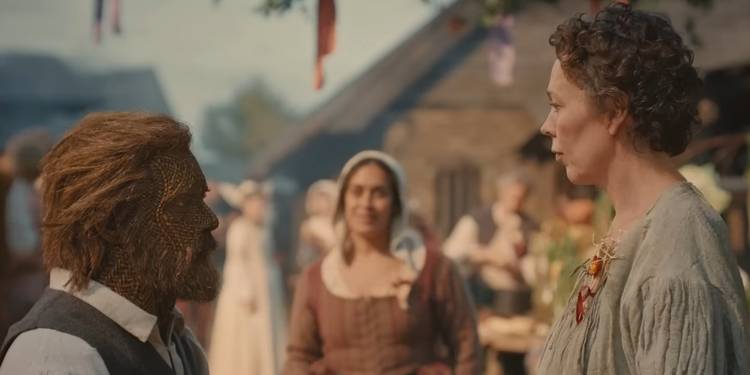
Directed and written by Alex Huston Fischer and Eleanor Wilson, Wicker takes inspiration from Ursula Wills’ short story The Wicker Husband.
But anyone expecting a conventional romantic fantasy may be in for a surprise.
Described as bizarre, provocative, darkly funny and unexpectedly moving, the film approaches love and loneliness through an unusual fairytale premise.
Colman leads an impressive ensemble that includes Alexander Skarsgård, Peter Dinklage and Elizabeth Debicki.
On paper, such an eccentric combination of fantasy, humour and adult themes might seem like a difficult commercial proposition.
Yet its emotional foundation is remarkably universal.
Beneath the unusual storytelling lies a meditation on isolation, companionship and the deeply human desire to be understood.
That contrast appears to be central to the film’s appeal.
Following its festival debut, the production attracted enthusiastic commentary, including praise from Collider critic Therese Lacson, who described it as an immensely entertaining experience and highlighted its exploration of love and overcoming loneliness.
For Colman, such material feels particularly well suited to her strengths.
Throughout her career, she has demonstrated an unusual gift for moving effortlessly between comedy and heartbreak, sometimes within the same scene.
A raised eyebrow can communicate embarrassment. A hesitant smile can suggest years of disappointment. A seemingly ordinary conversation can become devastating through the smallest change in expression.
It is precisely this emotional versatility that makes her such a compelling presence in an unconventional story.
And while Wicker may be the film generating the most surprising commercial headlines, it is not the only Colman project attracting serious attention.
The Other Performance Quietly Generating Oscar Buzz
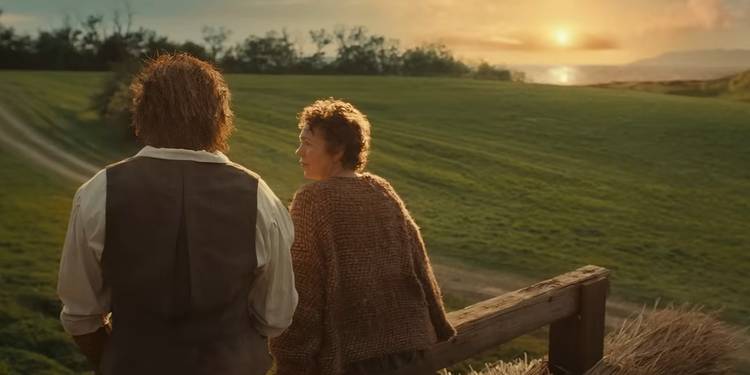
Away from the peculiar romantic world of Wicker, Colman also appears in Elsinore, a considerably more intimate drama that premiered at the 53rd Telluride Film Festival on September 4, 2026, according to the supplied festival report.
The film features Colman as Margaret Johnson, alongside Andrew Scott in a central performance that has reportedly generated awards discussion.
Its premise is profoundly moving.
Scott portrays a man undertaking the extraordinary challenge of playing Hamlet during the final months of his life.
It is a story naturally concerned with mortality, artistic purpose, personal relationships and the complicated emotions that accompany approaching loss.
Unlike the spectacular worlds of major studio franchises, its dramatic power appears to come from vulnerability rather than visual extravagance.
And that is where Colman’s presence becomes especially intriguing.
Her most memorable performances have rarely depended upon grand theatrical declarations.
Instead, she frequently finds emotional depth in restraint.
The moments between conversations, the feelings characters struggle to articulate and the sadness concealed beneath everyday routines can become more affecting than any dramatic speech.
In a film dealing with life’s final chapters, those qualities have the potential to carry extraordinary weight.
Although much of the early awards conversation surrounding Elsinore has reportedly focused on Scott, Colman’s supporting presence adds another compelling dimension to the production.
Her role as Margaret Johnson invites particular interest because of the emotional sensitivity she has brought to similarly intimate material throughout her career.
However, specific claims about a hidden final-scene revelation or a particular performance detail transforming the ending have not been independently established. The film’s quieter emotional moments remain a source of anticipation rather than a confirmed narrative twist.
Why Olivia Colman Remains One of Cinema’s Most Powerful Performers
There is a reason Colman’s name continues to carry such considerable weight across the entertainment industry.
Her Academy Award-winning portrayal of Queen Anne in The Favourite demonstrated her remarkable ability to combine vulnerability, cruelty, loneliness and dark comedy.
In The Father, opposite Anthony Hopkins, she delivered an intensely moving portrayal of a daughter struggling with the emotional consequences of her father’s deteriorating health.
And in The Lost Daughter, she explored the uncomfortable complexities of motherhood, memory and regret with extraordinary psychological precision.
These performances share an important characteristic.
Colman rarely asks audiences to admire her characters.
Instead, she encourages viewers to understand them, even when their decisions are troubling, contradictory or impossible to defend.
That approach gives her work an authenticity that can be difficult to manufacture.
It also explains why her involvement in two such different 2026 productions is particularly exciting.
Wicker offers an opportunity to explore love and human connection through eccentric fantasy.
Elsinore appears to examine similar emotional needs through a far more sombre exploration of mortality.
The settings could hardly be more different, yet both stories seem connected by an enduring question: what does it mean to find companionship when life feels overwhelmingly lonely?
For an actress whose career has repeatedly explored the contradictions of human relationships, the thematic connection is striking.
Two Films, Two Very Different Triumphs
The contrast between these projects also reflects a broader conversation about what audiences want from contemporary cinema.
Major franchises may still command enormous attention, but unusual independent films can create their own momentum through distinctive storytelling and strong audience responses.
If the reported opening figures for Wicker hold, its early performance represents an encouraging result for a production that refuses to follow conventional commercial formulas.
Meanwhile, the festival attention surrounding Elsinore suggests another potential showcase for emotionally ambitious filmmaking.
Neither film needs to imitate the other.
One embraces the absurdity of an unconventional fairytale. The other confronts the painful realities of mortality and human connection.
Together, they demonstrate the range that has made Colman one of the most respected actresses of her generation.
And perhaps the most remarkable aspect of her current career is that she appears entirely uninterested in repeating herself.
From royal palaces to psychological dramas, from dark comedy to experimental fantasy, she continues to choose material that challenges audience expectations.
The Quiet Power That Could Leave the Biggest Impression
For all the excitement surrounding box office rankings, festival premieres and possible awards recognition, Colman’s greatest strength remains something far less measurable.
It is her ability to make audiences feel that an entire emotional history exists behind a character’s eyes.
A fleeting expression can reveal what dialogue deliberately leaves unsaid.
A moment of silence can communicate a lifetime of regret.
And a supporting performance can sometimes remain in the memory long after the central drama has ended.
That is why Elsinore may ultimately prove just as significant to Colman’s remarkable year as the unexpected commercial success of Wicker.
The reported awards attention currently centres largely on Andrew Scott, and it remains too early to predict which performances will secure major nominations.
But Colman’s presence in a story about love, artistic devotion and the final stages of life offers a compelling reason to pay attention.
In an industry frequently obsessed with bigger budgets, louder spectacles and record-breaking openings, she continues to demonstrate the enduring power of understatement.
And while Hollywood counts its millions, Olivia Colman’s most unforgettable cinematic moment of the year may turn out to be the one in which she barely says a word.