LATEST UPDATE ON THE TSHUMA CASE: Police believed there was only one person involved… until a hidden fingerprint changed everything! 🚨 During detailed laboratory testing of evidence recovered from the home in Great Denham, Bedfordshire, experts found a distinct fingerprint that had previously gone unnoticed. Curiously, this biometric data matches…
A potentially crucial fingerprint discovered during a fresh examination of evidence from a home in Great Denham, Bedfordshire, has introduced a startling new mystery into the TSHUMA case: the unidentified print reportedly does not match anyone in the available records.
What initially appeared to be an investigation involving just one individual has now become the subject of a far more unsettling possibility. Could someone else have been present inside the property without ever being identified?
The extraordinary development centres on a single fingerprint allegedly overlooked during the initial examination of the scene.
According to the scenario described, forensic specialists conducting detailed laboratory testing discovered a distinct impression on an item recovered from the house. Although its precise location has not been established, the print was sufficiently clear to warrant further examination.
But the result was not what investigators had expected.
Rather than identifying a familiar individual or providing a direct connection to someone already associated with the case, the comparison reportedly produced no match at all.
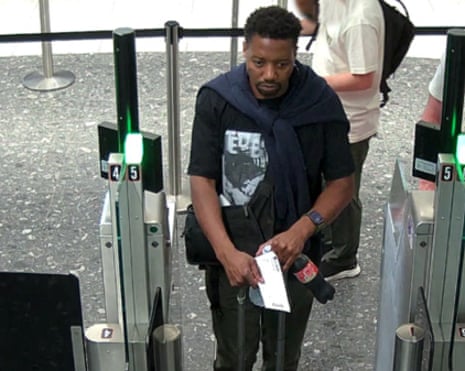
THE FINGERPRINT THAT REFUSED TO REVEAL ITS OWNER
Fingerprint analysis has long been considered an important tool in criminal investigations, particularly when investigators are attempting to establish who may have entered a property or handled specific objects.
In this case, the unidentified impression presents an unusual challenge.
Under the reported scenario, specialists compared the recovered fingerprint against available biometric records, hoping to establish its owner.
The result was inconclusive.
No corresponding identity emerged from the comparison.
However, an unmatched fingerprint does not necessarily mean that its owner is unknown to everyone or that the person was involved in wrongdoing. It may simply mean the individual has never had their fingerprints entered into the databases searched.
There are also innocent explanations for unidentified fingerprints, including previous visitors, residents, maintenance workers or other individuals who may have touched an object before it was recovered.
Nevertheless, the discovery would require careful consideration if it were confirmed as part of the TSHUMA investigation.
COULD ANOTHER PERSON HAVE BEEN INSIDE THE HOUSE?
The most significant question is whether the fingerprint could indicate the presence of someone who has not previously featured in the investigation.
Until now, the supplied account suggests that attention had focused primarily on one individual.
An unidentified fingerprint could potentially challenge that assumption, but only if investigators establish when and how it was deposited.
Forensic experts cannot ordinarily determine the exact age of a fingerprint simply by examining its appearance.
That limitation makes the surrounding evidence particularly important.
The location of the print, the nature of the surface and any additional forensic findings would all influence its significance.
Without those details, it would be premature to conclude that another person participated in any suspected offence.

A NEW LEAD — OR AN INNOCENT TRACE?
The difference between an unexplained fingerprint and evidence of another person’s involvement is substantial.
An unidentified print might eventually lead investigators towards an important witness, an overlooked visitor or someone with a legitimate connection to the property.
Alternatively, further examination could establish that it has no connection to the events under investigation.
For the TSHUMA case, the central issue would therefore be determining whether the fingerprint belongs to someone whose presence requires an explanation.
Investigators would also need to establish whether the print can be compared against additional records or against samples voluntarily provided by relevant individuals.
Until such work produces a reliable result, the identity of its owner remains unknown.
THE QUESTION THAT STILL HAS NO ANSWER
The reported discovery illustrates how a seemingly minor piece of forensic evidence can introduce an entirely new line of inquiry.
A single fingerprint may appear insignificant among the many items recovered from a property, yet its potential importance can change dramatically when examined alongside other evidence.
In Great Denham, the alleged unmatched print has become the focus of a troubling question.
Not because it proves that another individual was involved, but because its origin has not been explained.