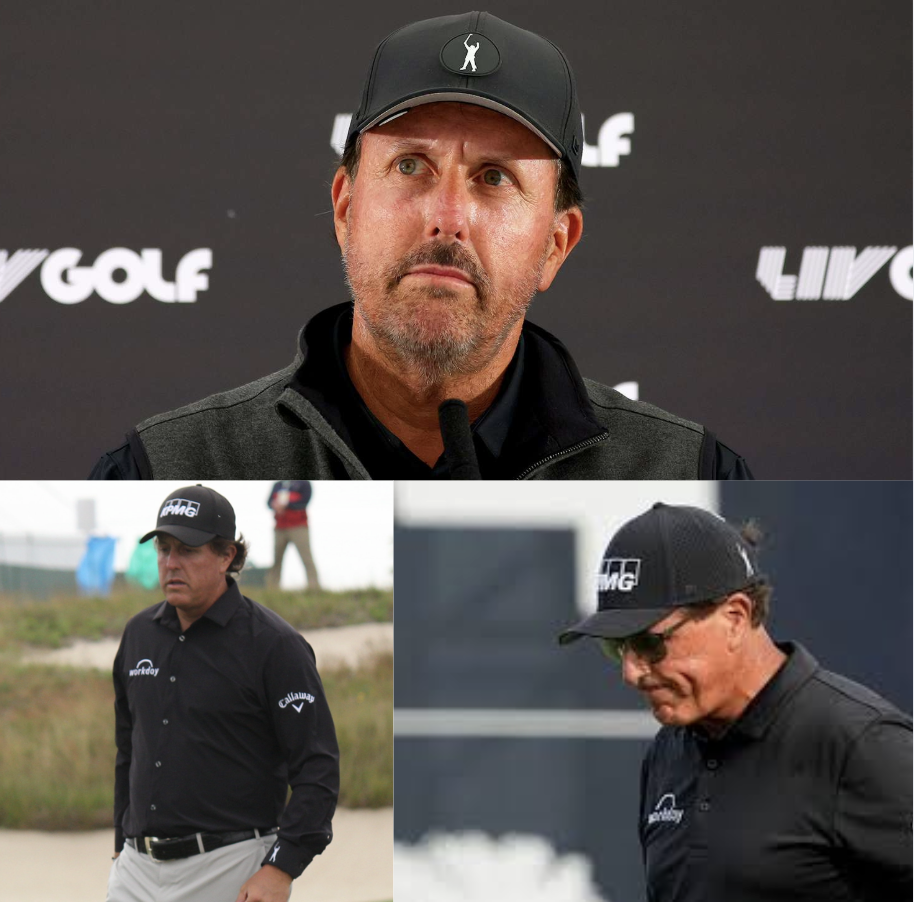
THE “GOLF WAR” REIGNITED? Viral Claims About Phil Mickelson and the PGA Tour Raise Questions — But Where’s the Proof?
A new wave of viral headlines is once again framing professional golf as a battlefield, with Phil Mickelson cast as the figure “issuing a final warning” to the PGA Tour. The posts reference alleged “leaked statements,” rising tensions tied to tournament withdrawals, and even suggest the sport could be heading toward a breaking point.
It’s dramatic. It’s widely shared.
But as of now, there is no verified evidence supporting the existence of any “final warning” statement from Mickelson—nor any confirmed transcript matching the claims circulating online.
THE BACKDROP: A REAL CONFLICT, OFTEN EXAGGERATED
To understand why these rumors gain traction, it helps to look at the real context behind them.
Over the past few years, professional golf has experienced one of the most significant disruptions in its modern history with the emergence of LIV Golf, a rival circuit that drew several high-profile players away from the PGA Tour—including Mickelson.
The resulting tension between the two tours has been well documented:
- Player suspensions and eligibility disputes
- Legal battles between organizations
- Divided loyalties among fans and athletes
At times, the conflict has been intense. But it has also evolved.
Recent developments—including negotiations and framework agreements involving governing bodies and investors—have signaled attempts to stabilize the sport rather than escalate conflict.
WHERE THE “FINAL WARNING” CLAIM COMES FROM
The latest viral narrative suggests that Mickelson has issued a dramatic ultimatum tied to “RBC withdrawals,” implying that player decisions around events like the RBC Heritage or RBC Canadian Open are part of a larger confrontation.
However:
- There is no confirmed statement from Mickelson using language resembling a “final warning”
- No verified transcript has been released by credible media outlets
- No official PGA Tour response indicates any new escalation
In short, the core claim lacks substantiation.
MISINTERPRETING PLAYER SCHEDULES
Part of the confusion may stem from how tournament participation works at the elite level.
Professional golfers frequently adjust their schedules based on:
- Physical condition
- Strategic preparation for major championships
- Personal commitments
- Tour eligibility requirements
Withdrawals from events—whether due to injury, scheduling, or strategic rest—are common and not inherently political.
Linking those decisions directly to a broader “war” narrative often oversimplifies a more routine aspect of the sport.
MICKELSON’S REAL PUBLIC POSITION
Phil Mickelson has been outspoken in the past about the structure of professional golf, particularly regarding player compensation and opportunities.
His involvement with LIV Golf was itself a major statement—one that contributed to the initial fracture within the sport.
However, in recent months, his public comments have been more measured, focusing on competition and participation rather than issuing threats or ultimatums.
No recent verified interview or statement supports the idea that he has escalated rhetoric toward the PGA Tour in the way viral posts suggest.
IS THE PGA TOUR “IN DANGER”?
Another claim embedded in the narrative is that this moment could signal “the end of the PGA as we know it.”
That’s a significant leap.
While the PGA Tour has faced unprecedented competition, it remains:
- The primary organizer of many of golf’s most prestigious weekly events
- Supported by long-standing sponsorships and broadcast agreements
- Central to the qualification pathways for major championships
Industry analysts generally view the current period as one of transition, not collapse.
“The structure of professional golf is changing,” one sports economist said. “But that’s very different from it ending.”
WHY THESE STORIES SPREAD
The idea of a “golf war” is compelling because it simplifies a complex situation into a clear conflict with heroes, villains, and dramatic turning points.
Add in phrases like “leaked,” “final warning,” and “shocking transcript,” and the story becomes highly shareable—even without verification.
This kind of framing thrives in environments where:
- There is real underlying tension
- Information is fragmented
- Audiences are already invested in the outcome
In other words, the story feels believable—even when key details are missing.
THE DIFFERENCE BETWEEN RHETORIC AND REALITY
There has been conflict in professional golf. That much is undeniable.
But the current moment is less about escalation and more about negotiation, adaptation, and long-term restructuring.
The biggest developments in the sport right now are happening through:
- Boardroom discussions
- Financial partnerships
- Governance changes
—not public ultimatums.
THE BOTTOM LINE
Despite the dramatic headlines, there is no confirmed evidence that Phil Mickelson has issued any “final warning” to the PGA Tour, nor that a new crisis tied to RBC tournament withdrawals is unfolding.
What exists instead is a familiar pattern:
a real story—professional golf’s ongoing evolution—being amplified into something more immediate, more explosive, and less grounded in verified fact.
A SPORT STILL FINDING ITS BALANCE
Professional golf is undeniably in a period of change. The emergence of LIV Golf disrupted long-standing structures, and the aftershocks are still being felt.
But change is not the same as collapse. And speculation is not the same as evidence.
For now, the “golf war” may make for compelling headlines—but the reality is a slower, more complex process playing out far from the viral spotlight.