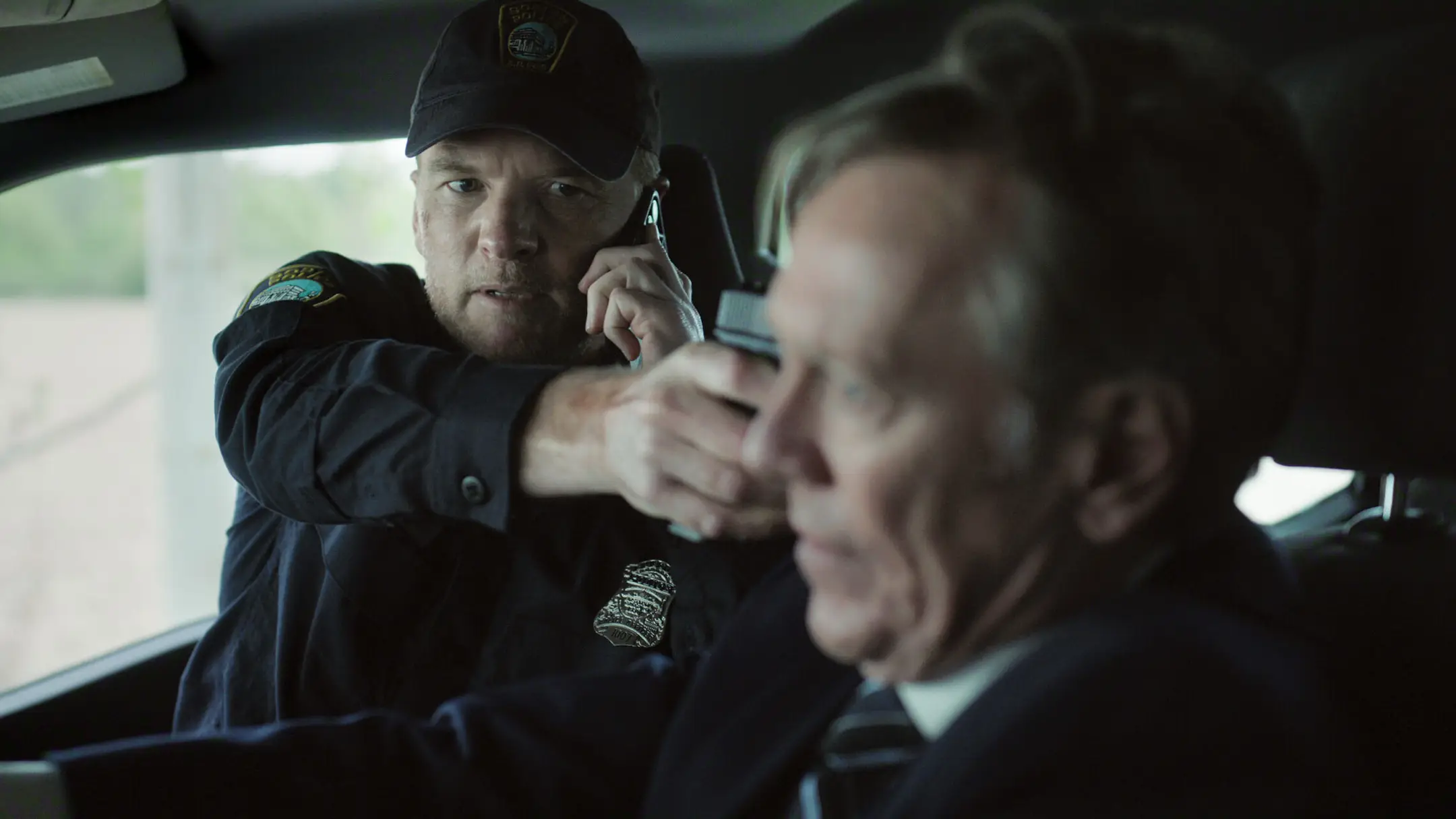
HE DOESN’T LOOK LIKE A CRIMINAL… WHICH MAKES THIS SCENE EVEN MORE DISTURBING
This image captures one of the most unsettling sequences from the acclaimed 2003 BBC miniseries State of Play, a masterclass in political thriller storytelling that still resonates today. Philip Glenister, best known to many as the swaggering DCI Gene Hunt from Life on Mars and Ashes to Ashes, delivers a chillingly restrained performance here as DCI William Bell — a by-the-book detective thrust into a labyrinth of corruption, murder, and high-stakes cover-ups.
The Setup: Two Deaths, One Deadly Connection
State of Play, written by Paul Abbott (Shameless) and directed by David Yates (who would later helm multiple Harry Potter films), unfolds as a six-part conspiracy thriller set against the backdrop of London’s Westminster and Fleet Street. It begins with two seemingly unrelated deaths on the same day.
A teenage boy named Kelvin Stagg is gunned down in what looks like a gangland drug deal gone wrong. Almost simultaneously, Sonia Baker — a young, ambitious political researcher working for rising Labour MP Stephen Collins (David Morrissey) — falls to her death under a London Underground train. Was it suicide? An accident? Or something far more calculated?
Enter investigative journalist Cal McCaffrey (John Simm), a former campaign manager for Collins and now a dogged reporter for The Herald. As Cal and his team — including the tenacious Della Smith (Kelly Macdonald) and sharp editor Cameron Foster (Bill Nighy) — dig deeper, they uncover a shocking affair between Collins and Sonia, explosive phone records linking the two victims, and a briefcase containing a gun and surveillance materials.
What starts as a tabloid-friendly sex scandal spirals into revelations of government corruption, shady dealings with American oil interests, and powerful ministers willing to do anything to protect their secrets. Lives are threatened, flats are broken into, witnesses are silenced, and the press finds itself racing the police — and sometimes clashing with them — to expose the truth.
Philip Glenister’s DCI Bell: The Cop Who Doesn’t Fit the Mold
In this high-wire ensemble, Glenister’s DCI William Bell enters as the new lead detective on the case. He’s no flashy maverick like Gene Hunt; Bell is measured, professional, and initially appears as the straight-arrow cop determined to keep the journalists from meddling. But as the investigation intensifies, cracks appear. The car scene highlighted in the image — tense, claustrophobic, with Bell on the phone while holding a weapon amid palpable fear — exemplifies the moral ambiguities at the heart of the series.
Glenister brings a quiet intensity to the role. His face, often associated with charismatic authority, here conveys a man wrestling with duty, pressure, and perhaps the dawning realization that the system he’s sworn to uphold is rotten at its core. “He doesn’t look like a criminal,” the teaser notes — and that’s precisely what makes it disturbing. In a story full of gray areas, Bell represents the thin blue line that can blur under institutional weight.
The series excels at humanizing its characters amid the conspiracy. Collins grapples with betrayal and political survival. Cal’s friendship with Collins is tested as personal loyalties collide with journalistic ethics. Della navigates sexism and danger in a male-dominated newsroom. And through it all, Bell and his team chase leads that keep slipping away, one step behind the reporters who have inside tracks.
Why State of Play Remains a Benchmark for Thrillers
Broadcast in 2003, State of Play earned critical acclaim for its intelligent script, stellar performances, and unflinching look at the intersection of politics, media, and big business. It holds an impressive 8.3/10 on IMDb and influenced later adaptations, including the 2009 Hollywood film starring Russell Crowe, Ben Affleck, and Rachel McAdams (which shifted the setting to Washington D.C. but retained the core conspiracy elements).
What sets the original apart is its authenticity. Paul Abbott drew from real-world tensions between Westminster and the press. The pacing is deliberate yet relentless — each episode layers new revelations, red herrings, and emotional stakes. Viewers are drawn into the paranoia: Who can you trust when MPs, journalists, cops, and corporate players all have agendas?
The car scene with Glenister encapsulates this unease. Isolated, armed, and receiving cryptic instructions, Bell embodies the isolation of those caught in the machinery of power. The fear in his eyes isn’t just for the immediate threat — it’s the horror of a larger machine grinding on, indifferent to truth or justice.
Deeper Themes: Power, Truth, and the Cost of Exposure
Beyond the plot twists, State of Play probes timeless questions. How far will those in power go to protect their interests? What happens when the fourth estate (the press) becomes both hunter and hunted? The series doesn’t shy away from the personal toll: broken marriages, endangered families, and eroded trust.
In one subplot, a witness is assassinated in a hospital despite police protection. Flats are ransacked. Journalists trade information with cops in uneasy alliances. Glenister’s Bell, tasked with reining in the media, finds himself entangled in the very web he’s investigating. His performance adds gravitas — a reminder that even “good cops” operate in a flawed system.
For fans of Glenister, this role bridges his earlier work and the iconic Gene Hunt. Where Hunt is bombastic and larger-than-life, Bell is understated and human. The contrast highlights Glenister’s range: capable of both swaggering charisma and subtle, simmering dread.
Legacy and Modern Relevance
Twenty-plus years later, State of Play feels eerily prescient. In an era of deepfakes, political scandals, corporate influence, and “fake news” debates, its exploration of media-government tensions hits harder. The 2009 film adaptation brought the story to a wider audience, but the BBC original remains the gold standard for its nuanced character work and London grit.
If you’re new to the series, prepare for a slow-burn that rewards patience. Stream it (often available on platforms like U&Drama or BritBox equivalents) and watch how seemingly mundane details — a phone call, a briefcase, a car conversation — build to explosive payoffs.
The provided image, with its raw emotional charge, serves as the perfect entry point. It teases the moral complexity: Is Bell a hero, an obstacle, or something in between? The answer, like the conspiracy itself, unfolds layer by layer, leaving viewers questioning everything.
Behind the Scenes: Crafting Tension
Director David Yates and the cast created an atmosphere of authenticity. Filming in real London locations added to the grounded feel. Glenister has spoken in interviews about the appeal of complex law enforcement roles, and his work here showcases why he’s a staple of British drama. The chemistry among the ensemble — Morrissey’s tormented MP, Simm’s conflicted journalist, Nighy’s cynical editor, and Glenister’s determined detective — elevates the material.
Music, cinematography, and tight editing heighten the paranoia. Those confined car moments, rain-streaked windows, and urgent phone calls make you feel the walls closing in.
Final Thoughts: A Scene That Lingers
“He doesn’t look like a criminal… which makes this scene even more disturbing.” That tagline perfectly captures State of Play‘s power. Ordinary people in extraordinary circumstances, forced to confront how power corrupts and how truth exacts a price.
Philip Glenister’s haunted expression in that police car isn’t just great acting — it’s a window into a world where appearances deceive, alliances shift, and one wrong move can unravel everything. If you haven’t seen the series, this image might just compel you to dive in. And once you do, you’ll understand why that fear never truly leaves his face.
The truth, when it finally arrives, changes everything — just as it does in this unforgettable moment.