STREAMING NOW ON NETFLIX: SAM WORTHINGTON IN A HIGH-STAKES PSYCHOLOGICAL NIGHTMARE
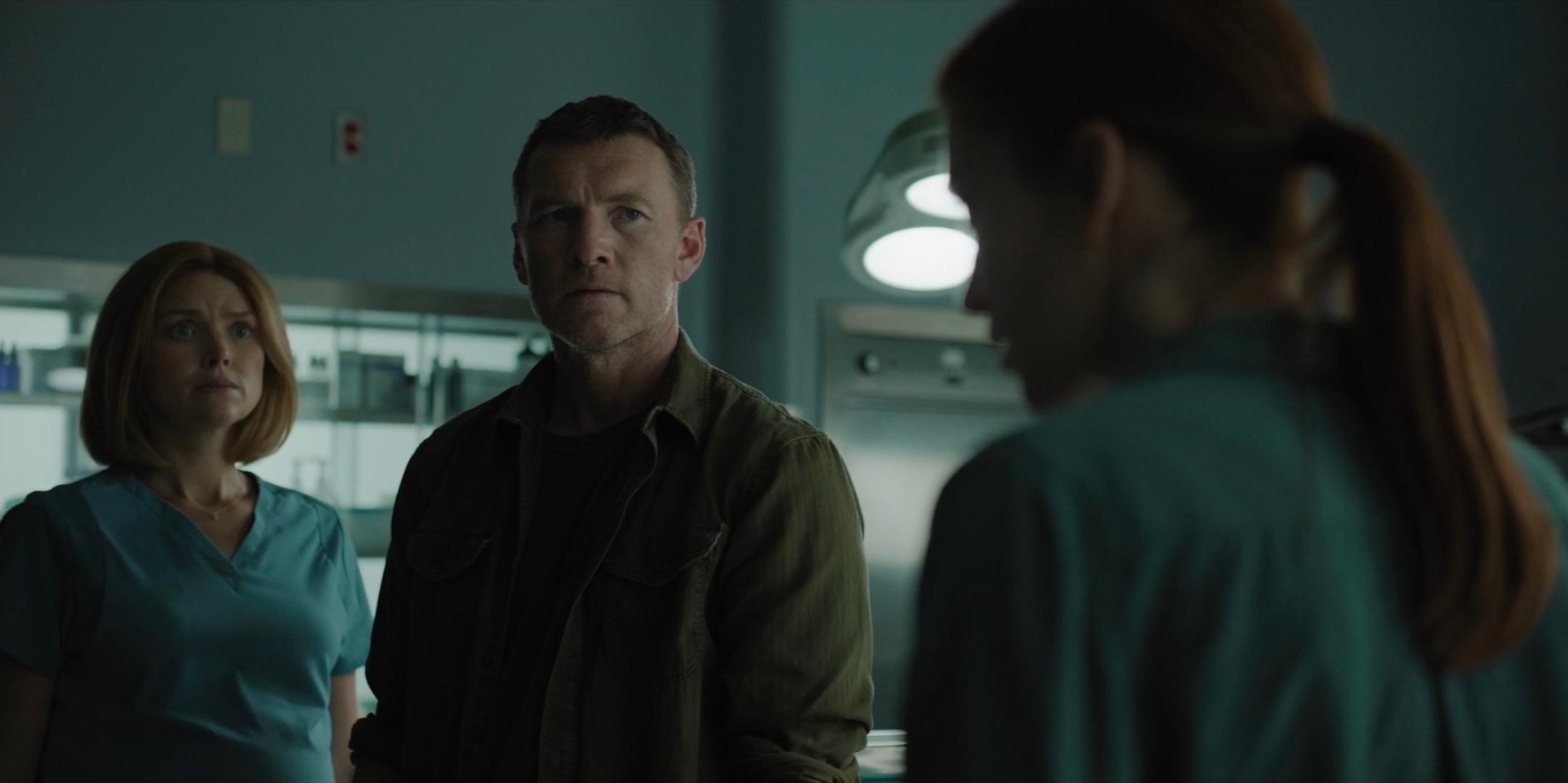
A brief stop at a local clinic that spirals into an irreversible psychological trap. On Netflix, Sam Worthington and Lily Rabe deliver a tension-filled performance as Ray and Joanne Monroe, a couple fighting to keep their family safe. As the medical staff exchange silent, knowing glances, a chilling realization begins to dawn…
What begins as an ordinary family road trip home after Thanksgiving unravels into one of the most unsettling psychological experiences Netflix has delivered in recent years. Fractured, the 2019 thriller directed by Brad Anderson, has quietly maintained a grip on viewers long after its initial release, and its return to prominence on the platform feels timed for those craving a slow-burn nightmare that refuses to let go.
Sam Worthington stars as Ray Monroe, a man whose ordinary evening takes a sharp, irreversible turn when a minor incident at a rest stop sends his young daughter to a nearby hospital. What should have been a straightforward medical visit becomes something far darker. Alongside him is Lily Rabe as his wife Joanne, a performance that anchors the emotional core of the story even as the ground beneath the couple begins to shift. Their chemistry is strained, intimate, and increasingly desperate—two people trying to protect what remains of their family while the world around them refuses to cooperate.
The film’s strength lies in its relentless sense of unease. From the moment the Monroes enter the hospital, the atmosphere thickens. Fluorescent lights hum. Staff members exchange looks that feel a fraction too long. Answers arrive incomplete or contradictory. Ray’s growing insistence that something is wrong is met with the calm, practiced dismissal of professionals who seem more interested in managing him than helping his family. The more he pushes, the more isolated he becomes. Every corridor feels longer. Every closed door carries the weight of something being kept just out of sight.
Anderson, known for his work on tense, character-driven thrillers, builds the film like a pressure cooker. There are no jump scares designed purely for effect. Instead, the horror emerges from the ordinary made strange: the way a receptionist’s smile never quite reaches her eyes, the clinical language that starts to sound like code, the growing sense that Ray is the only one who remembers his wife and daughter were ever there. Worthington plays this unraveling with a raw, physical intensity. His Ray is not a polished action hero; he is a flawed, exhausted man whose fear and frustration spill into every interaction. You feel his pulse quicken. You feel the walls closing in.
Rabe’s Joanne provides the emotional counterweight. In limited screen time she conveys a woman who has already been carrying the weight of a strained marriage and now finds herself caught in a situation that defies logic. Their shared scenes crackle with the kind of private history that makes the stakes feel personal rather than manufactured. The supporting cast, including Stephen Tobolowsky as a doctor whose calm authority feels increasingly suspect, adds layers of quiet menace without ever tipping into caricature.
What makes Fractured linger is the way it weaponizes doubt. Is Ray experiencing a legitimate medical crisis, or is the hospital itself the source of the danger? The film never lets the audience settle comfortably into one answer for long. Every new piece of information rewrites the previous one. Every glance between staff members plants another seed of suspicion. The result is a viewing experience that keeps the stomach tight and the mind racing long after the credits roll.
The movie also functions as a sharp, if unsettling, commentary on systems that are supposed to protect us. Hospitals are places of healing, yet here the bureaucracy, the hierarchy, and the quiet efficiency of medical routines become instruments of isolation. Ray’s growing conviction that he is being gaslit by an institution designed to help him strikes a nerve that feels uncomfortably familiar. In an era of long waits, opaque procedures, and institutional distance, the film’s premise lands with particular force.
Worthington has spent years balancing blockbuster spectacle with smaller, riskier roles. Here he delivers one of his most committed performances, shedding the stoic action-star persona in favor of something more fractured and human. You watch a man slowly losing the ability to trust his own senses, and the performance never flinches. Rabe, always reliable in roles that demand both strength and vulnerability, matches him beat for beat. Together they create a portrait of a marriage under extreme pressure—one that feels lived-in rather than written for the sake of drama.
Fractured does not reinvent the psychological thriller, but it executes its familiar beats with enough precision and atmosphere to remain effective. The direction is tight, the editing keeps the tension taut, and the sound design—those echoing hallways, the distant beeps of monitors, the low murmur of voices just out of earshot—does as much work as the dialogue. By the time the full scope of the nightmare comes into focus, the film has already done its damage. The final stretch lands with the kind of quiet, devastating clarity that stays with you.
For viewers who prefer their suspense slow, methodical, and psychologically corrosive, Fractured remains a strong recommendation. It is not a film of constant action or elaborate set pieces. It is a film of mounting dread, of ordinary places made hostile, and of a man fighting to hold onto the people he loves while the evidence around him insists they were never there.
The caption that has been circulating captures the experience perfectly: a brief stop that becomes an irreversible trap. Once Ray and Joanne Monroe walk through those hospital doors, nothing is ever simple again. The medical staff’s silent glances are not just background detail—they are the first cracks in a reality that is about to shatter.
Fractured is streaming now on Netflix. Watch it with the lights low, the volume up, and the knowledge that some nightmares begin with something as ordinary as a fractured arm and a long wait in a fluorescent-lit room. The real fracture, it turns out, runs much deeper.