STREAMING NOW ON NETFLIX: THE TRUE STORY SO HORRIFYING, SURVIVING IT ALONE FEELS LIKE A MIRACLE
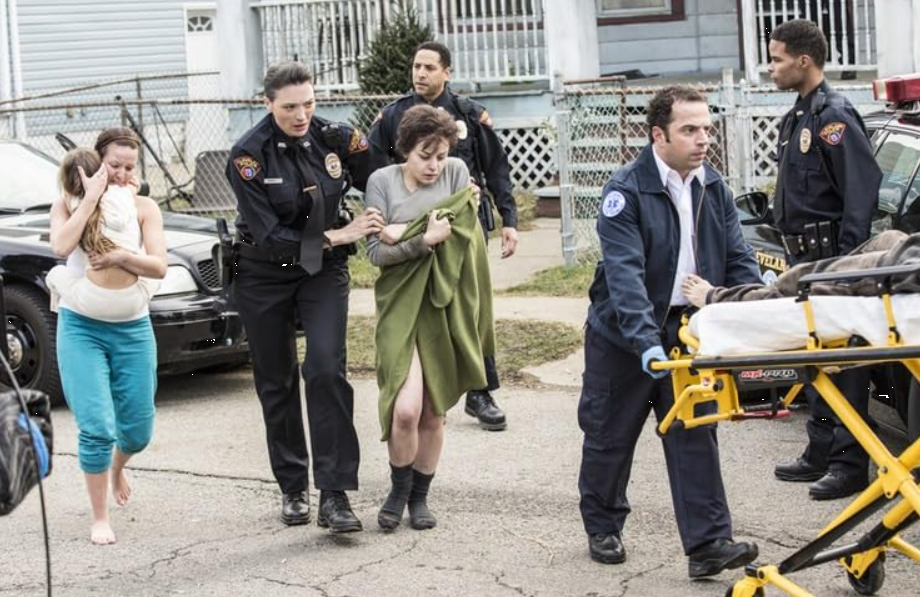
Katie Sarife appears in this harrowing true-story drama, while Taryn Manning delivers a raw, unforgettable performance as Michelle Knight, the first victim whose terrifying ordeal anchors Cleveland Abduction. The film brings the decade-long nightmare to the screen with a level of realism that is difficult to shake. Wrapped in a blanket and surrounded by rescuers, Michelle’s first steps toward freedom carry the weight of years spent trapped behind closed doors. The paramedics rushing toward the survivors had no idea they were witnessing the end of one of America’s most disturbing captivity cases. Then comes the detail that makes this story even harder to forget…
In the quiet Tremont neighborhood of Cleveland, Ohio, an ordinary-looking house on Seymour Avenue became a private prison for more than a decade. Between 2002 and 2004, school bus driver Ariel Castro abducted three young women from the same stretch of streets and locked them inside his home. What followed was a sustained campaign of control, violence, and isolation that only ended on May 6, 2013, when one of the women finally forced open a door and screamed for help.
Michelle Knight was 21 years old when she vanished in August 2002. A single mother fighting to regain custody of her young son, she accepted a ride from a man she recognized as the father of a schoolmate. Castro lured her with the promise of a puppy. Once inside the house, the door locked behind her. For the next eleven years she would remain there, beaten, starved, raped, and repeatedly forced into miscarriages. At times she went months without bathing. Chains, locked rooms, boarded windows, and the constant threat of worse kept her confined.
Eight months later, in April 2003, 16-year-old Amanda Berry disappeared after finishing a shift at a local Burger King. She, too, accepted a ride from the familiar face of Castro. Nearly a year after that, 14-year-old Gina DeJesus was taken while walking home from school. Castro used the same method: a quick offer of help or a casual request involving his own daughter, who happened to be Gina’s friend. Within minutes the girls were inside the house that would become their world.
Inside those walls the three women forged a bond that helped them survive. They became sisters in captivity, sharing what little food Castro allowed, whispering encouragement, and protecting one another as best they could. When Amanda became pregnant, it was Michelle who delivered the baby on Christmas Day 2006 in an inflatable pool on the floor. The newborn was not breathing. Castro threatened to kill Michelle if the child died. She performed CPR until the infant took her first breath. The little girl, later named Jocelyn, would grow up inside the same locked rooms until the day of the escape.
Cleveland Abduction, the 2015 Lifetime film now streaming on Netflix, tells this story primarily through Michelle’s eyes, drawing from her memoir Finding Me: A Decade of Darkness, a Life Reclaimed. Directed by Alex Kalymnios and written by Stephen Tolkin, the movie refuses easy sensationalism even as it confronts the horror head-on. Taryn Manning (Orange Is the New Black) gives a performance of remarkable physical and emotional commitment as Michelle. Raymond Cruz (Breaking Bad) portrays Castro with chilling ordinariness—the smiling neighbor and school-bus driver who hid monsters behind a familiar face. Katie Sarife plays Gina DeJesus with quiet intensity, while Samantha Droke brings Amanda Berry’s determination and maternal ferocity to the screen. Supporting turns from Pam Grier and Joe Morton ground the story in the wider world that searched for the missing women and failed to find them for years.
The film does not linger on every act of violence. Instead it focuses on the slow erosion of hope and the stubborn refusal to disappear completely. Viewers watch the women age inside the house. Birthdays pass unmarked. Holidays become opportunities for further torment. Outside, missing-person posters faded. Families held vigils. Police investigated leads that went nowhere. Neighbors later recalled hearing strange noises or noticing boarded windows, yet the house on Seymour Avenue remained undisturbed for more than a decade.
The escape itself feels almost too sudden after so many years of captivity. On May 6, 2013, Castro left the house and failed to secure an interior door. Amanda Berry seized the moment. She kicked out a section of the storm door, shouted for help, and was heard by a neighbor who called police. Within minutes officers entered the house and found Michelle and Gina still inside. The three women and the child were taken to the hospital. Photographs from that day show Michelle wrapped in a blanket, small and fragile after years of deprivation, yet already moving toward the light.
Castro was arrested the same day. He eventually pleaded guilty to 937 counts, including kidnapping, rape, and aggravated murder related to the forced miscarriages. He received a sentence of life without parole plus 1,000 years. One month into that sentence he died by suicide in his prison cell. The house on Seymour Avenue was demolished as part of the plea agreement, erasing the physical structure that had contained so much suffering.
What lingers after the credits of Cleveland Abduction is not only the scale of the crime but the resilience required to survive it. Michelle Knight later changed her name to Lily Rose Lee and wrote a second book about healing. Amanda Berry and Gina DeJesus co-authored their own memoir, Hope. All three women have spoken about reclaiming their lives, about the long work of recovery, and about the quiet miracles of ordinary freedom—walking outside without permission, choosing what to eat, sleeping without chains.
The film does not claim to capture every detail of those eleven years. No single movie could. Yet by centering Michelle’s perspective and refusing to look away from the cost of survival, Cleveland Abduction forces viewers to confront an uncomfortable truth: monsters can live next door, and the people they destroy can still walk out of the darkness. Streaming now on Netflix, the film remains one of the most difficult and necessary true-crime dramas of its kind. Once seen, the image of those first steps into daylight is almost impossible to forget.