THE HIGH-STAKES PSYCHOLOGICAL DRAMA ON NETFLIX THAT FEATURES FIONN WHITEHEAD IN A MASTERCLASS PERFORMANCE
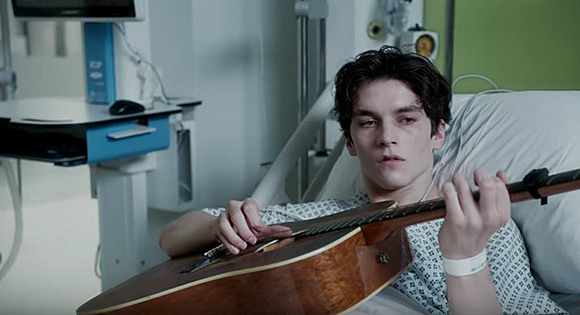
When saving a boy’s life means stripping away everything he believes in. On Netflix, Fionn Whitehead captures the delicate vulnerability of a teenager caught between religion and the law. The haunting song he plays for the visiting judge was…
In the quiet, elegant world of British legal drama, few films cut as deeply as The Children Act (2017). Directed by Richard Eyre and adapted by Ian McEwan from his own 2014 novel, this understated yet devastating psychological thriller does not rely on courtroom theatrics or explosive confrontations. Instead, it builds its power through silence, moral tension, and two extraordinary performances that linger long after the credits roll. At its center is a question that feels both ancient and urgently contemporary: what happens when the law collides with faith, and when a single ruling reshapes not only a young life but the soul of the woman who must decide it?
Emma Thompson delivers one of the finest performances of her career as Fiona Maye, a brilliant High Court judge in the Family Division whose professional precision has come at a profound personal cost. Her marriage to academic Jack (Stanley Tucci) is quietly fracturing under the weight of years of emotional distance. Fiona’s days are consumed by impossible cases—separating conjoined twins, balancing the rights of parents against the welfare of children—yet she remains the model of controlled authority. Then a new case arrives that refuses to stay within the boundaries of her courtroom.
Seventeen-year-old Adam Henry, played with heartbreaking intensity by Fionn Whitehead, is dying of leukemia. Doctors insist a blood transfusion will allow further treatment that could save his life. Adam and his Jehovah’s Witness parents refuse. Blood, in their faith, is sacred. Mixing it is a violation of divine law. Adam is three months short of his eighteenth birthday. Legally, he is still a child. Under the Children Act 1989, the court must decide what is in his best interests. The decision falls to Fiona.
What follows is not a standard legal procedural. In a rare and controversial move, Fiona visits Adam in hospital. That encounter becomes the emotional core of the film. Whitehead, still early in his career after his breakthrough in Christopher Nolan’s Dunkirk, gives a performance of remarkable delicacy and force. He plays Adam as intelligent, articulate, and startlingly self-possessed for a boy facing death. There is no melodramatic pleading, no wide-eyed innocence. Instead, Whitehead conveys a young man who has constructed his entire identity around belief and who is now being asked—forced—to abandon it. The vulnerability is in the eyes, in the careful way he measures every word, in the sudden flashes of humor and poetry that reveal a mind hungry for connection beyond the narrow world of his upbringing.
Their meeting is marked by music. Adam plays a melody on his guitar. Fiona recognizes it and begins to sing the words of Yeats’s “Down by the Salley Gardens.” The moment is quiet, almost intimate, and profoundly unsettling. In that shared song, something shifts. A boy who has prepared himself for death suddenly encounters an adult who sees him not as a legal problem or a religious symbol, but as a person. The judge who has spent her career maintaining professional distance finds herself emotionally implicated in a way she cannot fully control. Whitehead makes Adam’s subsequent attachment to Fiona both understandable and dangerous. It is not simply gratitude or teenage crush; it is the desperate reaching of someone whose entire worldview has been cracked open by the very person who ordered it so.
Thompson matches him note for note. Her Fiona is a woman of formidable intellect whose emotional life has been carefully compartmentalized. The performance is all micro-expressions, carefully controlled posture, and the slow erosion of that control. When the case forces her to confront the human cost of her judgments, and when Adam’s presence begins to unsettle the careful order of her private life, Thompson lets the cracks show without ever tipping into sentimentality. It is acting of the highest order—precise, restrained, and ultimately devastating.
The film’s power lies in its refusal to offer easy answers. It does not mock faith, nor does it treat the law as infallible. McEwan and Eyre understand that both systems claim to protect the vulnerable, yet both can inflict lasting damage when they collide with the messy reality of a single human life. Adam’s parents, played with quiet dignity by Ben Chaplin and Eileen Walsh, are not cartoon villains. Their love for their son is genuine; their terror of violating their beliefs is equally real. The doctors are not cold technicians. Everyone involved believes they are acting out of care. The tragedy is that care, in this instance, cannot be reconciled.
Whitehead’s performance is the film’s secret weapon. Coming so soon after Dunkirk, it confirmed him as an actor of unusual range. He never overplays Adam’s suffering or his later emotional turbulence. Instead, he lets the character’s intelligence and sensitivity do the work. Watching him, one feels the weight of a young life being reshaped in real time—the confusion of sudden survival, the betrayal of discovering that the adults who claimed absolute certainty were more complicated than they appeared, the ache of wanting connection from someone who cannot fully give it. It is a masterclass in restrained emotional exposure.
The Children Act is not a film of big speeches or tidy resolutions. Its most powerful moments are often the quietest: a shared song in a hospital room, a late-night conversation that reveals more than either participant intended, the look on a face when the consequences of a decision finally arrive. The score by Stephen Warbeck supports this intimacy without overwhelming it. The cinematography keeps the frame close, almost claustrophobic at times, reflecting the emotional pressure cooker in which these characters exist.
Critics rightly praised the film upon its release, noting its intelligence and the rare pleasure of watching adult characters wrestle with genuine moral complexity. Thompson’s work was widely regarded as among her best. Whitehead’s contribution, though sometimes overshadowed in discussions of the film, is equally essential. Without his ability to make Adam both fully realized and heartbreakingly incomplete, the central dilemma would remain abstract. With him, it becomes painfully specific.
In an era of loud entertainment and simplified moral narratives, The Children Act stands apart. It trusts its audience to sit with discomfort. It understands that the most difficult questions—about autonomy, faith, the state’s duty to protect, and the private cost of public responsibility—do not resolve cleanly. And it places at its heart a young actor’s performance that captures the precise moment when a boy’s carefully constructed world begins to collapse under the weight of being saved.
The film is currently available on Netflix. For those willing to engage with its quiet intensity, it offers something increasingly rare: a psychological drama that respects both the intelligence of its characters and the complexity of the questions it asks. Fionn Whitehead’s Adam remains one of its most lasting achievements—a portrait of vulnerability, conviction, and the terrible price of having one’s deepest beliefs challenged by the people charged with keeping you alive. The song he plays still echoes. The questions it raises refuse to settle.