
WHEN JUSTICE FACES THE ABYSS: THE BLURRED LINE BETWEEN THE PROTECTOR AND THE CRIMINAL
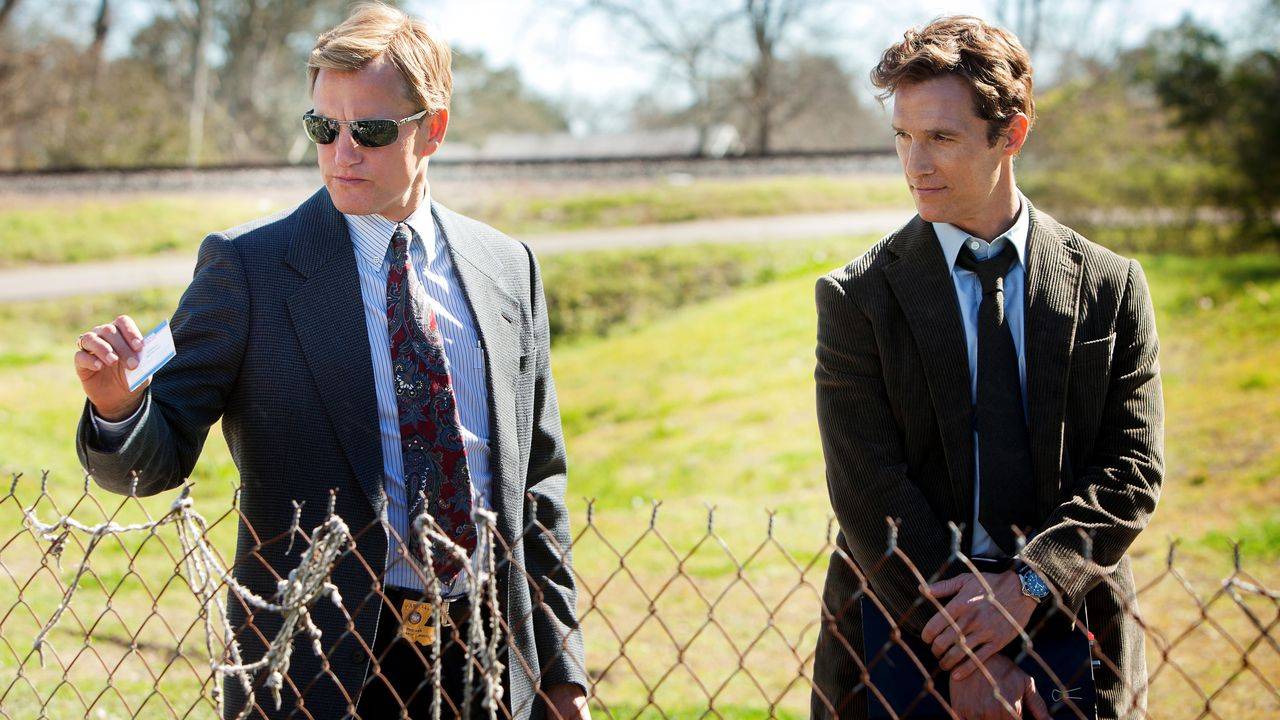
In the relentless pursuit of justice, there come moments that force men to confront truths so depraved they shatter every conventional moral boundary. Standing outside a lawless compound in the desolate bayou, Rust Cohle (Matthew McConaughey) and Marty Hart (Woody Harrelson) bore the badges of the law, yet their souls were already consumed by a dark, righteous fury. The fateful choice they made just moments after this photo—the very act that bound them together in a decades-long lie—was one that would echo through their lives, careers, and the very fabric of their humanity.
True Detective Season 1, the critically acclaimed HBO series created by Nic Pizzolatto and directed in its first season by Cary Joji Fukunaga, masterfully dissects the human condition through the lens of two Louisiana detectives investigating a ritualistic murder. At its core lies this haunting scene from Episode 5, “The Secret Fate of All Life.” It captures Rust and Marty at the threshold of a meth lab and child abuse compound hidden deep in the bayous, a place where the horrors of humanity manifest in their most visceral form.
The image itself is iconic: Rust, lean and intense with his tattooed arm gripping a rifle, stands in stark contrast to Marty, the more conventional family man, hands fidgeting near his belt. The dilapidated structures, overgrown vegetation, and humid, oppressive atmosphere of the Louisiana wetlands serve as a perfect metaphor for the moral quagmire they are about to enter. This is not just a crime scene; it is the abyss staring back.
The Road to the Compound
To understand the weight of that moment, one must trace the paths that led Cohle and Hart there. In 1995, the detectives are investigating the murder of Dora Lange, a young woman whose body is found posed in a sugarcane field with antlers on her head and symbols suggesting occult involvement. The case pulls them into a web of corruption, pedophilia, and a mysterious cult tied to the “Yellow King” and Carcosa—a cosmic horror-inspired mythology drawing from Robert W. Chambers’ work.
Rust Cohle, the philosophical nihilist haunted by the death of his young daughter and his undercover past, sees patterns where others see chaos. Marty Hart, the pragmatic everyman struggling with his own infidelities and family issues, represents the flawed human anchor. Their partnership is a study in contrasts: Cohle’s cosmic pessimism versus Hart’s grounded (yet hypocritical) morality.
As leads point toward Reggie Ledoux, a meth cook and former associate of a powerful family, the detectives follow Ginger, an informant, into the swamps. The journey through the bayou is tense, filled with booby traps and eerie twig sculptures—symbols of the larger conspiracy. Upon reaching the compound, they discover not just a drug lab, but unimaginable horrors: two kidnapped children, one chained and abused, the other in a state of catatonic shock.
The provided image captures the calm before the storm. Rust and Marty stand side by side, badges glinting, weapons ready. Their expressions convey exhaustion, determination, and the dawning realization that the evil they face defies standard police procedure.

Crossing the Line
What happens next defines the series and the theme of blurred lines. Marty, upon seeing the children and hearing Ledoux’s cryptic ramblings about “Carcosa” and the “black stars,” snaps. In a moment of uncontrolled rage, he shoots Reggie Ledoux. Dewall, Ledoux’s partner, flees and triggers a booby trap, blowing himself up. Rather than report the truth, the detectives stage the scene to make it look like a justified shootout. They plant evidence, fabricate details, and become heroes in the eyes of the department and the public.
This act—the “decades-long lie”—is the pivot point. It saves the children and eliminates a monster, but it corrupts the very system they swore to uphold. Rust, ever the thinker, later reflects on the philosophical implications: “This place is like somebody’s memory of a town, and the memory is fading.” The compound, the cover-up, everything feels like a fading nightmare.
Why do they do it? For Marty, it’s visceral protection—of the innocent and perhaps his own fragile sense of self. For Rust, it’s a pragmatic necessity in the face of systemic failure. The law, they realize, is ill-equipped for the abyss. True justice sometimes demands becoming the thing you hunt.

This moment resonates because it mirrors real-world dilemmas faced by law enforcement. Officers confronting cartel compounds, human trafficking rings, or ritualistic abuse cases often grapple with similar moral quandaries. When the system fails the vulnerable, do protectors have the right—or the duty—to step outside the rules?
Themes of Justice and Morality
True Detective excels in exploring Nietzschean ideas: “He who fights with monsters might take care lest he thereby become a monster.” Cohle stares into the void so long that it stares back, shaping his worldview into one of time as a flat circle, where suffering repeats endlessly. Hart clings to normalcy—family, beer, work—but his personal failings reveal the cracks in that facade.
The blurred line between protector and criminal is not black and white. In the bayou compound, the “protectors” commit perjury, evidence tampering, and effectively extrajudicial killing. Yet, their actions prevent further atrocities. Is this heroism or vigilantism? The series doesn’t provide easy answers, forcing viewers to confront their own ethics.
Throughout the season, this theme deepens. The 2012 timeline sees the detectives, now estranged, pulled back into the case as new investigators suspect Cohle of involvement. The cover-up haunts them, straining their partnership and mental health. Revelations about powerful figures like the Tuttle family expose how evil is institutionalized—protected by wealth, religion, and influence—while street-level monsters like Ledoux are mere symptoms.
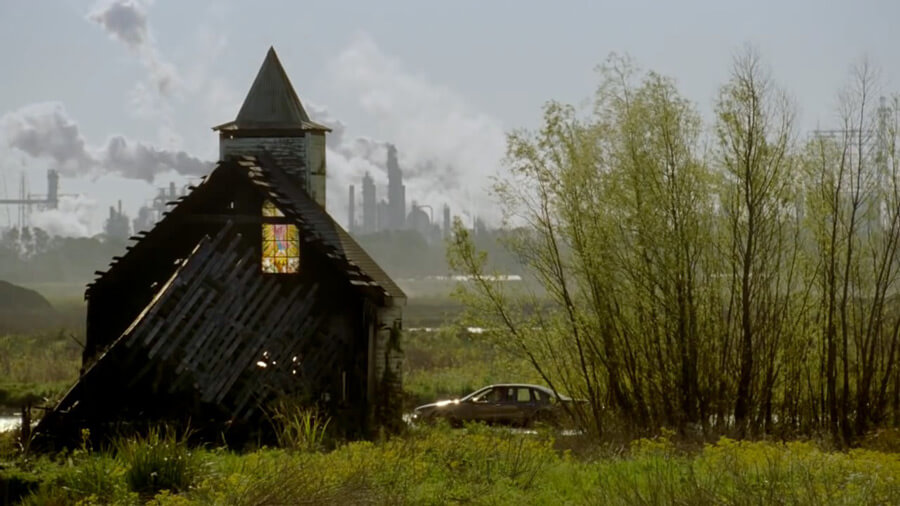
Pizzolatto’s writing draws from Southern Gothic traditions, infusing the narrative with Louisiana’s humid decay, petrochemical landscapes, and cultural undercurrents of voodoo and evangelicalism. The bayou isn’t just a setting; it’s a character, symbolizing the murky depths of the human soul.
Character Arcs and Performances
Matthew McConaughey’s Rust Cohle is a tour de force. His monologues on existence—”I think human consciousness is a tragic misstep in evolution”—are legendary, earning him an Emmy. Woody Harrelson’s Marty Hart provides the emotional counterbalance, his arc from self-righteous family man to humbled seeker of redemption equally compelling.
Their chemistry drives the story. The image of them in the bayou encapsulates this: two flawed men, back-to-back against darkness. By the finale, they reunite not just to solve the case but to save each other, carrying one another out of the literal and metaphorical flames.
Legacy and Cultural Impact
True Detective Season 1 redefined anthology television. Its philosophical depth, cinematography (long takes, tracking shots through hellish environments), and soundtrack (including the haunting theme by The Handsome Family) set a new standard. It sparked discussions on true crime, masculinity, existentialism, and police ethics.
In an era of rising awareness around institutional failures—cover-ups in sex abuse scandals, police misconduct, vigilante justice debates—the story remains relevant. The compound scene forces us to ask: When does the protector become the criminal? And is some darkness necessary to combat greater evils?
The lie they told bound Rust and Marty in brotherhood. It cost them years of friendship but ultimately led to confronting the true Yellow King. Justice, in the end, is imperfect, born from moral compromise.
As Cohle says in the finale, gazing at the stars: “The light’s winning.” In the abyss, even a spark of humanity can illuminate the path forward. Yet, the blurred line remains—a warning and a testament to the cost of wearing the badge in a world where monsters hide in plain sight.